The reason a laptop costs more than it did a year ago runs through a decision made in a Korean fabrication plant about what to print on a silicon wafer.
High-bandwidth memory will consume about 30 percent of total DRAM wafer capacity by 2027, up from 22 percent at the end of 2026, according to TrendForce projections reported by Yahoo Finance. As that report puts it, every wafer devoted to high-bandwidth memory is one that cannot be used to produce conventional DRAM.
Two kinds of memory, one production line
A short explanation, because the distinction does the work here.
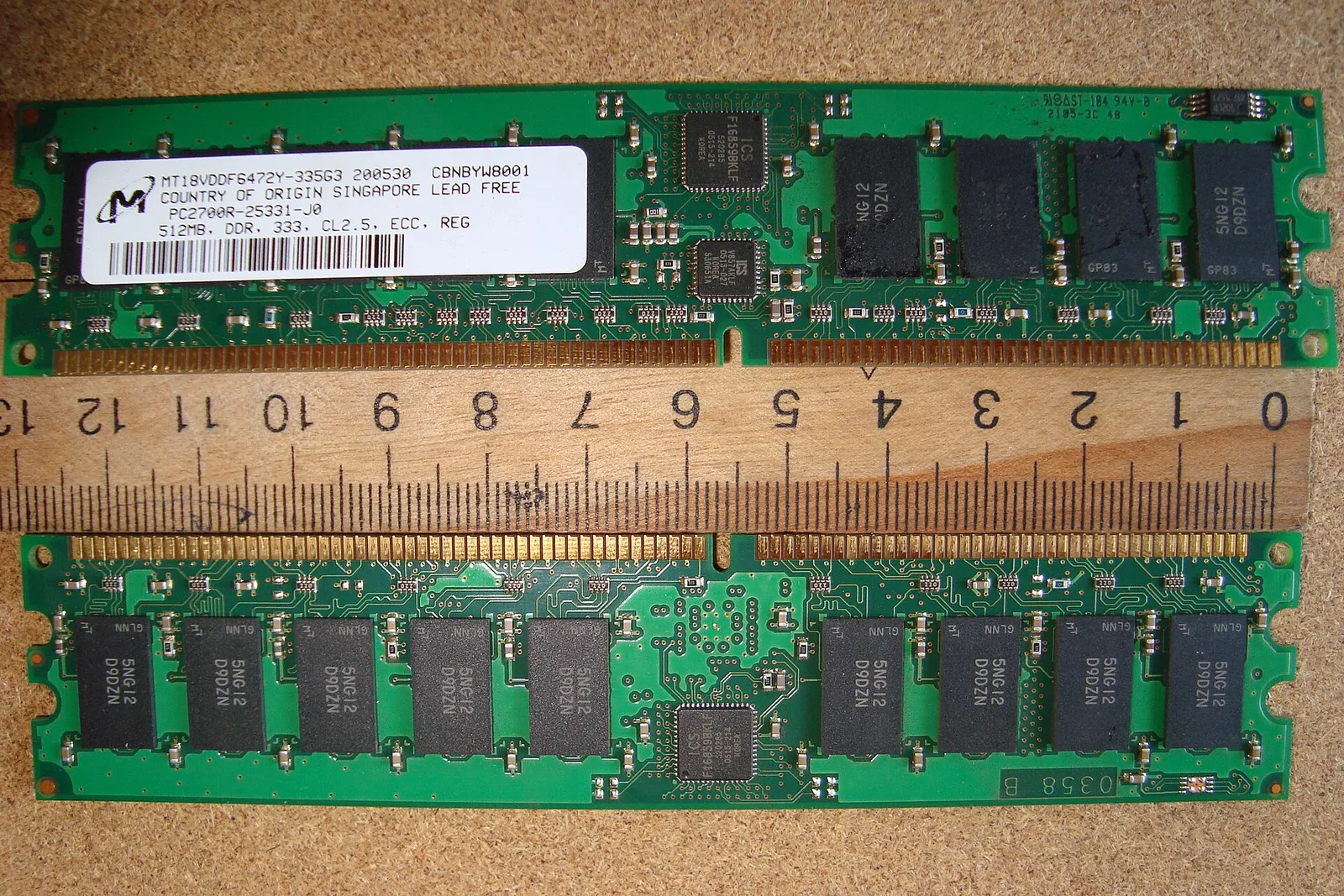
DRAM is the working memory in every phone, laptop and server. It is a commodity: largely interchangeable between suppliers, bought on price, and sold in enormous volume.
High-bandwidth memory, or HBM, is DRAM stacked vertically and placed next to a processor so data can move between them much faster. AI training and inference are limited less by processor speed than by how quickly data can be fed in, which is why HBM has become the bottleneck component of the AI build-out, and why it sells at a substantial premium.
The critical fact is that both come off the same wafers and compete for the same capacity. A manufacturer choosing to make more HBM, which is more profitable, is choosing to make less conventional DRAM. There is no separate factory for the memory in your phone.
Why this cycle is violent
Memory has always been among the most cyclical businesses in technology, and the mechanism is structural rather than a matter of management competence.
Adding capacity means building a fabrication plant, which takes years and costs enormous sums. Demand, by contrast, moves in months. When demand rises, supply cannot respond, so price does all the adjusting, sometimes brutally. Then the new capacity finally arrives, often just as demand cools, and prices collapse just as brutally.
What makes this episode different is the source of demand. AI infrastructure spending is being committed years in advance by a small number of very large buyers, which makes the demand less likely to evaporate quickly than a consumer electronics cycle, but also concentrates the risk if those buyers slow down.
The build-out under way
The response is enormous. Samsung and SK Hynix have committed a combined 800 trillion won, about $518bn, to four new memory facilities expected to begin production in 2027 and 2028. Industry capital spending is projected to rise from $53.7bn in 2025 to $61.3bn in 2026, though most of that targets HBM rather than broad capacity.
That last clause matters more than the headline figure. Spending aimed at HBM does not necessarily relieve the shortage of conventional DRAM, and may worsen it if it accelerates the shift in the wafer mix.
Even committed capacity arrives slowly. New facilities typically need 12 to 24 months after opening before they run at peak output, so a plant starting production in 2027 is not fully contributing until 2028 or later.
When it might loosen
The analyst views collected in the report point to 2028 rather than anything sooner.
UBS expects the DRAM market may not return to balance until the second quarter of 2028. Bank of America is more cautious on the supply side, estimating that SK Hynix may achieve only about one sixth of its originally planned capacity additions by 2028.
Those are forecasts, not facts, and the memory industry's record of predicting its own cycles is poor in both directions. The useful takeaway is not the date but the shape: nobody credible is arguing that supply catches up within the next year.
Who pays
For readers who do not buy wafers, the consequence is straightforward. Manufacturers of phones, laptops and consumer devices are buying a component whose supply is being diverted to a higher-paying customer. They can absorb that in margin or pass it on in price, and over time they do some of both.
There is a portfolio point too, which connects to our coverage of the Kospi. The same dynamic that squeezes device makers is what has made Samsung and SK Hynix so profitable and their home index so volatile. The memory shortage is simultaneously a cost problem for one set of companies and the entire investment case for another, which is worth remembering when the cycle eventually turns.