European gas prices have risen sharply as the US-Iran conflict has escalated. Dutch TTF, the continent's benchmark contract, climbed above €56 per megawatt-hour late last week, its highest in nearly four months, and was quoted around €60 on Monday morning. Prices are up roughly 15% on the week and about 29% since the start of July, erasing a decline of more than 14% over the second quarter.
Intraday quotes vary by source and moment of capture, so treat the exact level as approximate. The direction is not in doubt.
The price is the symptom. The condition is the storage calendar.
Why summer is the dangerous season
Europe consumes far more gas in winter than it produces or can import in real time, so it spends the summer injecting gas into underground storage to withdraw during the heating season. A supply disruption in July is therefore worse than the same disruption in March, because July is when the buffer for the following winter is supposed to be built.
That makes storage percentage, not spot price, the number to watch.
Where storage actually stands
The EU Agency for the Cooperation of Energy Regulators, ACER, reported EU gas storage at roughly 49% of capacity on July 2, 2026, a level it compares with 2021. The summer season opened worse: storage stood at just 28% on April 1, below each of the previous three years.
Injections through April to June ran below both the 10-year summer average and 2025 levels. Europe started the refill season in a hole and has been filling it more slowly than usual.
The target is 90% by November 1, though the Gas Storage Regulation permits flexibility down to 80%. ACER's assessment is that the lower 80% target "remains achievable with 2025 import levels."
The 90% target is the harder question, and here is ACER's key finding: to reach it, "the EU's LNG imports will need to rise by around 13% over 2025 levels."
Which is precisely the problem
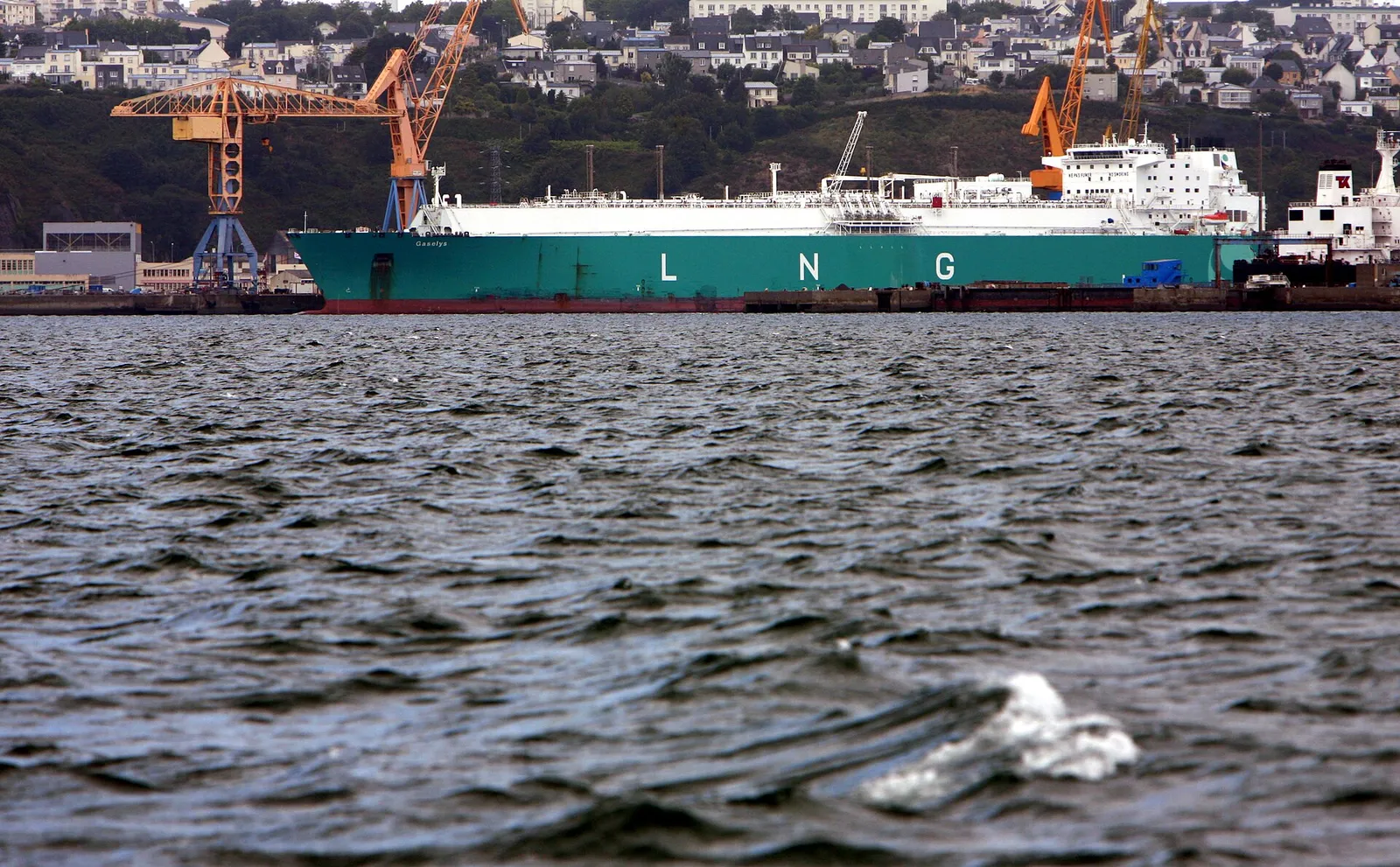
Europe now depends on seaborne gas to a degree it did not before 2022. LNG covers about half of total EU gas imports, and Europe is the world's largest LNG importer.
A meaningful share of that LNG originates in the Persian Gulf and must pass through the Strait of Hormuz. The International Energy Agency's factsheet on the strait puts Qatari LNG flows through it at roughly 9.3 billion cubic feet a day in 2024, with the UAE adding about 0.7 Bcf/d, essentially all Gulf LNG. The Institute for Energy Economics and Financial Analysis estimates a Hormuz disruption would jeopardise around 10% of Europe's LNG imports.
Ten percent is material rather than catastrophic on its own. Set against a requirement to increase total LNG imports by 13%, it is the difference between hitting the target and missing it.
Cargoes are already moving elsewhere
This is not purely a risk premium. LNG is a globally traded, largely destination-flexible commodity, and cargoes go where prices are highest. Reporting based on ship-tracking data indicates European LNG arrivals have fallen materially year on year while Asian imports have risen, with US cargoes bound for Europe well below their January peak.
That matters more than the headline price, because it means physical molecules that Europe needs for its storage refill are being landed elsewhere. A price spike attracts cargoes back; a sustained Asian premium does not.
What flows through to consumers
Gas sets the marginal price of electricity across much of Europe, which is why a gas move becomes a power move even where gas is a minority of generation. The effect is very uneven by country, depending on how much of the hourly price gas actually sets: heavily gas-dependent markets such as Italy see a much tighter link than Spain, where renewables set price far more often.
For industrial users and households, the transmission runs through winter tariffs rather than today's spot. Utilities hedge forward, so the bill effect of a July disruption typically appears in the autumn and winter contracts being written now.
What would change the picture
Three things, in rough order of importance.
The strait reopening properly. Sustained normal transit would let Gulf cargoes resume and pull the risk premium out.
Asian demand softening. Europe competes for the same cargoes; a mild Asian season frees supply.
Accepting 80% rather than 90%. This is the quiet policy lever. ACER's own assessment is that 80% is achievable at 2025 import levels, meaning the difference between comfortable and stressed is partly an administrative choice about how much insurance to buy.
The risk case is not that Europe runs out of gas. It is that it enters winter with a thinner buffer than usual, which raises the price at which the market clears if the winter is cold, and leaves less room for any further supply shock. On current figures that is the direction of travel.