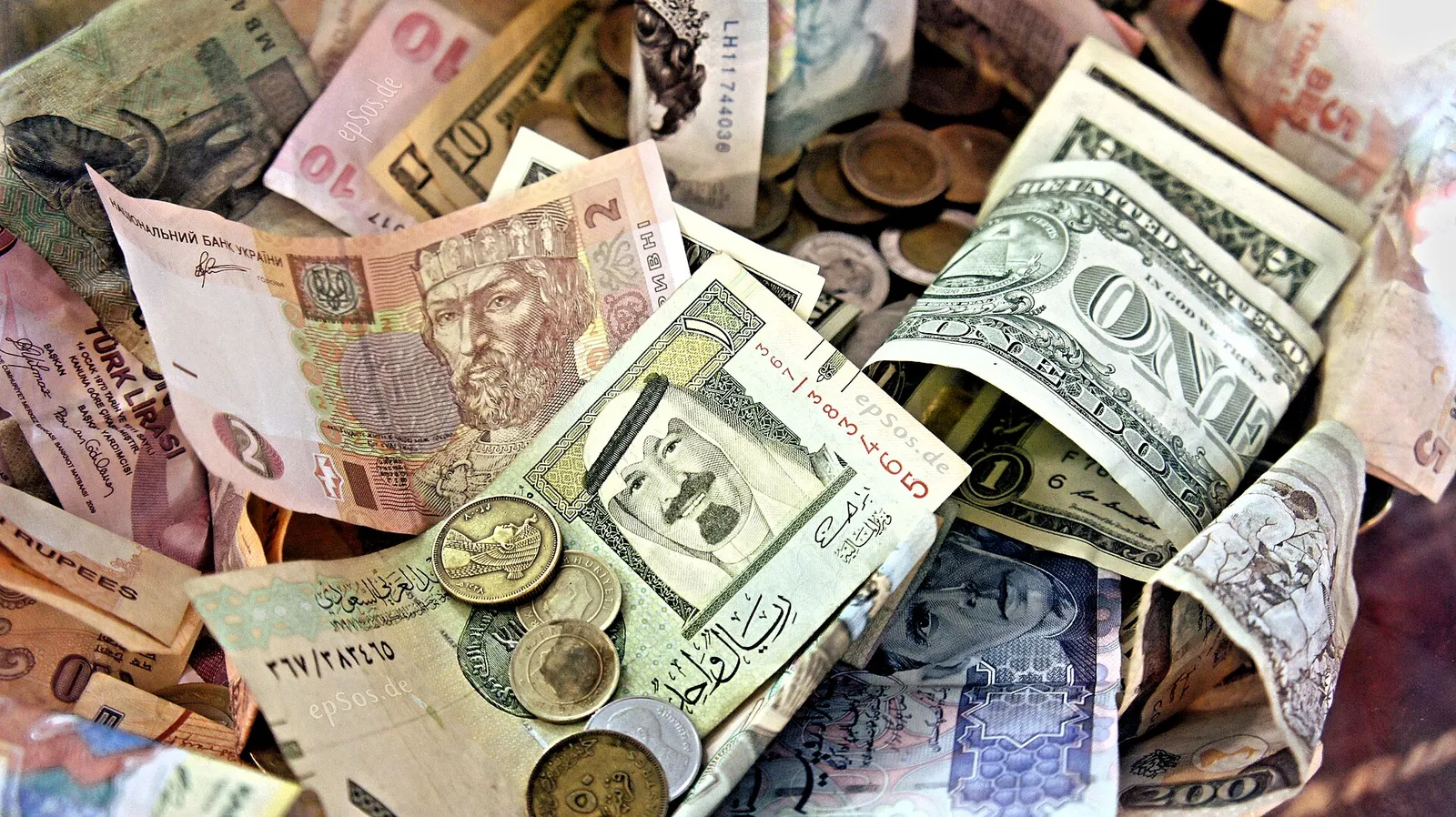
An exchange rate is simply the price of one currency in terms of another — how many dollars a euro costs, or how much yen a dollar buys, as Investopedia defines it. It's one of the most important prices in the world, and one of the most misunderstood. Start with where the number comes from.
Who sets the rate
For most major currencies, the rate is floating — set continuously by supply and demand in the global foreign-exchange (forex) market, the enormous, around-the-clock marketplace where currencies are traded, as Investopedia describes. No committee decrees the dollar-euro rate; it's the constantly shifting result of banks, companies, investors and governments buying and selling.
Some countries instead peg their currency — fixing it to another currency (often the U.S. dollar) or a basket, and using their central bank and reserves to hold it there, the alternative to a floating rate. Most large economies float; many smaller ones peg for stability.
What moves a floating rate
Several forces push currencies up and down:
- Interest rates. Higher rates tend to attract foreign money chasing better returns, lifting demand for — and the value of — that currency. This is why central-bank decisions move currencies so sharply.
- Inflation. A currency losing purchasing power at home tends to weaken against others over time.
- Trade and capital flows. A country selling more abroad, or attracting investment, sees more demand for its currency.
- Confidence and risk. In turbulent times money flows to currencies seen as safe havens; political or economic stress can send a currency down fast.
The "real" rate — and why you never get it
Here's the crucial part for anyone changing money. The rate you see quoted on financial news is the mid-market rate (also called the interbank or spot rate) — the midpoint between what buyers and sellers are offering in the wholesale market. It's the truest measure of a currency's value, but it is not what a traveler or shopper is charged.
Everyone who converts currency for you — a bank, a card network, a bureau de change — takes a slice. They do it in two ways:
- The spread. They buy the currency from you a little below the mid-market rate and sell it to you a little above it, pocketing the difference. A currency kiosk's wide "buy" and "sell" prices are this spread in action.
- Fees and markups. On top of the spread come explicit charges — a percentage fee, a markup baked into the rate, or a tactic like dynamic currency conversion, where a merchant converts the price at a rate that favors them.
The gap between the mid-market rate and your rate is exactly where the cost of moving money lives. The tighter that gap, the better the deal — which is why the same $1,000 can be worth noticeably different amounts depending on who converts it.
Why it matters
For travelers and shoppers, understanding the mid-market rate turns a confusing number into a benchmark: compare any offer against it, and you can see how big a cut you're paying. For investors and businesses, exchange rates quietly reshape returns and profits — a foreign investment can gain in its home market yet lose value once converted back. And for economies, currency moves ripple through inflation, trade and growth. Boursel gives no investment advice; the practical lesson is simple — know the mid-market rate, and you'll always know how good (or bad) the rate you're being offered really is.