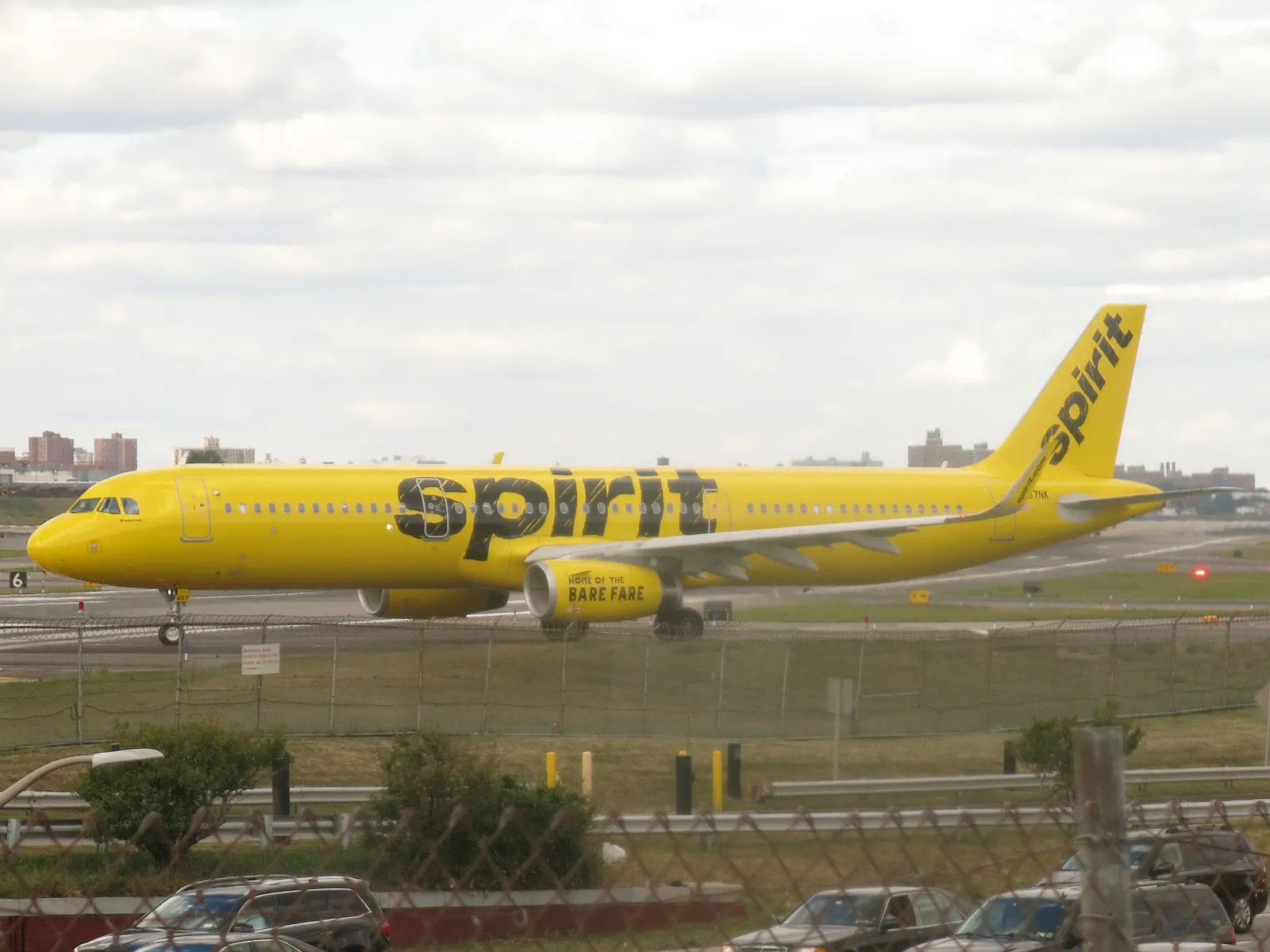
The era of the ultra-cheap US flight just lost its standard-bearer. Spirit Airlines ceased operations on May 2, canceling every flight in an "orderly wind-down" after talks on a federal rescue collapsed, NPR reported. It was the first major US airline to go out of business in about 25 years, and the shutdown put roughly 17,000 people out of work.
How it died
Spirit's collapse was years in the making, then sudden at the end. It pioneered the ultra-low-cost carrier model in the US — rock-bottom base fares, money made back through fees for bags, seats and everything else. But the model frayed: the big legacy airlines fought back with cheap "basic economy" tickets that erased Spirit's price edge, while its costs climbed. A planned $3.8 billion merger with JetBlue, which would have given it scale and capital, was blocked by a federal judge on antitrust grounds, and Spirit filed for Chapter 11 bankruptcy in late 2024 — then again in 2025 as losses and debts mounted.
The knockout blow was fuel. Spirit pointed to the spike in jet-fuel prices tied to the 2026 conflict with Iran — the same Gulf crisis that briefly sent crude sharply higher — as the cost it could no longer absorb on razor-thin margins. The airline sought a roughly $500 million federal bailout; when those talks failed, it had no cash left to keep flying.
What its absence means
Spirit's exit pulls a chunk of cheap capacity out of the US market, and on routes it dominated, fares have room to rise as demand crowds onto fewer seats. Rival budget carriers — Frontier, Allegiant, Breeze and Avelo — will absorb some of the displaced travelers, but not all, and not always at Spirit's prices. For the most cost-sensitive flyers, the cheapest option in the sky has simply vanished.
The bus boom
Those travelers haven't stopped moving — they've moved to the ground. The US intercity bus market has been growing as budget-conscious travelers trade down, and operators are expanding to meet them. FlixBus, the German company that bought and rebranded the storied Greyhound network, reports rising ridership and has been adding service and new coaches, according to the company; market researchers size the US intercity-bus business in the low tens of billions of dollars and growing at a mid-single-digit annual clip, per Mordor Intelligence. (Those figures come from the operators and industry trackers, so read them as directional.)
The economics favor the bus for shorter trips: no costly hub-and-spoke network, lower fuel and labor cost per passenger, and none of the add-on fees that soured travelers on carriers like Spirit. For journeys of a few hundred miles, a bus can simply be the cheapest way to go.
The bigger picture
Spirit's death is a story about affordability and what happens when it breaks. A carrier built entirely on being the cheapest could not survive a stretch of high fuel costs, heavy debt and aggressive competition all at once. And the migration to buses is the same story from the passenger's side: when flying gets pricier, cost-conscious travelers don't stop traveling — they find the next-cheapest way to get there. The ultra-low-cost airline that promised to democratize flying is gone; the demand it served is now riding the highway.