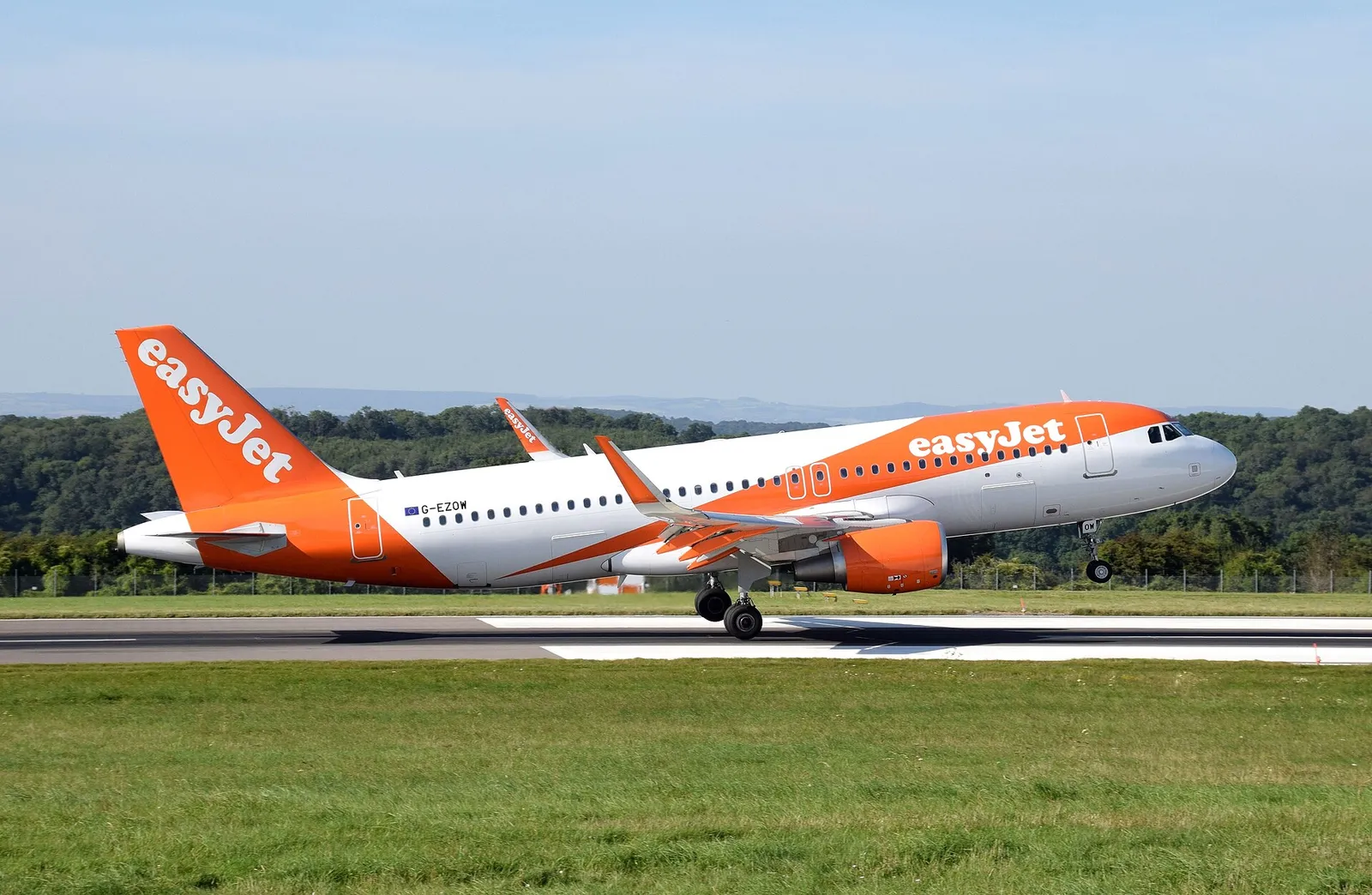
The oil-price shock rippling out from the Middle East now has a clear corporate casualty. EasyJet, the London-listed budget airline, reported in its trading update for the quarter ended 30 June that headline profit before tax fell to £85 million, from £286 million in the same quarter a year earlier. That is a drop of 70%, and it happened even though the airline sold slightly more, not less.
Revenue up, profit down
The striking part of easyJet's quarter is that the top line held up. Group revenue rose 2% to £2,983 million, from £2,918 million a year earlier. The airline flew 25.8 million passengers, barely changed from 25.9 million, and filled 88.9% of its seats, a load factor down just 1.3 percentage points from 90.2%. (Load factor is the share of available seats actually sold; high-80s is healthy for a low-cost carrier.)
So this was not a collapse in demand. The business kept flying full planes and taking slightly more money for it. The profit still fell by two-thirds. When revenue rises and profit falls that hard, the answer is on the cost side, and here it has a single name: fuel.
The fuel bill did the damage
EasyJet's fuel costs rose £105 million year on year, to £732 million. On a per-seat basis, what the airline calls fuel cost per available seat kilometer, or fuel CASK, rose 13%. That increase, £105 million, is almost exactly the size of the £201 million swing in pre-tax profit, which tells you how central fuel was to the result.
The company was explicit about the cause. Its results, it said, were "impacted by elevated fuel prices and a reduction in consumer demand following the onset of the Middle East conflict in March." In other words, the same geopolitical shock that has pushed crude oil sharply higher this year feeds almost directly into an airline's largest variable cost. Jet fuel is refined from crude, so when oil rises, an airline's bill rises with it, and for a low-margin, high-volume carrier like easyJet, a move in fuel can swamp everything else on the income statement.
Why airlines are so exposed
This is the classic vulnerability of the airline business, and easyJet's quarter is a textbook illustration. Fuel is one of the two or three biggest costs an airline carries, and it is set by a commodity market the airline cannot control. Carriers hedge some of their fuel needs in advance to smooth the swings, but hedging delays and softens the impact of a price move, it does not cancel it. A sustained rise in crude eventually flows through.
Layer on the demand side, and the squeeze tightens. The Middle East conflict did not only lift fuel prices; easyJet said it also dampened consumer demand, and conflicts in the region can force costly airspace closures and rerouting. An airline can end up paying more for fuel to fly routes that are themselves disrupted, while nervous travelers hold back on booking.
What the airline is signaling ahead
EasyJet gave a cautiously steady read on the months ahead. It said the fourth quarter is currently 68% sold with yields, the revenue per passenger, "broadly flat," and that early bookings for the first quarter of its 2027 financial year show ticket yields "up mid-single digits." Its chief executive, Kenton Jarvis, said the airline had "continued to manage the impact of the Middle East conflict, and its effect on fuel prices and booking trends, during the quarter."
That is the measured language of a company absorbing a shock rather than being knocked over by it: demand is holding, forward prices are firm to rising, and the damage is concentrated in a fuel line that will ease if and when oil does.
Why it matters
EasyJet's numbers are a clean transmission of a macro story into a single company's accounts. The oil-price move driven by the Middle East conflict is not an abstraction on a commodities screen; it is £105 million of extra cost and a 70% smaller profit for one large European airline in a single quarter. For investors, the read-across is broad: every airline is exposed to the same force, and results across the sector this earnings season will be shaped heavily by how much fuel cost each one absorbed and how well its hedging and pricing held up. This is not investment advice, but easyJet's quarter is a reminder that for airlines, the price of crude is rarely just background noise.