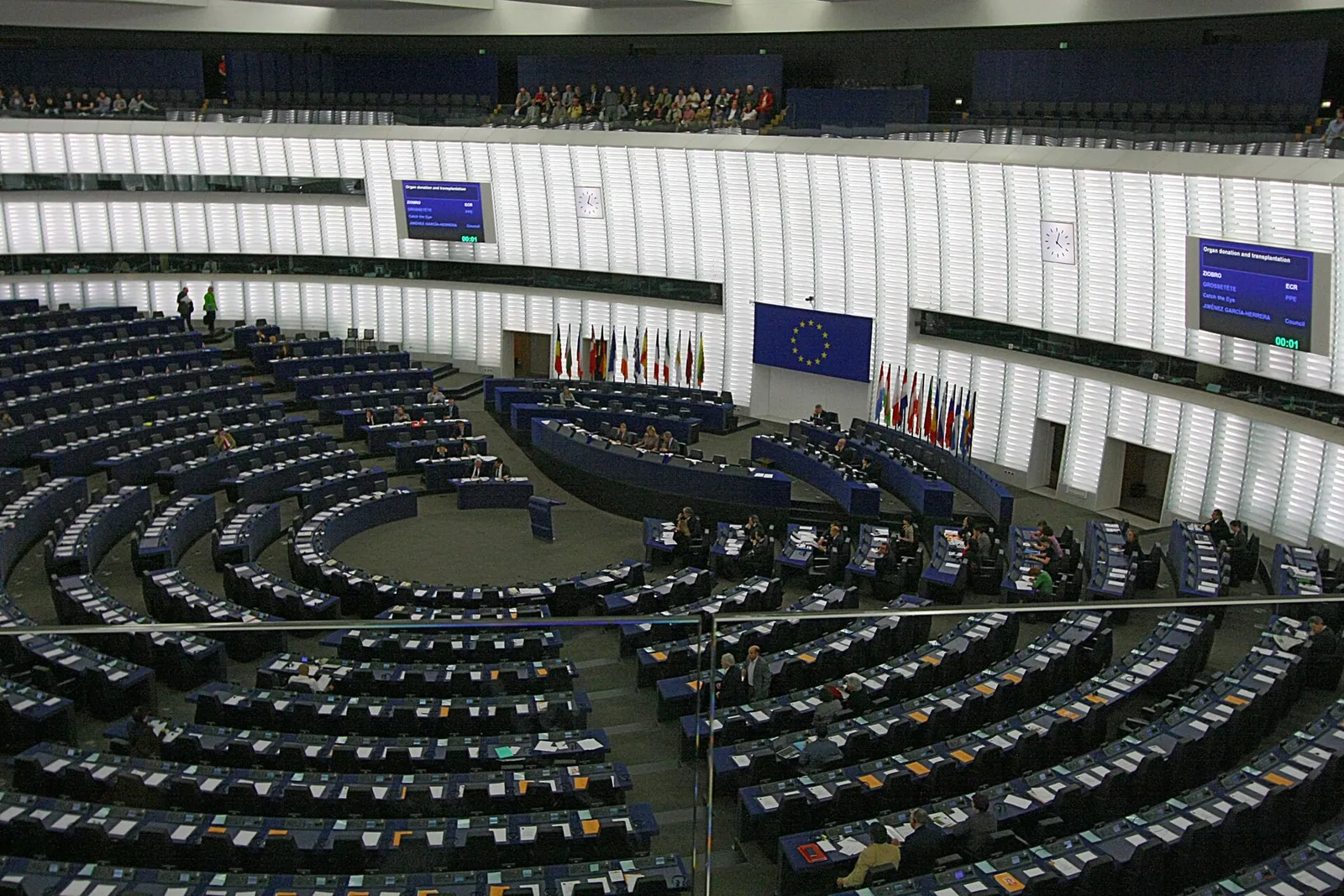
The European Parliament's economic affairs committee has approved a report urging the EU's executive to examine whether several fast-growing parts of the crypto market — decentralized finance (DeFi), staking, crypto lending and NFTs — should be brought under regulation, Cointelegraph reported. Drafted by Belgian MEP Johan Van Overtveldt, it is a non-binding "own-initiative" resolution; the full Parliament is due to vote on it on July 7.
The gap in the rulebook
The backdrop is MiCA — the EU's Markets in Crypto-Assets regulation, the most comprehensive crypto framework any major jurisdiction has enacted. Its transition period ends July 1, 2026, after which crypto firms operating in the EU must hold formal authorization. But when lawmakers wrote MiCA, they deliberately left several areas out — and those are exactly the ones the committee now wants studied.
Here is what they are, in plain terms:
- DeFi is financial activity — lending, trading, earning yield — run on public blockchains by self-executing software, with no bank or broker in the middle. MiCA carves out services that are "fully decentralized," but never defines the phrase, leaving a grey zone.
- Staking is locking up certain cryptocurrencies to help run (validate) a blockchain network in return for rewards — a bit like earning interest on a deposit. MiCA doesn't explicitly cover it.
- NFTs are blockchain tokens representing ownership of a unique digital item, like art or a collectible. MiCA in principle excludes genuinely one-of-a-kind assets — but that line blurs when thousands of near-identical tokens are sold as one collection.
What "assess" means — and what it doesn't
This is the key distinction. The committee is asking the European Commission — the EU's executive, which alone can propose laws — to study whether new rules are needed. It is not itself writing rules. If the full Parliament adopts the text, it becomes the legislature's official position, which can shape the Commission's priorities; but turning that into binding obligations on companies would require a separate legislative proposal and its own multi-year process. In other words: a signal, not a statute.
Regulators have already been looking
The push doesn't come out of nowhere. In a joint report required under MiCA, the EU's two main financial watchdogs — the markets regulator ESMA and the banking regulator EBA — examined these markets in early 2025. Their read was measured: DeFi makes up only about 4% of global crypto-asset value, and decentralized exchanges account for roughly 10% of spot crypto trading volume, the agencies said. They found no current threat to financial stability — but flagged gaps in consumer protection (unclear fees, rates and collateral terms) and risks around money laundering, given DeFi's relative opacity. ESMA has signaled it is now shifting from writing rules toward supervising and enforcing them, while keeping a close eye on DeFi.
Why it matters beyond Europe
The EU tends to set templates others copy. MiCA itself became a reference point for crypto policymakers from the UK to Singapore to the Gulf. So even a preliminary EU move to examine DeFi and NFTs is likely to push the same questions up the agenda elsewhere.
The industry is split on the prospect. Some argue DeFi is genuinely hard to regulate the old way — there may be no licensed middleman to hold responsible. Others, including some larger crypto firms, quietly want clearer rules, on the view that today's ambiguity is itself a barrier to bringing big institutional money in. For now, the EU has done the most Brussels thing of all: it has asked for a study — and signaled where it may eventually decide to act.