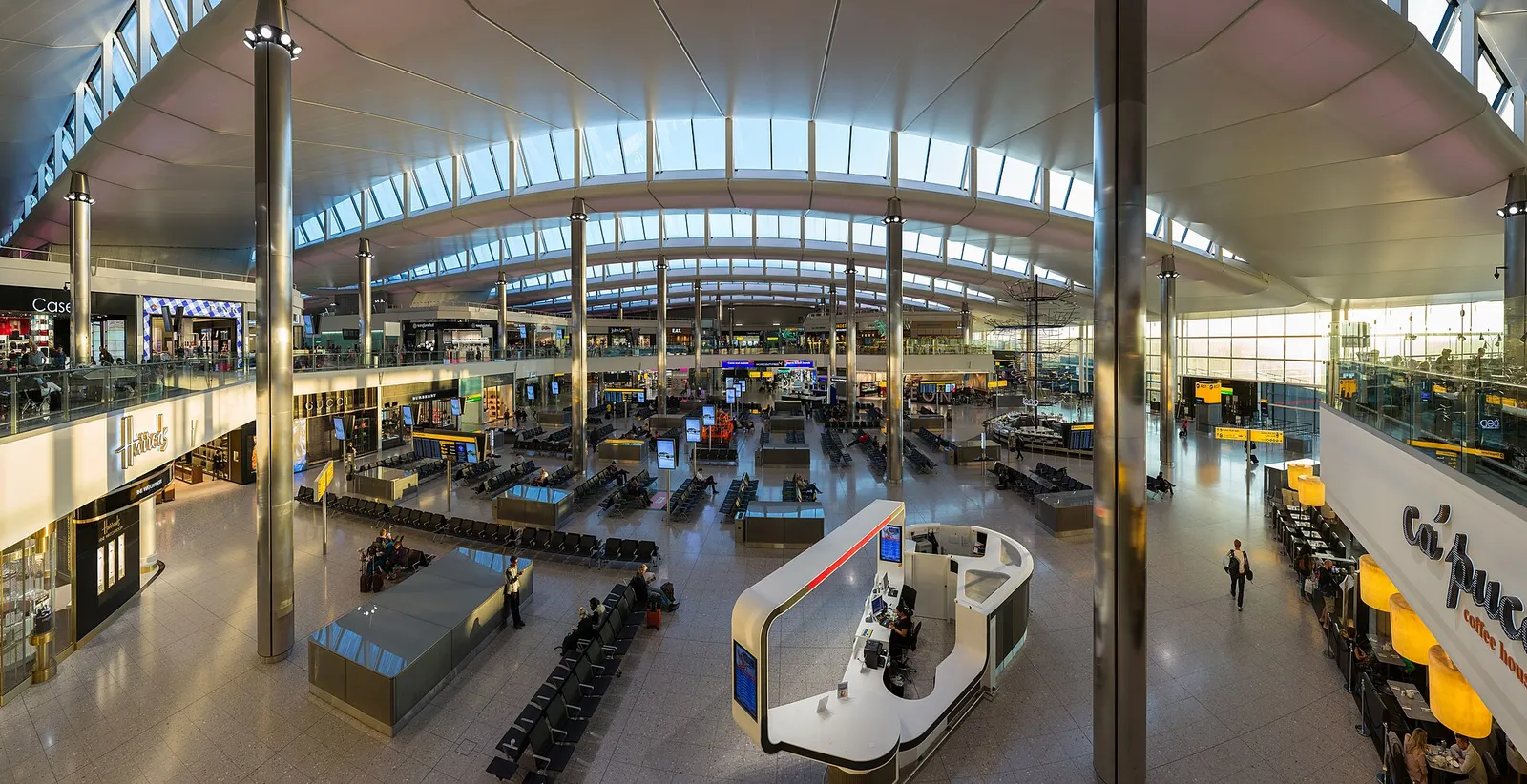
The spring oil shock didn't just show up in the inflation data. It landed on Heathrow's bottom line too.
The downgrade
Heathrow now expects to handle about 83.6 million passengers in 2026 — down 1.1% from last year's record 84.5 million — and warned that adjusted EBITDA (a measure of operating profit) will fall by £147 million versus 2025, Investing.com reported from the airport's investor update. That's also about £60 million worse than the guidance Heathrow gave in December, with aeronautical revenue — the per-passenger fees it charges airlines — set to come in roughly £49 million light. Through May, traffic was still up slightly (32.8 million passengers, +0.7%), PA reported, which means the damage is expected to land in the second half.
Why
The culprit is the spring conflict between the U.S. and Iran. Fighting around the Strait of Hormuz forced widespread airspace closures across the Middle East, sending Heathrow's traffic on regional routes sharply lower and pushing up jet-fuel costs as crude spiked — the same oil shock Boursel has tracked through the inflation data and the oil market. Heathrow flagged that the uncertainty spread "beyond the region to global travel demand," meaning even travelers with no Middle East connection grew cautious.
The knock-on for airlines
Carriers felt it too. IAG, the parent of British Airways, has warned that surging jet-fuel prices would push its annual fuel bill toward roughly €9 billion, up from about €7 billion, with hedges providing only partial cover. Across the industry, airlines rerouted around closed airspace — burning more fuel on longer paths — and trimmed schedules as costs rose.
Context and outlook
Heathrow is privately owned (its largest shareholders include the French fund Ardian and the sovereign wealth funds of Qatar and Saudi Arabia) and is in the middle of a long-running push for a third runway, with key UK regulatory decisions on cost recovery due this year — a case the traffic downturn complicates. There is, however, a potential floor: the U.S. and Iran reached an initial deal in mid-June to halt the war and reopen the strait, and oil has fallen back toward pre-conflict levels. The catch is timing — shipping lanes reopen faster than airspace, and airlines need weeks to reinstate suspended routes. Heathrow's update reflects conditions before the ceasefire fully took hold. Whether the easing translates into a summer-booking recovery, and whether that £147 million gap narrows, is the question now facing the airport and its carriers. We're reporting the company's guidance and the documented context, not forecasting the rebound.