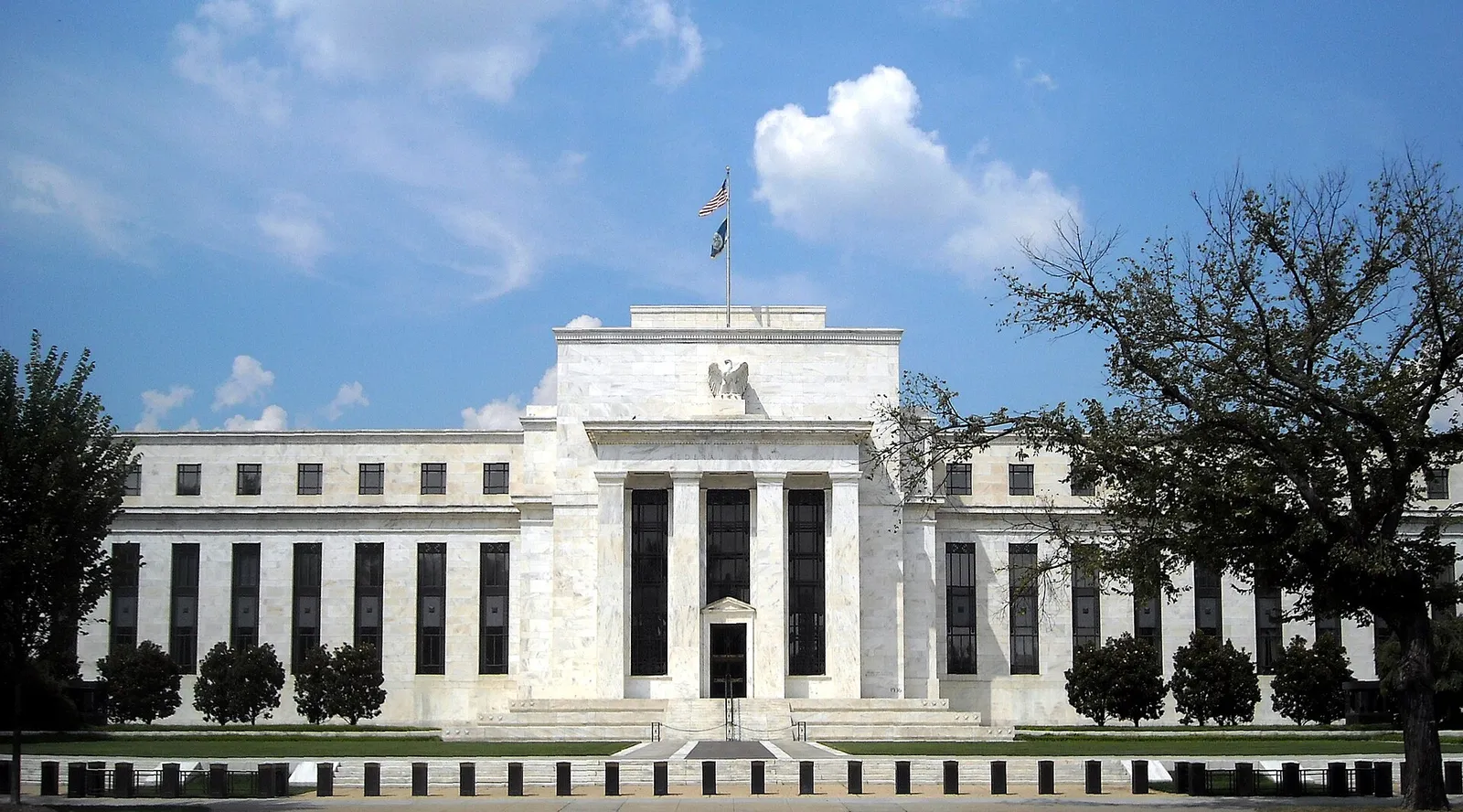
The Federal Reserve, the US central bank, owns an enormous portfolio of bonds. At its peak it was worth about $9 trillion; today it stands near $6.7 trillion, according to the Fed's own balance-sheet data. The Fed has spent the past few years trying to shrink it, and how far to go, and how fast, is one of the quieter but more consequential questions in finance. Get it wrong and the plumbing of the financial system can jam.
What the balance sheet is
Like any balance sheet, the Fed's has assets and liabilities. On the asset side sit mostly US government bonds (Treasuries) and mortgage-backed securities the Fed has bought over the years. On the liability side sits the money it created to buy them, chiefly physical cash and the "reserves" that commercial banks hold in accounts at the Fed. Those reserves are the lifeblood of the banking system: banks use them to settle payments with one another every day.
When the Fed buys bonds, it pays with newly created reserves, and the balance sheet grows. When it lets bonds go without replacing them, reserves drain out of the system, and the balance sheet shrinks. The size of the balance sheet, in other words, is really about how much cash is sloshing around the banking system.
Why it exploded
The portfolio grew in two big bursts, both through "quantitative easing," or QE, the practice of buying bonds to push money into the economy and hold down long-term interest rates. The first came after the 2008 financial crisis; the second, far larger, came in 2020, when the Fed bought trillions in bonds to steady markets frozen by the pandemic. By 2022 the balance sheet had roughly doubled from pre-pandemic levels to about $9 trillion.
Quantitative tightening, explained
Reversing QE is called "quantitative tightening," or QT, and the Fed has run it largely on autopilot. Rather than actively selling bonds, it simply lets a set amount mature each month and does not reinvest the proceeds. When a Treasury the Fed holds matures, the government repays it, the cash disappears from the system, and the balance sheet falls by that amount. The Fed caps how much it lets roll off each month and slowed that pace over time as the balance sheet came down, per Brookings' explainer of the process. That deliberate, gradual approach is the whole point: a controlled drain rather than a sudden dump.
The 2019 warning
Why not just shrink it aggressively? Because the Fed has learned that it does not know exactly how many reserves the banking system needs. In September 2019, during an earlier round of tightening, reserves fell lower than banks were comfortable with. Short-term borrowing rates that normally barely move suddenly spiked, and the Fed had to step back in and add money to calm the market. The episode taught policymakers that the level of "ample" reserves is a moving target, and that overshooting on the way down is dangerous.
The debate over the endpoint
That is why the language now is about stopping while reserves are still "ample," rather than squeezing the balance sheet as small as possible. Economists disagree on where the floor is. Some Fed researchers have estimated ample reserves at roughly 10% to 12% of GDP, which would put the balance sheet well below today's level, per analysis from the Federal Reserve Bank of St. Louis; others favor keeping a larger cushion to avoid another 2019-style scare. There is also a question of composition: the Fed has signaled it would like, over time, to tilt its holdings back toward Treasuries and away from mortgage bonds.
None of this is a prediction about interest rates, which are a separate lever. It is about how much cash the Fed leaves in the system once the shrinking is done. The lesson of the past few years is that the number is hard to pin down in advance, which is why the Fed is feeling its way down slowly rather than racing to a target. Boursel takes no view on where the balance sheet should finally settle.