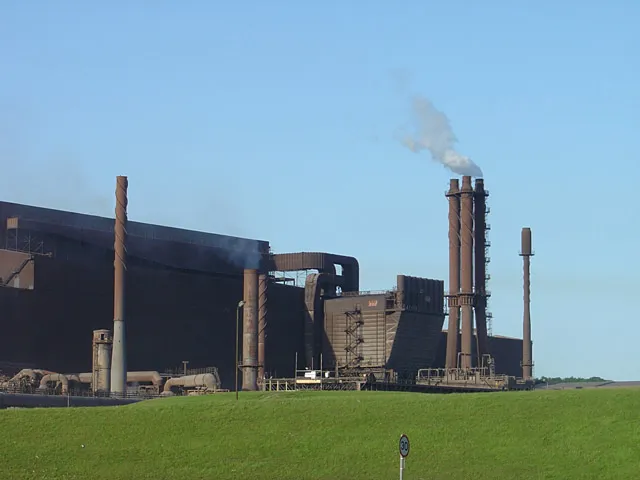
The United Kingdom has taken British Steel into full public ownership, ending the private ownership of the Scunthorpe works and putting the country's last blast furnaces in government hands. The step, completed after legislation cleared Parliament, secures the site that is the only place in Britain still able to make steel from scratch, and with it roughly 2,700 jobs.
Why Scunthorpe matters
There are two broad ways to make steel. One, "primary" steelmaking, uses blast furnaces to turn iron ore and coke into new steel; the other, "secondary" production, melts down scrap in electric arc furnaces. Scunthorpe's blast furnaces are the last in the UK capable of primary steelmaking from raw materials, according to the House of Commons Library. Losing them would have left Britain as the only major economy unable to make its own virgin steel, dependent on imports for a material used in everything from railways and construction to defense.
That strategic argument, as much as the jobs, is what drove the government to act. Steel made from scratch is used where quality and security of supply matter most, and ministers judged that letting the furnaces close, a step that is effectively irreversible once they cool and the linings are lost, was too great a risk.
How Britain got here
The plant had been owned by China's Jingye Group, which bought British Steel in 2020. Relations between the company and the government deteriorated over the future of the loss-making Scunthorpe operation and the cost of keeping its aging blast furnaces running. Early in 2025, ministers feared Jingye would let the furnaces shut down within days.
To prevent that, Parliament passed emergency legislation, the Steel Industry (Special Measures) Act 2025, which gave the government powers to direct the company, keep the furnaces operating and secure the raw materials they needed. That law handed the state operational control without transferring ownership. Nationalization now completes the process, moving the company itself into public hands rather than leaving it under emergency direction indefinitely.
What nationalization means
Nationalization is the transfer of a private business into state ownership. In this case it makes the government responsible for British Steel's operations, its losses and the investment the plant needs, including any shift toward cleaner, less carbon-intensive steelmaking over time. It also raises unresolved questions about compensation to the former owner and the long-term cost to taxpayers of running a business that has been losing money.
The government has framed the takeover as a rescue rather than a permanent arrangement, leaving open the possibility of future private investment once the plant is stabilized. For now, the immediate effect is certainty: the furnaces stay lit, the workforce stays in place, and Britain keeps the ability to make its own steel. Whether that can be done at an acceptable cost, and put on a sustainable footing, is the harder question that public ownership now inherits. Boursel will follow how the government funds and restructures the business.