This is general information, not investment advice.
Every headline about a "rate decision" traces back to one committee and one overnight interest rate. Here's the machinery behind it.
What the Fed is
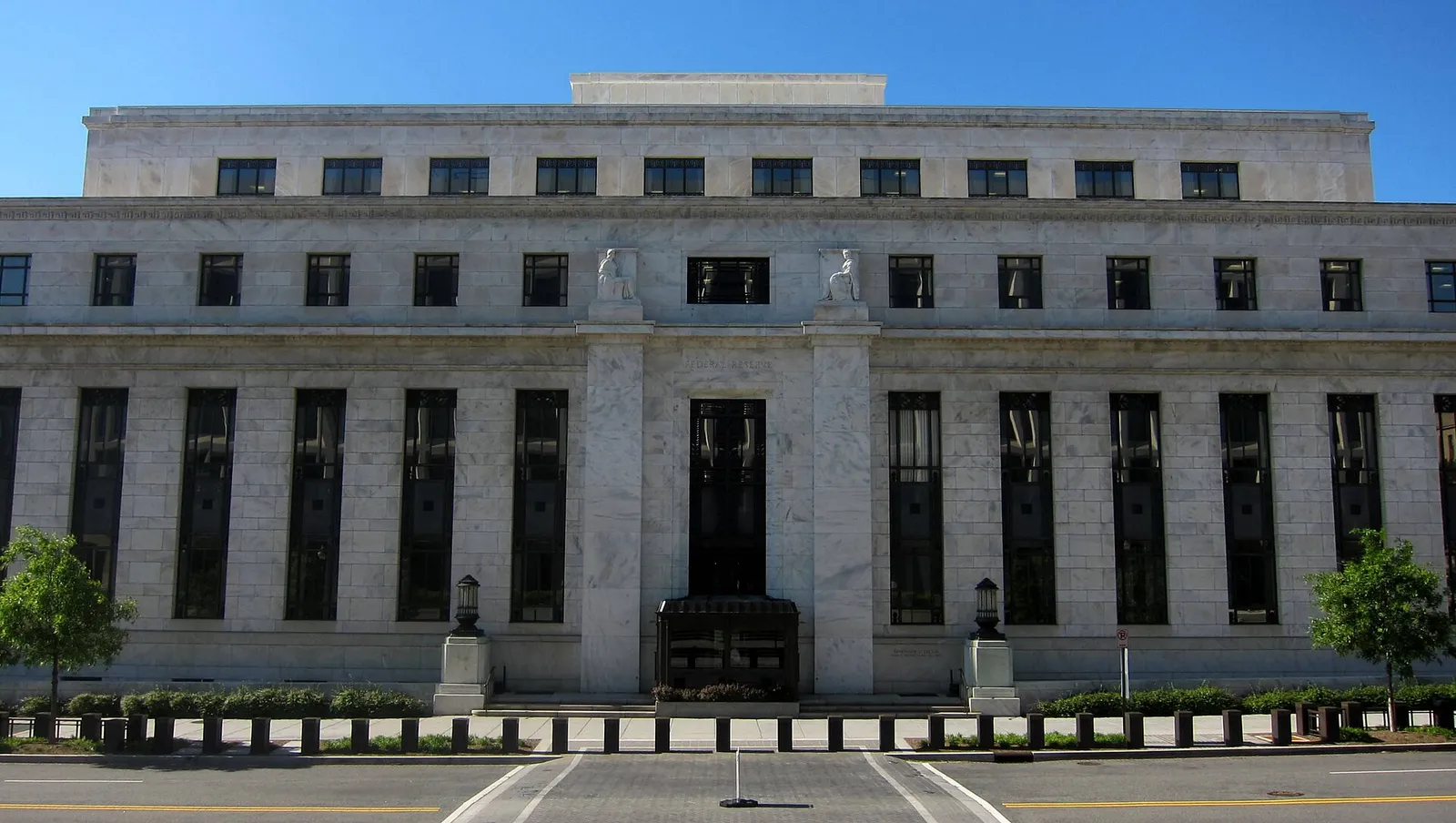
The Federal Reserve is the central bank of the United States, created by Congress in 1913. It supervises banks, guards financial stability and — most visibly — runs monetary policy: managing credit conditions to steer the economy. It's a system, not one office: a seven-member Board of Governors in Washington (appointed by the president, confirmed by the Senate to staggered 14-year terms) plus 12 regional Federal Reserve Banks.
The dual mandate
Congress gave the Fed a specific job — the dual mandate: maximum employment and stable prices (plus moderate long-term rates, which follow from the first two). On prices, the Fed has been precise: it targets 2% inflation, measured by the PCE price index — the same gauge whose recent hot readings have driven this month's market jitters. On employment, it doesn't fix a number but watches the labor market closely. (Federal Reserve)
Who decides: the FOMC
Rate decisions are made by the Federal Open Market Committee (FOMC), which has 12 voting members: the 7 governors, the New York Fed president (a permanent vote), and 4 of the other 11 regional presidents on a rotating basis. All 12 regional presidents join the debate; only the 12 members vote. The committee meets eight times a year, roughly every six weeks. (Federal Reserve)
The main lever: the federal funds rate
The FOMC's chief tool is the federal funds rate — the rate banks charge each other to borrow reserves overnight. The Fed doesn't decree one number; it sets a target range (say, 4.25–4.50%) and uses its own tools, chiefly the interest it pays on bank reserves, to keep the market rate inside that band. Few consumers ever touch this rate directly, but it's the fulcrum for nearly every other borrowing cost.
How a decision reaches your wallet
A rate change ripples outward: the prime rate (the benchmark for many consumer and business loans) typically sits about 3 points above the funds rate and moves with it; credit cards and home-equity lines reprice fast; mortgages track longer-term Treasury yields, which Fed policy shapes; business loans and bonds get pricier or cheaper, changing investment and hiring; and stock valuations shift as bonds become more or less competitive. The Fed acts ahead of the data because these effects work with "long and variable lags" — often 12–18 months before they fully show up in inflation or jobs.
Hawks, doves, and the bond toolkit
A hawk prioritizes fighting inflation and favors higher rates, even at the cost of slower growth; a dove prioritizes jobs and growth and favors lower rates. Members move along that spectrum as conditions change — the 2022–23 inflation fight was decisively hawkish, with rates rising from near zero to above 5% in roughly 16 months. When rates hit zero and more stimulus is needed, the Fed turns to quantitative easing (QE) — buying long-term bonds to push down longer rates — and reverses it with quantitative tightening (QT).
Why independence matters
Because governors serve long terms and can't be fired over policy, the Fed can make unpopular calls — like hiking hard to break inflation — without bending to the electoral cycle. Economists widely see that independence as essential to credible inflation control; Congress sets the mandate, but day-to-day decisions are insulated by design.
What to watch
- FOMC meeting dates (published a year ahead; decisions land at 2 p.m. ET).
- The statement — even a one-word change is parsed for shifts in tone.
- The "dot plot" — quarterly projections showing where each official expects rates to go (individual estimates, not promises).
- The chair's press conference — often more revealing than the statement.
- PCE inflation — the direct input to the Fed's price-stability target, and the figure markets watch most closely between meetings.