For most of the past century, petroleum has been the workhorse of the American economy — fuel for cars, trucks, planes and much of industry. That long reign is now projected to end, and to be ended by natural gas.
The forecast
The U.S. Energy Information Administration (EIA), the Energy Department's statistical arm, projects in its Annual Energy Outlook that natural gas will surpass petroleum as the nation's leading source of primary energy around 2030, in its long-term modeling. It would be the first change at the top of the U.S. energy table since petroleum overtook coal in the mid-20th century. (The exact crossover year and the precise 2030 shares are projections and could move by a year or two.)
What "primary energy" means
Primary energy is the total raw energy a country consumes before it's converted into electricity or refined fuel — the gasoline in a car, the gas burned in a power plant, the oil feeding a chemical works. It's the broadest way to rank energy sources because it captures the whole system, not just the power grid.
On that measure, the two fuels are already nearly tied. Petroleum supplied about 38% of U.S. primary energy in 2024 and natural gas about 36%, out of roughly 94 quadrillion BTUs, per EIA data. Coal, nuclear and renewables each sat near 8–9%. A shift of a couple of percentage points is all that separates first from second.
Why gas is pulling ahead
Several forces are converging. The most talked-about is electricity demand. After years of near-flat consumption, U.S. power demand is climbing again — driven heavily by the build-out of AI and cloud data centers, whose enormous, around-the-clock electricity needs the EIA has modeled explicitly. Much of that new load is expected to be met by gas-fired power, which can run continuously to complement intermittent wind and solar.
The supply side makes it possible. The shale boom, centered on basins like the Permian in Texas and New Mexico, has produced abundant, cheap gas — much of it a byproduct of oil drilling. Natural gas made up 38% of total U.S. energy production in 2025, more than any other source, the EIA reports. Meanwhile coal keeps retreating, and the gas that replaces it deepens gas's share — while petroleum demand is expected to plateau as vehicles grow more efficient and electrify.
What it means for markets
The consequences run well beyond a change in rankings:
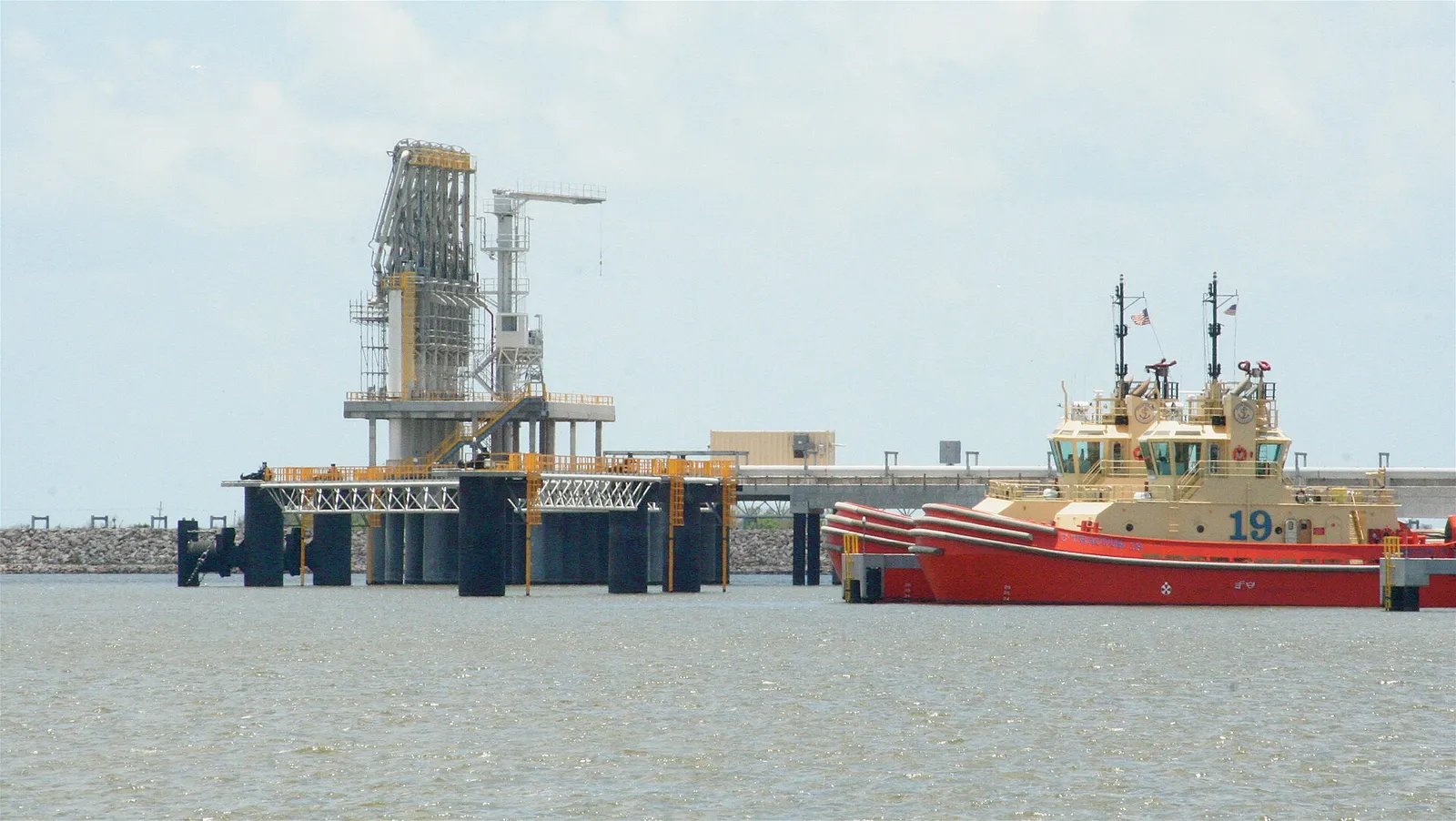
- LNG exports. The U.S. is already a top exporter of liquefied natural gas, and the EIA sees exports rising from about 15 billion cubic feet a day in 2025 to more than 30 over the coming decades — tying domestic gas prices more tightly to demand in Europe and Asia, and adding to Washington's geopolitical leverage.
- Utilities and the grid. Power companies are the pivotal buyers, planning a wave of new gas plants to serve data centers and electrification even as older ones retire — raising questions about reliability, capital spending and costs passed to ratepayers.
- Prices. Many analysts expect firmer gas prices as power and export demand absorb supply, moving away from the ultra-cheap gas of recent years. That is a forecast, not a guarantee.
- Emissions. Gas emits roughly half the carbon dioxide of coal per unit of electricity, so the coal-to-gas switch has cut power-sector emissions. But gas is still a fossil fuel, and methane leaks are a potent climate concern; new infrastructure built to last decades could lock in emissions.
Why it matters
For energy markets, a gas-led system reshapes where investment flows — toward pipelines, gas turbines and export terminals — and ties the U.S. more tightly to global gas trade. For the AI economy, it underlines that the data-center boom is, at bottom, an energy story: the compute needs power, and in America that power increasingly comes from gas. And for the climate debate, the shift is double-edged — cleaner than coal, but a long-lived fossil commitment nonetheless. Boursel makes no price forecast; the takeaway is that America is quietly changing its primary fuel, and the direction is unmistakable — whether the crossover lands exactly in 2030 or a little later, the country increasingly runs on gas.