Oil refining has quietly been the best equity trade of 2026. The S&P 500 sub-industry group that contains Marathon Petroleum, Valero and Phillips 66 has risen about 104% this year, with the large independents individually up more than 80%, against a broad market up roughly 11%.
That is a strange result in a year when crude has been expensive, because the intuition most people carry is that oil companies do well when oil goes up and refiners are oil companies. Refiners are not, quite, and the distinction is the story.
What a crack spread is
A refiner buys crude and sells gasoline, diesel and jet fuel. Its margin is the difference between the two, and because crude is one input and the products are several, the industry quotes a standard proxy: the 3-2-1 crack spread, the theoretical margin on turning three barrels of crude into two of gasoline and one of distillate.
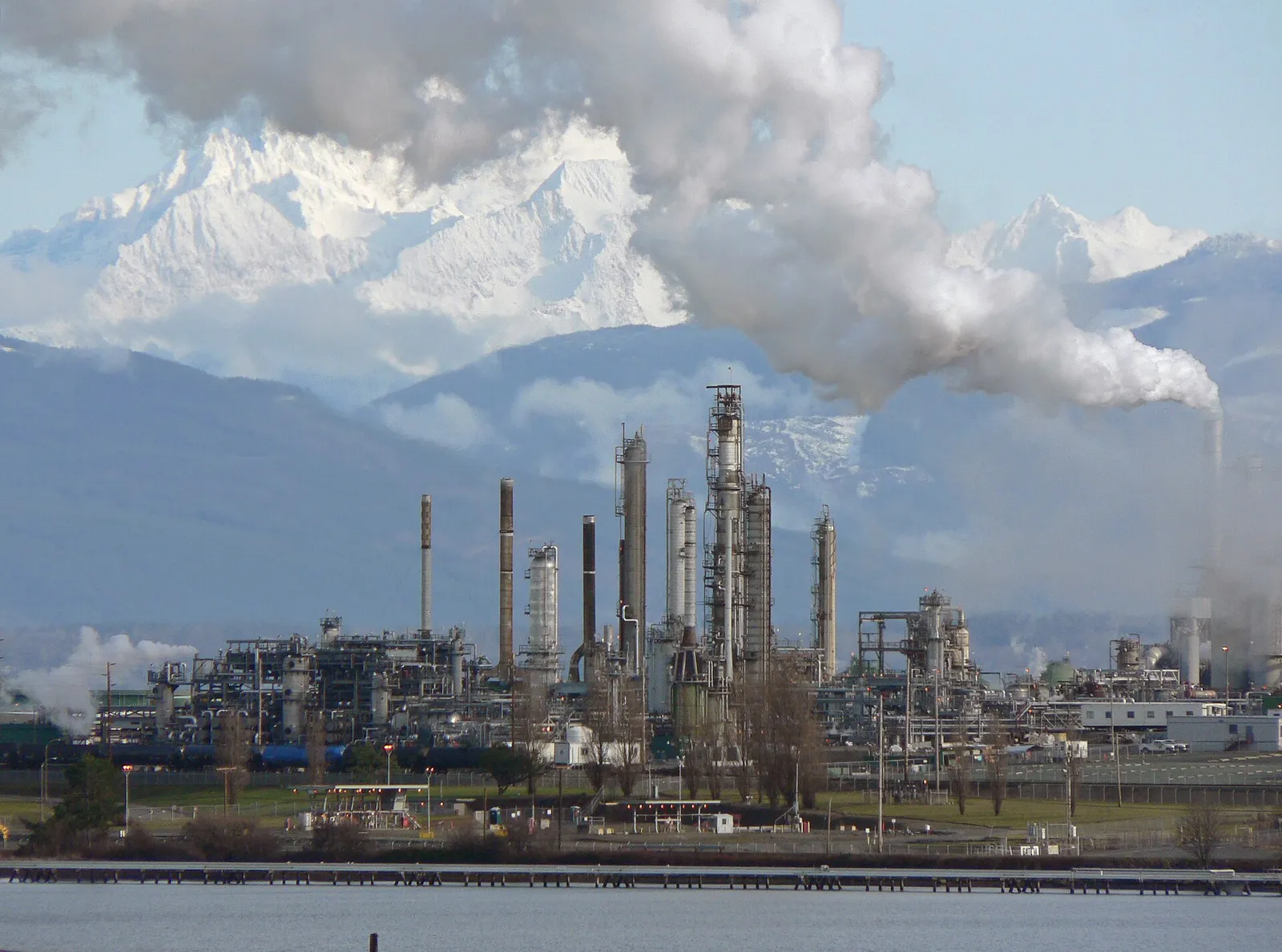
The word comes from the process. Crude is "cracked" into lighter products in the refinery.
The important consequence is that a refiner is indifferent to the level of crude and sensitive to the gap. Expensive crude is fine if products are more expensive still. Cheap crude is bad if products are cheaper. A refiner is a manufacturer whose fortunes turn on the spread between raw material and finished goods, and it happens to be in the oil business rather than being an oil business.
Where the spread is
Near $59 a barrel, roughly triple where it began the year, and far above anything typical of the 2010s.
Diesel is where the tightness is most acute. Distillate stocks fell again in the week to August 14, to about 105.6 million barrels, roughly 13% below the five-year average for the time of year, on the Energy Information Administration's weekly data. US refineries ran at 97.2% of operable capacity in the same week, which is close to the physical maximum: at those rates there is no spare capacity to answer a shortage, only maintenance that has to happen eventually.
The earnings have followed. The largest independent refiners reported sharply higher profits for the second quarter and stepped up buybacks and dividends, which is what a cyclical business does when it does not believe the cycle will last long enough to justify new plant.
Why the spread is this wide
Two things, and they are related.
The first is structural. Refining capacity in the United States and Europe has been closed or converted over the past decade faster than it has been added, while distillate demand from freight, farming and aviation has not fallen. That leaves the system with a thin cushion in any month when something goes wrong.
The second is the pressure campaign on Iran, which has kept Brent above $90 and disrupted the flow of crude and products through a region that supplies a large share of both. Boursel reported this week that oil rose for a fifth straight session as the US threatened measures against Iran's trading partners, and that the ceasefire lapsed without a replacement.
The risk is the same as the reason
This is the part the rally's own logic makes uncomfortable. A margin created by geopolitical disruption reverses when the disruption does, and it can reverse faster than it arrived, because the underlying refining capacity does not change: only the premium on getting product to where it is needed.
The historical record is unkind here. On CNBC's account of the sub-industry index, the group is now around 41% above its 150-day moving average, a stretch reached only five times in the index's history, after each of which the six-month forward return was negative, averaging about minus 10%.
Five observations is a thin sample and not a forecast. It is a description of what happens to a cyclical stock when it runs a long way above its own trend on a margin nobody expects to persist.
The two things to watch are therefore not the share prices. They are the crack spread itself, published weekly and visible to anyone, and the state of the US-Iran confrontation. A durable ceasefire would compress the first through the second, and the equities would follow. This is reporting on the mechanics of the trade, not advice on whether to be in it.