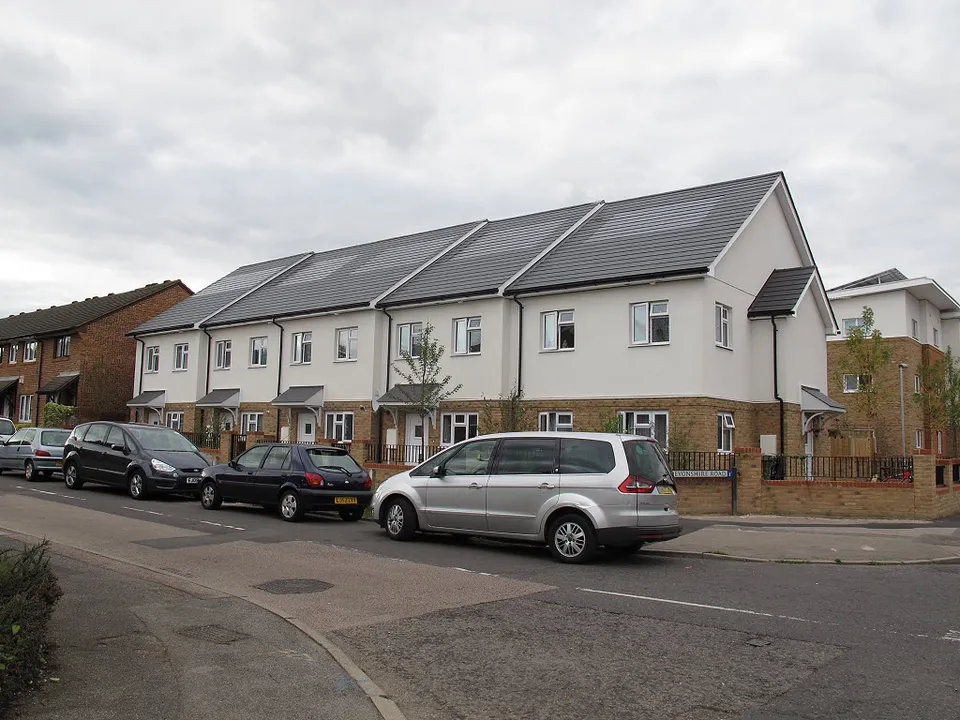
Tesla has stopped producing the Solar Roof, telling third-party installers it will no longer supply the tiles. The product has been removed from the energy section of Tesla's website, which now lists solar panels, Powerwall and Megapack.
Existing owners keep their coverage. Tesla warranted the roof for 25 years against defects, on materials and on weatherproofing, and those obligations survive the product. What ends is manufacture and new orders.
What it was, and when it appeared
Musk introduced the Solar Roof in October 2016 at a staged demonstration on a Hollywood back lot, showing tiles that generated power while looking like ordinary roofing. Weeks later Tesla shareholders approved the acquisition of SolarCity, announced at about $2.6 billion in stock and completed in November 2016 at roughly $2.1 billion as Tesla's share price moved.
The timing was not incidental, and it became the centre of years of litigation. SolarCity was a heavily indebted installer run by Musk's cousins, with Musk as its chairman and largest shareholder, and shareholders sued over whether Tesla had overpaid to rescue a company in which its own chief executive had an interest. Other directors settled for $60 million. Musk went to trial and won in Delaware in 2022.
The gap between the target and the outcome
Musk told investors the line would reach 1,000 roofs a week by the end of 2019. Industry tracking put Tesla's best run at roughly 23 a week, and total US installations in the low thousands by 2023. Tesla stopped disclosing Solar Roof figures altogether in early 2024.
The reasons are not mysterious. A solar shingle has to be a roof and a power plant at once, which means it competes with asphalt on cost and with panels on watts, and loses to each on its own terms. Installing one requires a crew that can both roof a house and wire an array, a combination that is scarce and expensive. And over the same decade the alternative got radically cheaper: conventional panels bolted to an existing roof kept falling in price per watt while the shingle's cost structure did not move.
That is the ordinary answer to why the product failed, and it was visible early. The interesting question is why it survived a decade after it stopped scaling, and the answer is probably that it had become load-bearing for a story about Tesla as an energy company rather than a car company.
Where Tesla's energy business actually is
The irony is that the energy business is working, just not the part that got the launch event. Tesla deployed 13.5 gigawatt-hours of energy storage in the second quarter, up about 40% on a year earlier and its second-best quarter on record.
Storage is a different business from residential solar in every respect that matters. It sells to utilities and data centre operators rather than homeowners, in units of megawatt-hours rather than square feet, and it does not require a crew on anyone's roof. Segment revenue has been growing, though margins have compressed as competition and tariffs bite.
Read that way, discontinuing the Solar Roof is not a retreat from energy. It is Tesla conceding that the consumer half of the SolarCity thesis did not work, ten years after paying $2.1 billion for it, while the industrial half it did not buy has become the growth engine.