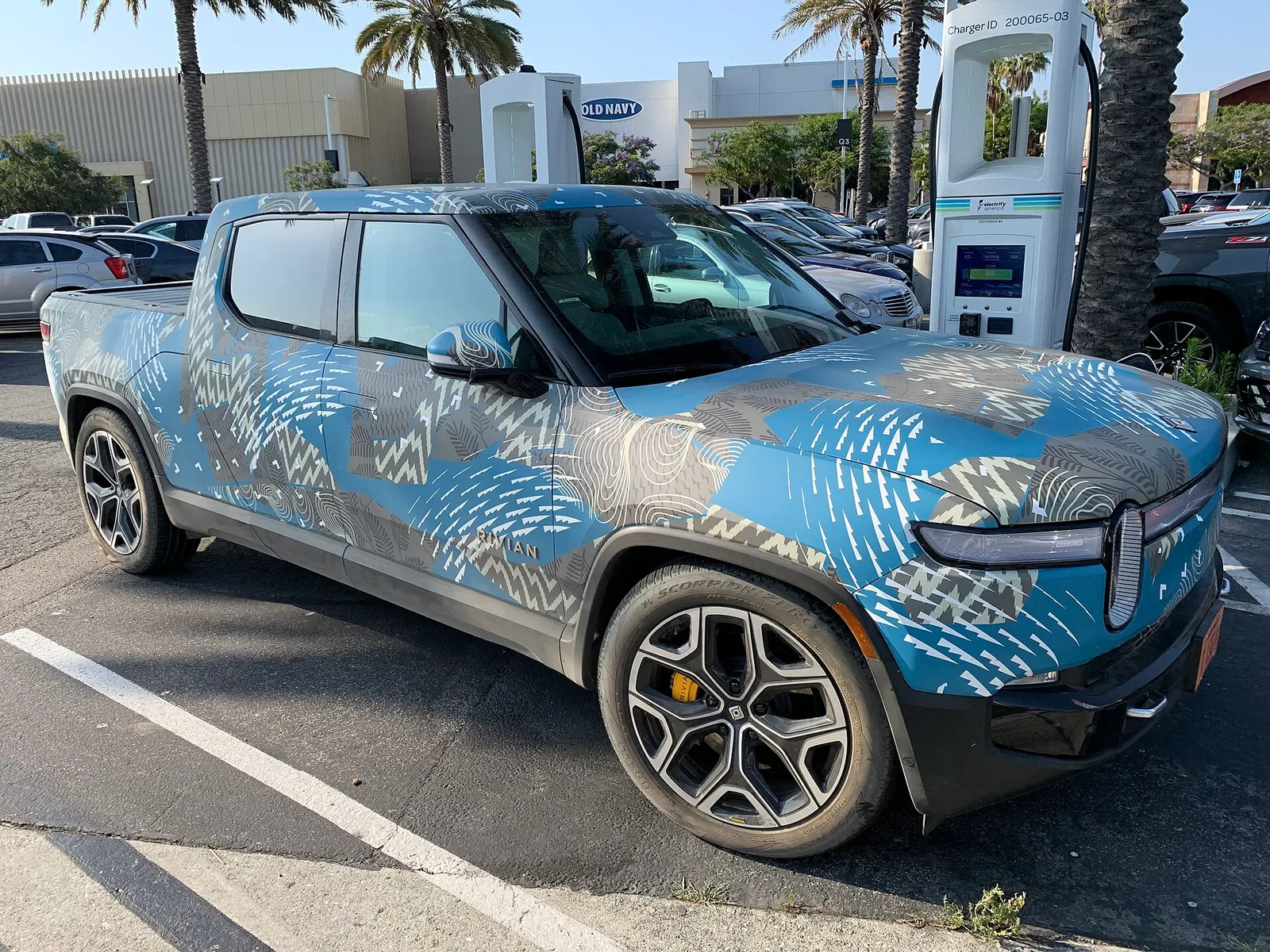
This is reporting and analysis, not investment advice. The CEO's strategic views are his own.
As US carmakers trim their EV ambitions, the boss of one of the few pure-play electric startups is making the opposite bet — loudly.
The argument
In a Guardian interview, Rivian CEO RJ Scaringe framed the moment as a "fork in the road": decisions carmakers make now about EV investment will compound for a decade, deciding who stays competitive. His core claim — echoed in other recent interviews — is that slowing US EV sales reflect a supply problem (too few compelling, affordable models), not proof that buyers don't want electric cars. He has called the "Americans don't want EVs" line "a fairly lazy explanation," arguing the end state is "nearly 100% electric — it's just a question of when, not if," and warning that automakers without modern software-defined architectures will struggle by the early 2030s.
Rivian's backers
Scaringe isn't arguing from the fringe. Rivian, founded in 2009 and public since 2021, has two heavyweight backers. Amazon holds roughly a 16% stake and ordered 100,000 electric delivery vans (due by 2030); its Rivian fleet topped 30,000 vans in 2025. Volkswagen committed up to $5.8 billion to a software/architecture joint venture launched in late 2024, with VW models expected to use the shared platform from around 2027 — a notable vote of confidence from a legacy giant that, as Boursel has reported, is itself cutting deeply.
The hard backdrop
The environment is genuinely tough. US EV sales fell about 4% in 2025, the first annual decline in years, after the $7,500 federal EV tax credit was eliminated and emissions rules eased. Legacy players responded by retrenching: GM took a $1.6 billion charge tied to revised EV plans, and Ford canceled its electric F-150 Lightning. Meanwhile China's BYD delivered 2.26 million battery-electric vehicles in 2025, overtaking Tesla's 1.64 million to become the world's biggest BEV seller — a reminder that the global race hasn't slowed even as the US one has.
Rivian's own numbers
Rivian remains loss-making but is inching forward: it reported roughly $1.3 billion in first-quarter 2026 revenue and a third straight quarter of positive gross profit (about $119 million), per company filings, while still guiding to a full-year adjusted-EBITDA loss of around $1.8–$2.1 billion. Its cheaper R2 SUV, priced near $45,000, entered production this year and is central to the volume story — a bill of materials roughly half that of its pricier R1 line.
Why it matters
Scaringe's case is really about national competitiveness: if US automakers pause EV and vehicle-software investment during this political cycle, they risk ceding leadership to Chinese rivals who haven't paused. The VW–Rivian tie-up reflects a judgment by at least two big players that the technology gap is wide enough to justify partnering rather than going it alone. The open question is whether weakened US incentives, a patchy charging network and political ambivalence compress the window in which American carmakers can build the scale and software to compete globally. We're reporting Scaringe's argument and the verifiable industry data, not endorsing a forecast.