One of the biggest names in the AI supply chain has just pulled off one of the biggest stock sales in history. SK Hynix, the South Korean memory-chip giant, raised about $26.5 billion in a US share offering priced at $149 per share, Bloomberg reported, the largest listing ever by a foreign company on a US exchange. The stock is set to begin trading on Nasdaq under the ticker SKHY.
What the deal is
A quick translation. SK Hynix sold "American depositary shares", or ADSs, a common way for a foreign company to list in the US: shares in the overseas company are bundled into certificates that trade on a US exchange, letting American investors buy them easily in dollars. The company sold 177.9 million of them at $149 apiece, Bloomberg reported.
The total, roughly $26.5 billion, is enormous: it edges past Alibaba's 2014 US IPO to become the largest US listing by a foreign company on record, the BBC reported. It is worth noting the deal priced below where SK Hynix first aimed; the company had earlier signaled a target closer to $29 billion, and the final, lower price reflects where demand settled, even though the sale was heavily oversubscribed.
Who SK Hynix is, and why it needs the money
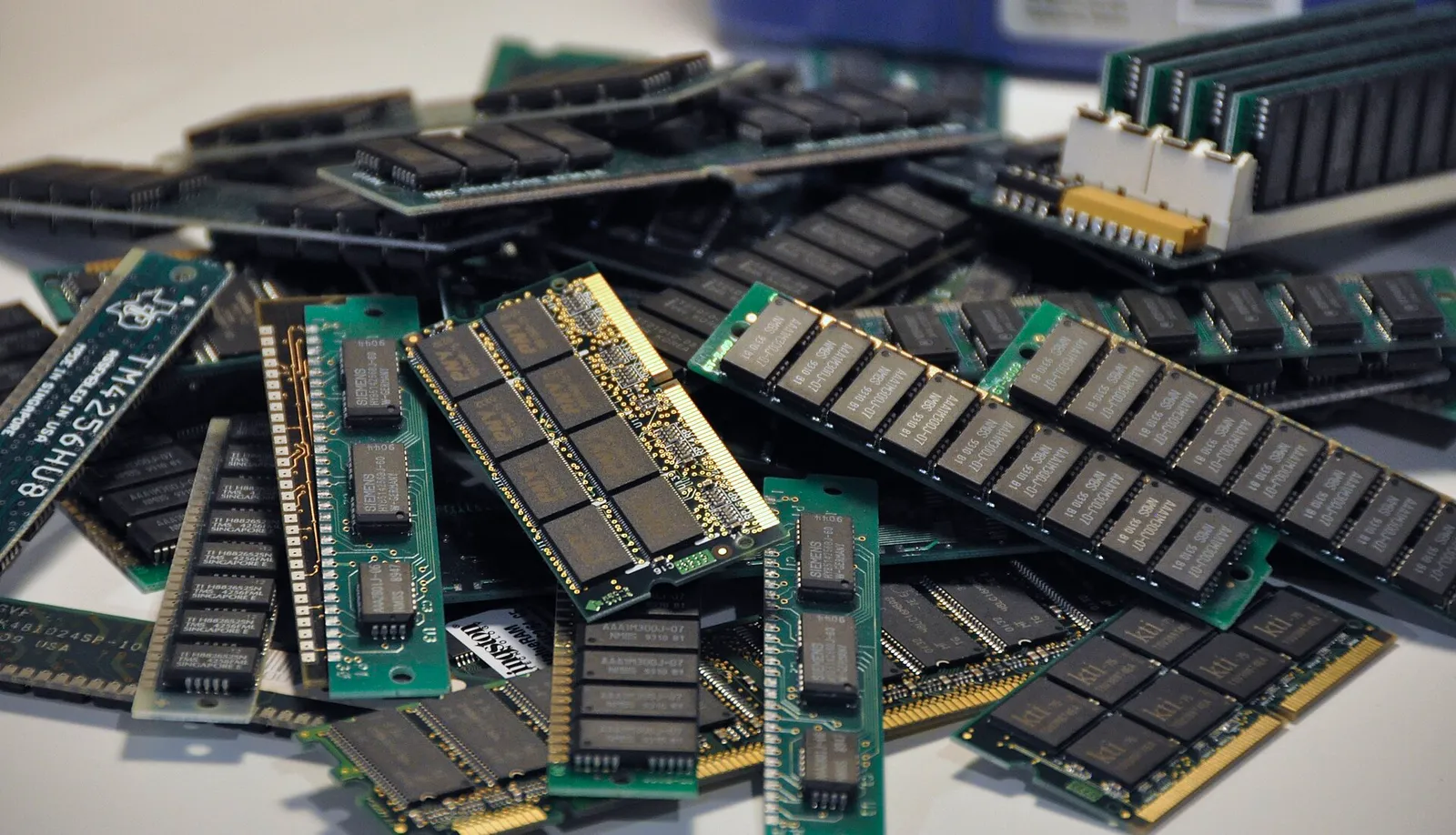
SK Hynix is the world's second-largest maker of memory chips, behind Samsung, and it dominates the hottest corner of that market: "high-bandwidth memory", or HBM, the specialized, densely stacked memory that AI systems need to move data fast enough to train and run large models. It is a key supplier to Nvidia, whose AI accelerators pair processors with stacks of exactly this kind of memory. Demand has surged as cloud giants race to build AI data centers.
That is the reason for the raise. Making advanced memory at scale is staggeringly capital-intensive. SK Hynix has said it will pour the proceeds into new chip factories in South Korea, including a huge new fab at its Yongin cluster and advanced packaging capacity, and into the extraordinarily expensive extreme-ultraviolet lithography machines, made by the Dutch firm ASML, needed to produce leading-edge chips. In short, the money funds the physical build-out behind the AI boom.
Why list in the US
Tapping US markets gives SK Hynix access to the world's deepest pool of capital and a much larger base of investors who can now buy its shares directly in dollars, rather than through South Korea's exchange. A US listing can also help narrow the valuation gap between Korean chipmakers and US-listed peers such as Micron, which have often traded at richer multiples. For a company that needs to raise tens of billions, being where the money is matters.
Why it matters
The sheer size of the offering is the story. Companies do not raise $26.5 billion in one go unless both they and their investors believe the spending it funds will pay off for years. The deal is another marker of how the AI build-out is mobilizing capital on a scale rarely seen, and of how central memory, not just the marquee processors, has become to it.
There is a note of caution beneath the enthusiasm. The memory-chip business is famously cyclical, prone to gluts and sharp downturns when demand cools, as it did as recently as 2023. Pouring tens of billions into new capacity is a bet that AI-driven demand will stay strong long enough to absorb it. That the deal priced below its initial target is a small reminder that even in a boom, investors have a limit. But at $26.5 billion and a record in the books, SK Hynix has secured the firepower to keep building. This article is informational and not investment advice.