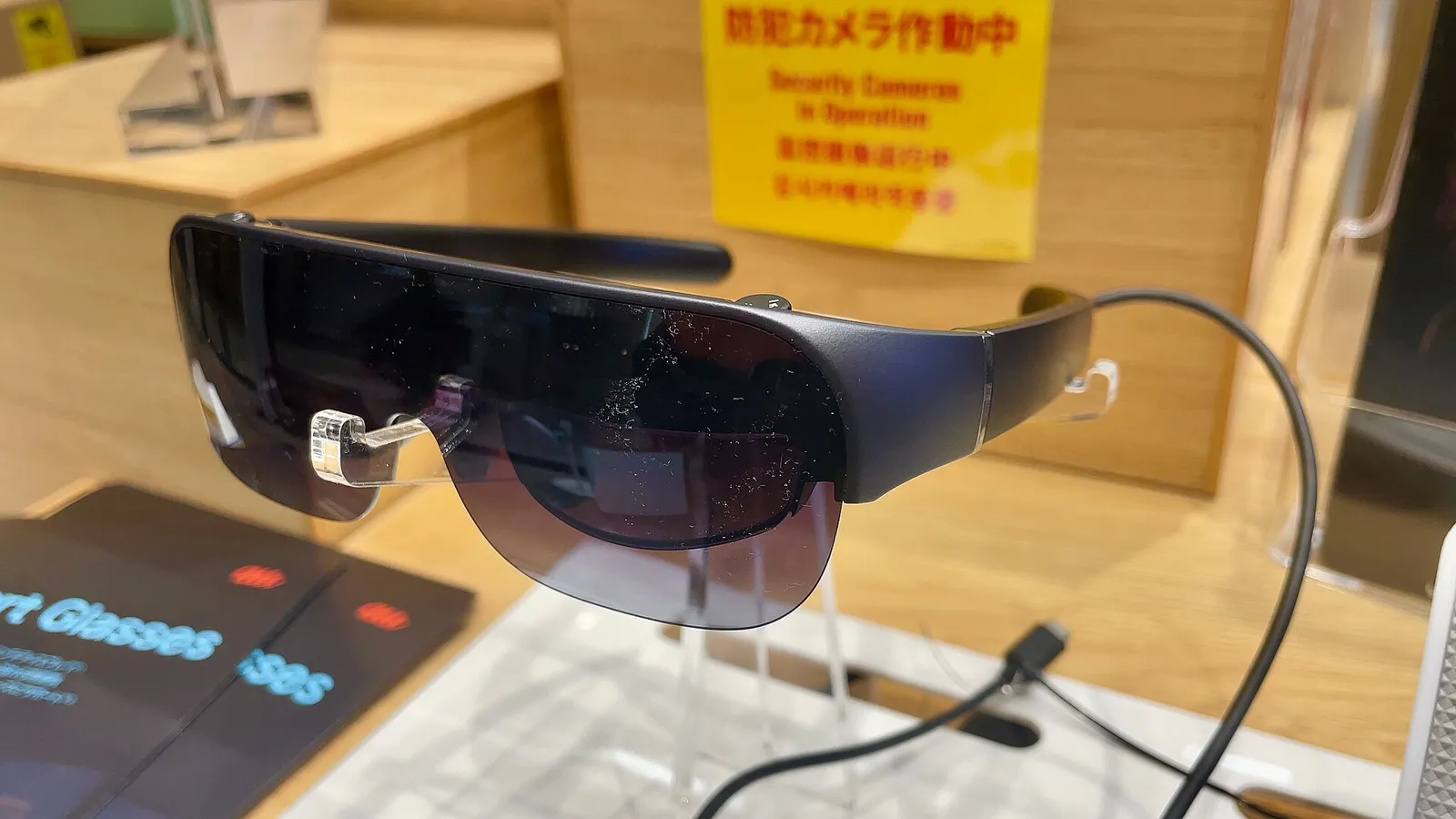
Snap has stepped into the consumer market for augmented-reality eyewear, unveiling glasses called Specs and pricing them at $2,195, with shipping expected this fall in the United States, the United Kingdom and France. The glasses were introduced at the Augmented World Expo in California.
What Specs are
Augmented reality, or AR, overlays digital images on the real world rather than replacing it — the opposite of a virtual-reality headset that blocks out your surroundings. Specs are designed as a standalone device: cameras, speakers, batteries, two Snapdragon processors and a full-color display are built into the frame, with no external puck or constant phone tether, according to Snap.
The company says the display spans a 51-degree field of view and renders 16 million colors — roughly the experience of a 24-inch monitor at arm's length. Battery life is rated at about four hours, or up to 20 with the bundled charging case, and prescription inserts are supported. Features include hand tracking, navigation, video and a "look-and-ask" AI that surfaces information about whatever the wearer is looking at; an indicator light shows when the cameras are recording.
A decade of trying
Snap has chased camera eyewear since 2016, when it sold the first Spectacles — a camera-only pair for capturing Snapchat clips — for about $130. The launch fizzled commercially; the company wrote off roughly $40 million in unsold inventory in 2017. Later generations followed, but none broke through, and from 2021 Snap pivoted to selling AR prototypes to developers rather than the mass market.
Specs are the first time Snap has put a true AR display in front of ordinary buyers. The company underscored the bet in January 2026 by spinning the hardware unit into a subsidiary, and it has invested more than $3.5 billion in the division to date, Yahoo Finance reported. Chief executive Evan Spiegel has framed Specs as a platform for a post-smartphone era, calling it "a totally new type of computer."
A crowded race
Specs land in a market that has filled up fast. Meta sells camera-and-AI Ray-Ban glasses starting around $350, and a display model, the Ray-Ban Display, for about $799 — though that uses a narrower, single-eye 20-degree screen meant for quick glances rather than an immersive overlay. Apple's Vision Pro, a full headset rather than slim glasses, starts at $3,500, and Google has signaled its own AI glasses are coming.
Snap is pitching a wider, more immersive display than Meta's current glasses, but at a much higher price. One analyst, Anshel Sag, called the $2,195 tag "still a bit on the high end," per Yahoo Finance.
The business case, and the risk
Snap is making this bet under pressure. Its core advertising business has struggled to grow consistently — trailing 12-month revenue was around $6.1 billion — and the company cut roughly 16% of its workforce earlier in the year. Specs are an attempt to build a new hardware platform rather than rely on ads alone.
The market was unmoved on the day: Snap shares fell 1.6% after the announcement. The central question is whether enough people will pay more than $2,000 — over 16 times the price of the original 2016 Spectacles — for AR glasses, a category that, despite years of investment across the industry, has yet to find a mass audience. Meta has poured billions into its own AR-and-VR effort with heavy losses; Snap is making a smaller but proportionally larger wager on the same uncertain bet.