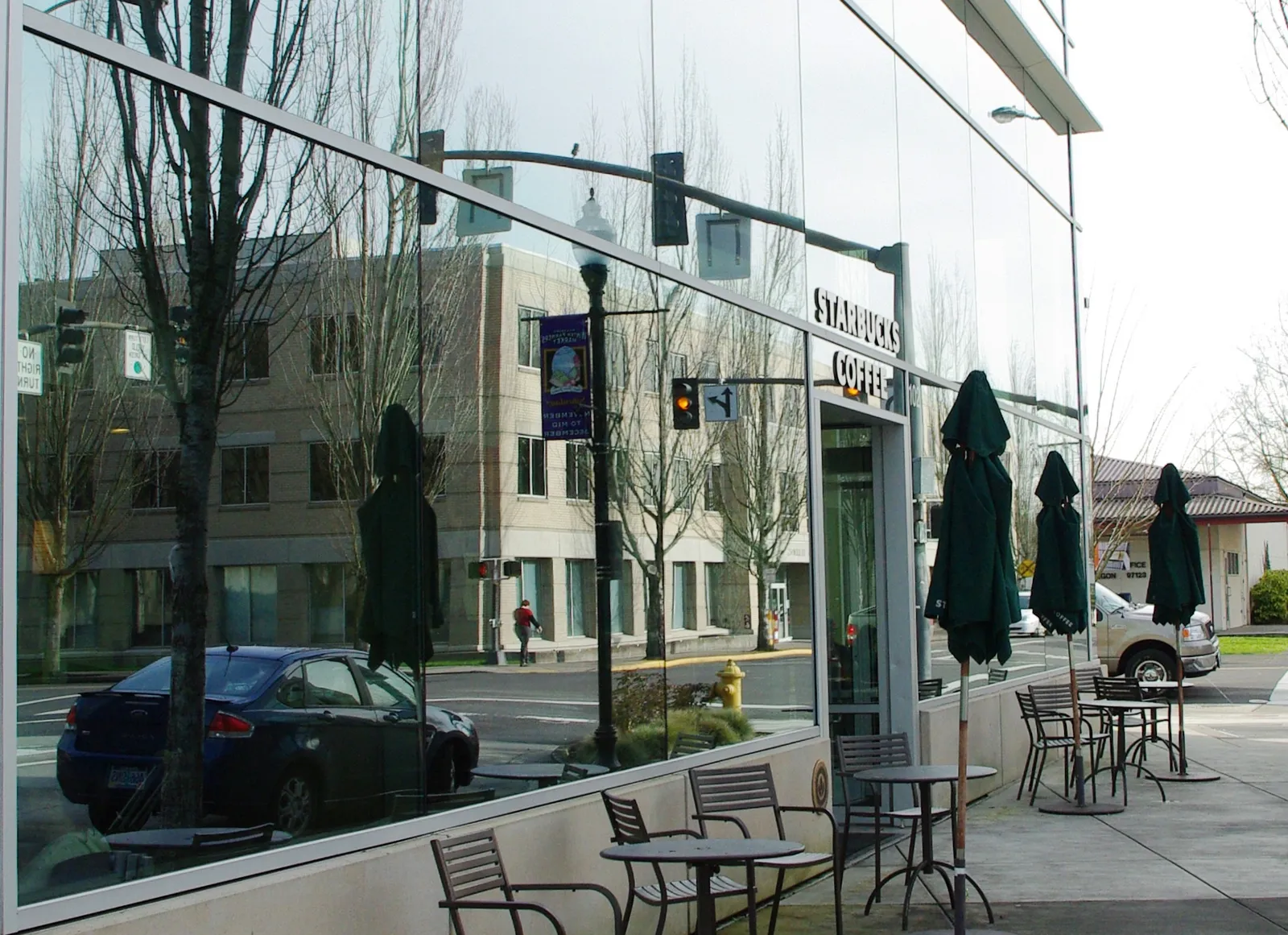
Starbucks is going small to compete. Chief executive Brian Niccol, speaking about the chain's expansion plans, laid out a strategy built on much smaller stores and faster service to take on the drive-thru chains eating into its turf, Yahoo Finance reported.
The plan: shrink the box, speed the line
The centerpiece is a new, compact store format. Niccol said Starbucks can now "get on a 0.5 acre" lot and build locations as small as "600, 800 square feet" — roughly half the size of a standard café — while still offering full service. He framed it as a way to multiply the company's runway: "We've got clear line of sight on about 5,000" new sites, he said, adding that with the small-format capability "you can quickly see how that 5,000 becomes 10,000."
The other half is speed. A core operational goal of Niccol's turnaround is throughput — how many orders a store completes per hour — with a target of four minutes or less for the average order. Starbucks has said a large majority of its U.S. company-run cafes are now hitting that mark, helped by an order-sequencing system and added staffing.
Though Niccol did not name them, the targets are clear: drive-thru-first chains like Dutch Bros and 7 Brew, which have expanded rapidly across suburban America on smaller footprints and quick service.
Why Starbucks needs it
Niccol took over in September 2024 from Chipotle, inheriting a chain in a slump: U.S. same-store sales — the change in revenue at locations open at least a year, which strips out the effect of new openings — had been falling, with customer traffic down sharply. His "Back to Starbucks" plan has leaned on restoring the coffeehouse feel: condiment bars, ceramic mugs, comfortable seating and free refills.
He has cast the fight in terms of experience, not just price. "What defines Starbucks is going to be a community," Niccol said. "It's going to be the barista customer experience, and it's going to be this idea of craft and customization."
The threat is real and growing
Dutch Bros is not standing still. The chain ran 1,177 locations across 25 states as of the end of March 2026 and counts more than 15 million loyalty members, per Yahoo Finance. Industry reports put its 2025 revenue around $1.64 billion, up nearly 28% from a year earlier, with plans to keep opening at a brisk pace. 7 Brew, another drive-thru concept, has topped 750 locations. Their model — cheap real estate, fast lines, heavy app engagement — is exactly what Starbucks' small-format push is meant to counter.
The numbers are turning
The turnaround is showing up in results. In its fiscal second quarter (ended March 2026), Starbucks reported U.S. comparable sales up 7.1%, with revenue of about $9.5 billion, up 9% from a year earlier, and net earnings of roughly $511 million, according to Fortune. Niccol said the gains spanned income levels: "When you offer experiences that feel unique and differentiated — a touch of luxury — it resonates across all income brackets."
What it still has to prove
The small-store rollout is early, and Starbucks has not detailed a construction timeline or budget for it. The company also still carries a far larger store base and cost structure than its nimble rivals — the very thing the compact format is meant to address but hasn't yet at scale. And weaker afternoon traffic, plus coffee-cost and tariff pressures, remain acknowledged headwinds. For now, though, the chain has done something it hadn't in two years: put up growth, and a credible plan to defend it.