When we reported July's European electric vehicle registrations earlier tonight, we said we would not explain the pattern because the release did not, and that accounts confidently attributing it to a single cause were usually filling a gap with assumption.
A second account has since appeared with named sources, and it points at three things. One of them is a war we have been covering separately for months.
Fuel
European electric sales accelerated after the Iran war began in February, which pushed prices up at the pump.
We have followed the oil side of that story continuously, through Brent at $94 being a diesel problem before it is an oil problem and the closure of the Strait of Hormuz. What we had not connected to it was the vehicle registration data, and the link is more direct than the usual chain from a geopolitical event to a consumer decision.
Adam Wood, Renault's UK managing director, put the mechanism in plain terms: "People are looking for ways to protect themselves from volatility in fuel prices and EVs are a great way to do that." The word doing the work there is volatility rather than price. An electric car does not necessarily cost less to run at any given moment. It moves the household's energy exposure from a globally priced commodity to a domestically regulated one, which is a different risk rather than simply a smaller bill.
The enquiry data supports the timing. The online marketplace OLX reported jumps in electric vehicle enquiries after the war began, of 84 percent in France, 59 percent in Romania, 30 percent in Portugal and 19 percent in Poland. A Carwow poll found 62 percent of respondents said switching to electric was the best long-term response to high fuel costs.
Those are enquiries and survey answers rather than purchases, and they should be treated as a measure of attention, not of demand.
Subsidy
France is the clearest case, and it is the one that most directly answers the question our earlier piece left open.
France reached 35 percent electric share in July against 17 percent a year earlier, roughly doubling, and 29 percent across the year to July. The account attributes this to a social leasing programme aimed at lower-income buyers. Marie-Laure Nivot of AAA DATA said the scheme "creates an environment that accelerates the transition."
Set that beside Italy, which fell from 10.1 percent to 5.9 percent in a single month when an incentive expired. Two large European economies, one adding a targeted subsidy and one removing an incentive, moving in opposite directions by similar magnitudes within the same year. That is about as clean a demonstration of policy sensitivity as this kind of data produces.
Price
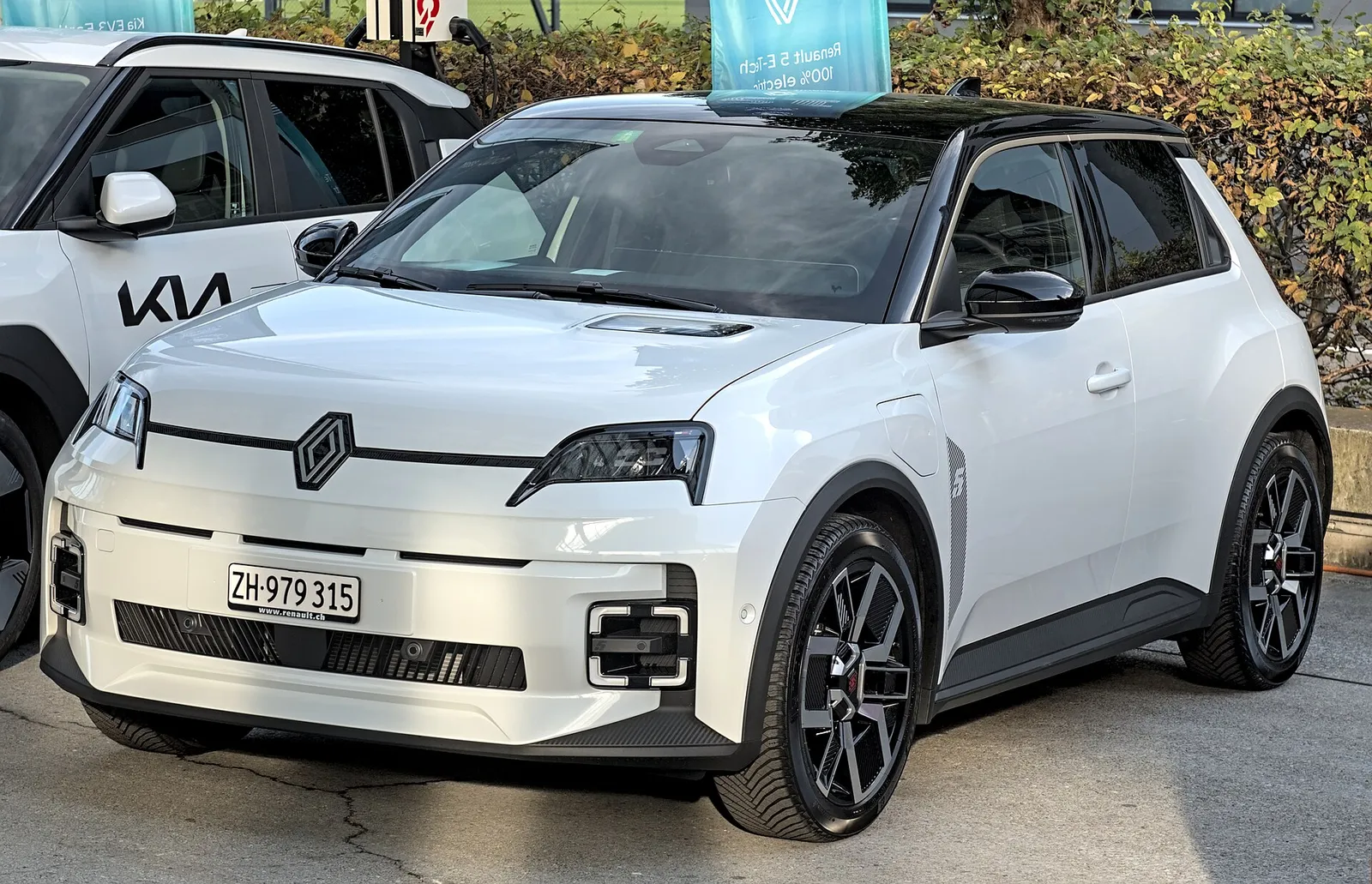
The third factor is the arrival of cheaper cars. The Renault 5 was Britain's best-selling electric car in July with a range of up to 250 miles, and the Renault Twingo is launching at under 20,000 pounds, about $26,984, before any subsidy.
A caution about this section, and it is a real one. The named model examples, the UK order data and the executive quote all come from a single manufacturer. Renault reports that electric cars were 50 percent of its UK orders in July against 10 percent two years ago, which is a striking number and also a number about Renault rather than about the market. A company with well-timed cheap electric models has an interest in the affordability explanation being the dominant one.
That does not make it wrong. It means the weight of evidence for the price factor is thinner than for the other two, and it rests disproportionately on one company's access.
The wider figures
For context on scale, the same account puts EU electric sales up 40.5 percent in the first half of 2026 against the first half of 2025, at more than 1.2 million cars, or 20.7 percent of all sales. July's figure across 16 markets was 25.7 percent.
Note that the half-year share of 20.7 percent and the July share of 25.7 percent are not measuring identical groups of countries, so the gap between them is not a clean measure of acceleration within the year.
What this changes
Our earlier piece said the Denmark-to-Poland spread could not be explained from the data available. It still cannot be explained in full, and nothing here accounts for Denmark at 80 percent or Poland at 4.
What has changed is that the year-over-year acceleration now has named causes attached to it by people who are in a position to observe them, and one of those causes is an oil shock that our own coverage has been tracking from the other end. That is worth stating, and so is the fact that two of the three explanations come with a commercial interest attached.