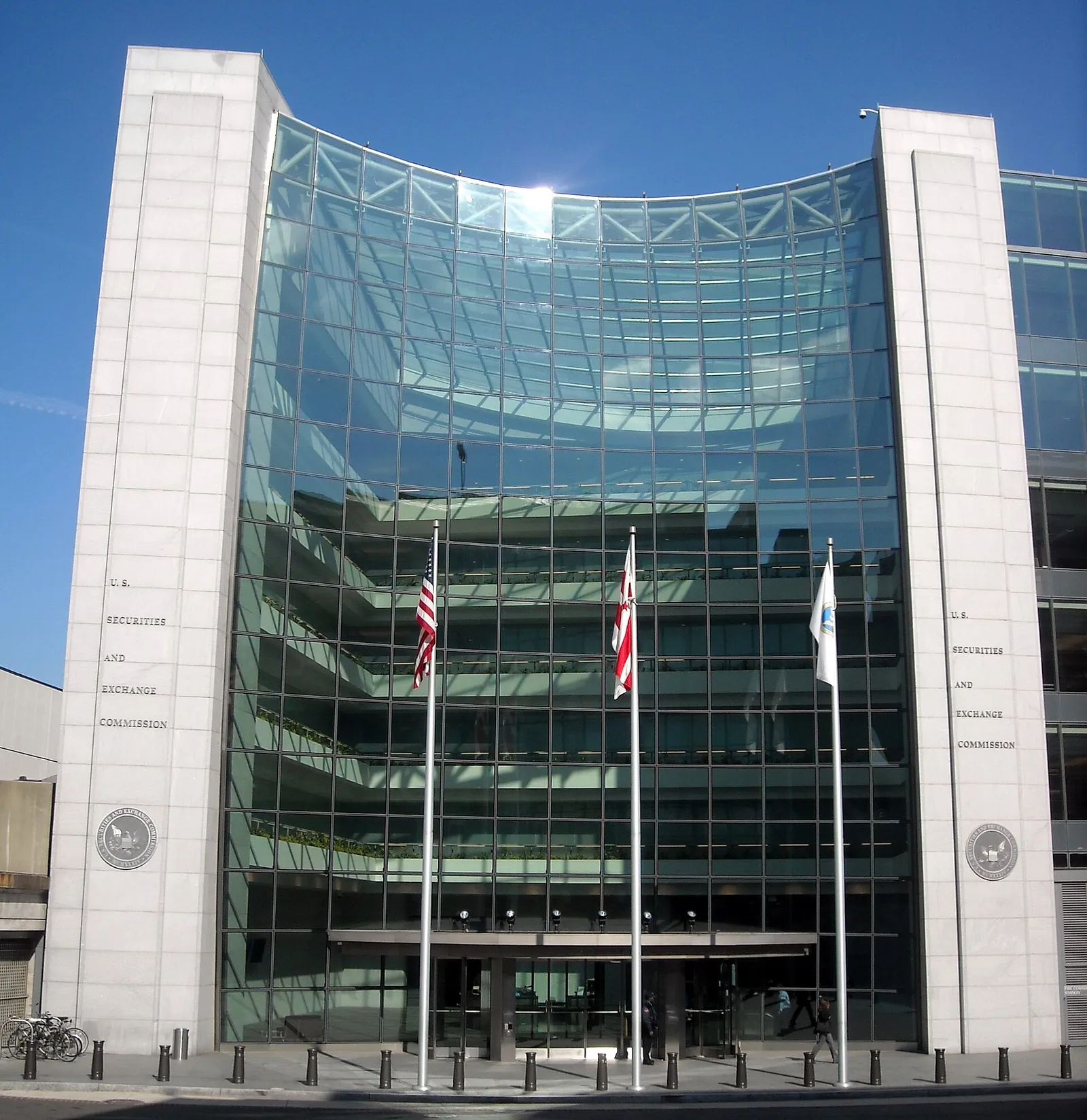
The Securities and Exchange Commission proposed in May what is described as the largest rewrite of the registered-offering framework in more than twenty years. Its effect would be to move the test for raising public capital away from a company's size and toward its disclosure record, extending shelf registration and at-the-market selling to roughly 81 percent of public companies.
That figure, and the most detailed public argument for the proposal, come from Cromwell Coulson, president and chief executive of OTC Markets Group, writing in Fortune. It is worth saying plainly at the outset that OTC Markets operates the venues where many of the companies who would gain eligibility already trade, so the firm has a commercial interest in the outcome. That does not make the argument wrong. It does mean the case deserves testing rather than repeating.
The three things being traded off
A shelf registration is a single filing that lets a company sell securities over a period, generally up to three years, without preparing a fresh registration for each sale. The company registers once and then issues when it chooses. The convenience is real and so is the trade-off: no individual sale gets the scrutiny that a standalone deal would attract.
An at-the-market offering is the mechanism built on top of it. The company instructs a bank to feed shares into the open market at whatever the prevailing price is, over days or weeks, with no fixed offer price, no roadshow and no single moment at which the market is told a large block is coming. It is the cheapest way for a public company to raise equity, and the least visible.
The alternative for a company that cannot use either is a private investment in public equity, or PIPE: shares sold privately, almost always at a discount to the market price. That discount is the cost, and existing shareholders pay it twice over. Their stake is diluted, and the discount that compensates the incoming investor for the risk is value transferred out of the company they already own.
Coulson's argument is that forcing smaller companies into the third option is the expensive outcome, and that disclosure standards rather than balance-sheet size or listing venue should determine access to public capital.
The size test that the proposal would loosen
The existing eligibility rules are what create the split. Broad shelf access has been reserved for larger, seasoned issuers, and companies below a public float threshold operate under a much tighter limit on how much stock they may sell off a shelf in any twelve-month period. That limit is what pushes a small company toward the PIPE market when it needs money, and it is the constraint the proposal would relax.
The case against relaxing it is not exotic. Continuous issuance dilutes existing holders in increments that are harder to see than a single announced deal, and the bank running an at-the-market program does less diligence than an underwriter pricing a discrete offering. Those features are tolerable in a large, liquid company whose stock absorbs the selling and whose disclosure is watched by analysts. They are riskier in a thinly traded one, where steady issuance can weigh on the price and where fewer people are reading the filings. No named opponent has published a rebuttal that this piece could locate, so treat that as the standard objection to loosening offering eligibility rather than as anyone's stated position.
What OTC Markets says about its own scale
The company reports that its venues facilitate trading in more than 12,000 securities, and that $453 billion changed hands across them in the first half of 2026, a pace that would reach roughly $900 billion for the year. It puts international companies at nearly 95 percent of that dollar volume.
These are company figures rather than figures from an exchange operator's regulatory filing or a third party, and they are relevant to reading the proposal in two ways. They establish that the venues in question are not marginal. They also show where the volume actually sits: if nearly all of it is in international names, then the American growth-stage companies the argument is built around are a small share of the business today, which is consistent with the reform being a growth opportunity as well as a matter of principle.
The proposal is at the proposed-rule stage. Nothing has been adopted, no compliance date exists, and the comment process is where an argument this consequential normally meets its opposition.