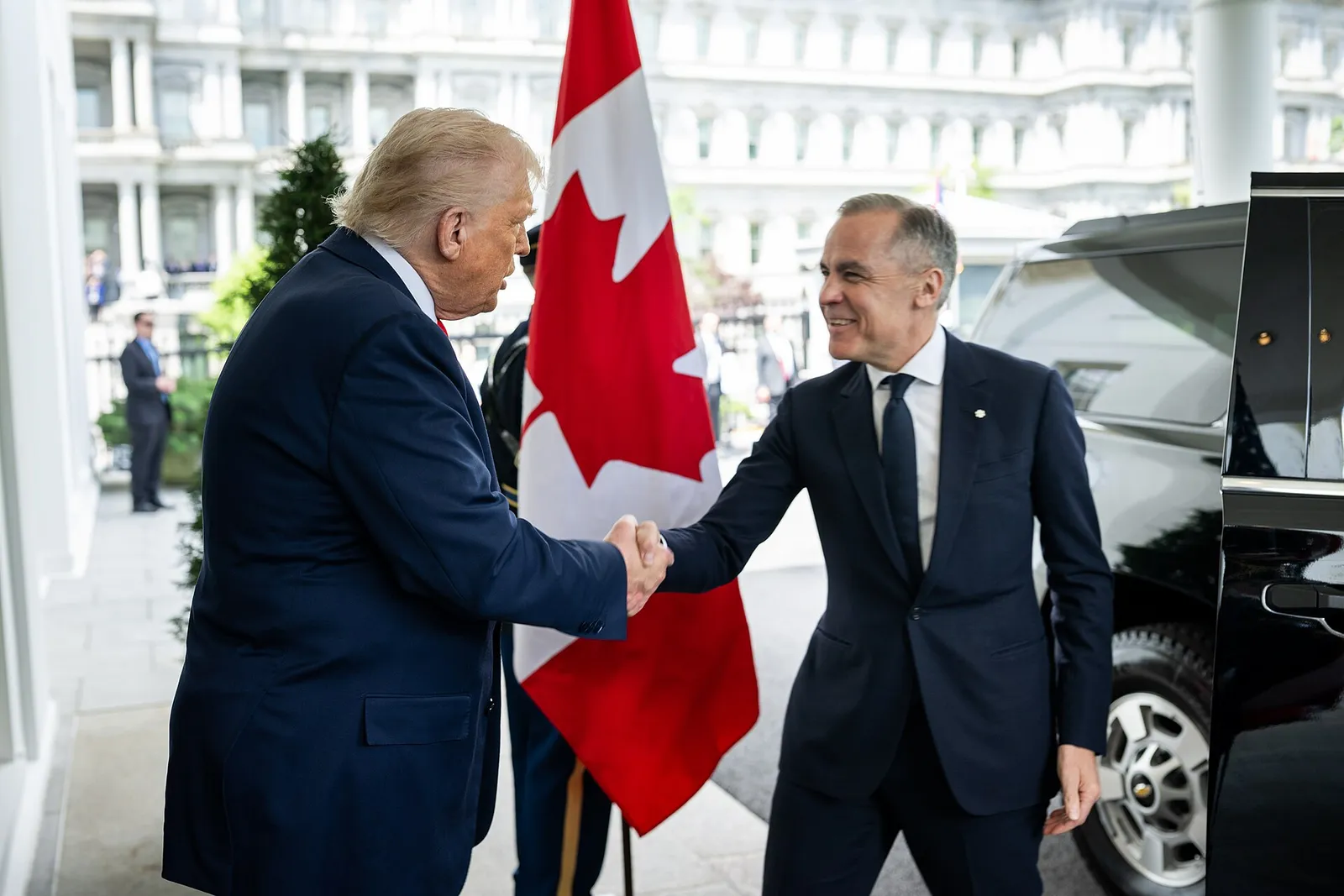
President Trump threatened on Friday to impose a 100% tariff on any country that levies a digital tax on American technology companies, PBS NewsHour reported. In a social-media post, he wrote that "any Country that imposes such a Tax will immediately be met with a 100% TARIFF on any and all Goods sent to the United States of America," and said the penalty would override trade deals already negotiated.
It is a threat, not a policy: no new tariff has been imposed, and it is unclear which countries would be targeted or how the measure would sit alongside existing trade arrangements.
What a digital services tax is
A digital services tax, or DST, is a charge on the revenue — not the profit — that large online platforms earn from users in a country. Governments introduced them to capture tax from companies that do big business in a market without the physical presence that normally triggers corporate income tax. They typically apply to online advertising, marketplace fees and data-driven services.
Because the biggest such platforms — Google, Meta, Amazon, Apple — are American, these taxes fall mostly on U.S. firms. That is the heart of Washington's objection: successive U.S. administrations have argued the levies are structured to single out American companies.
Who levies them
Around half of European OECD members have enacted, proposed or announced a DST, according to the Tax Foundation. The United Kingdom has had a 2% tax on the revenues of search engines, social-media services and online marketplaces since 2020. France, Italy and Spain each levy 3% on various digital activities; the Tax Foundation's data show France raising several hundred million euros a year from its version. Austria and Turkey apply higher rates focused on online advertising.
Why the timing matters
The threat is pointed because of the calendar. Trump set a July 4 deadline for the EU and U.S. to begin implementing a trade framework that caps tariffs on most European goods at 15% — and digital taxes were left outside that deal, remaining a sticking point, PBS reported. A 100% tariff layered on top of, or in place of, that 15% cap would mark an abrupt break from the emerging truce.
For investors, the stakes run through one of the world's largest trading relationships. A serious escalation would raise the risk of EU retaliation — potentially tariffs on U.S. exports or measures aimed at American services, a sector where the U.S. runs a surplus with Europe — and would inject fresh uncertainty into both the auto and technology trades that sit at the center of transatlantic commerce.
The longer dispute
The digital-tax fight is not new. For years the OECD tried to broker a global tax framework that would have made national DSTs unnecessary, but that effort stalled, and European governments facing budget pressures pressed ahead on their own. Trump's 100% tariff threat is the sharpest version yet of a long-standing U.S. demand that other governments stop treating American tech giants as a revenue source.
Whether it becomes an actual tariff order — or a bargaining lever that fades as the July 4 talks proceed — is what will determine its weight. For now, the market is left to price a threat whose scope and timing remain deliberately open.