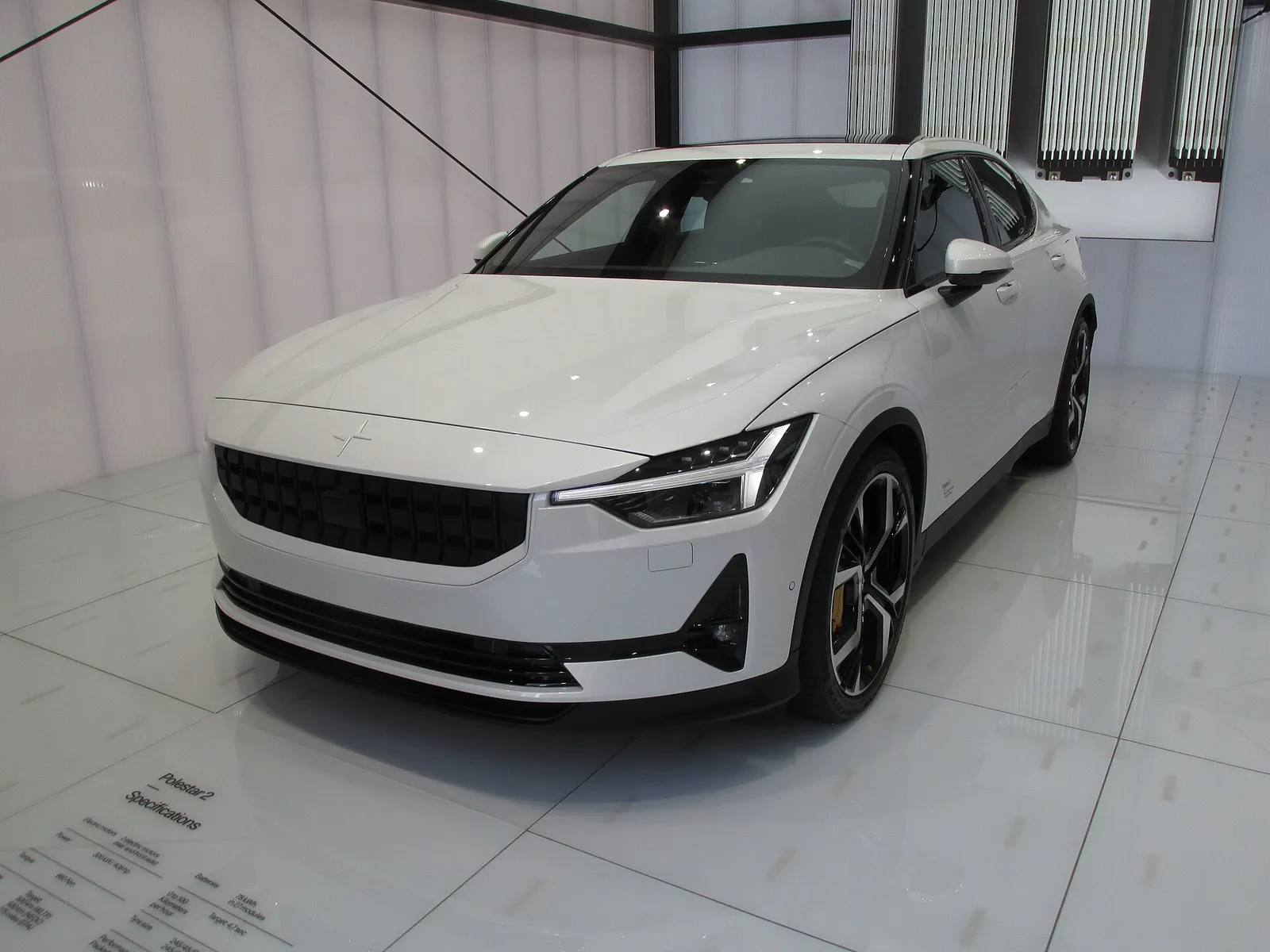
The latest casualty of America's effort to keep Chinese technology out of its cars is a Swedish-branded electric-vehicle maker.
What happened
The Commerce Department's Bureau of Industry and Security denied Polestar's application for a special authorization to sell new vehicles in the United States under the so-called connected-vehicle rule, TechCrunch reported. The decision blocks new U.S. sales of Polestar's latest models. The company said it would continue selling existing U.S. inventory and supporting current owners through its service network, while shifting its commercial focus to Europe — where, it noted, the vast majority of its sales already are.
Why Polestar is caught
Polestar carries a Swedish badge, but its majority owner is Geely, the Chinese group that also owns Volvo Cars. The connected-vehicle rule, finalized in 2024, restricts the sale of internet-connected vehicles that contain software or hardware tied to China or Russia, on national-security grounds. Because modern cars constantly collect and transmit data — location, video, usage — Washington argues that Chinese-linked components could expose that data or be remotely tampered with. Automakers that cannot show their supply chains are free of covered Chinese or Russian technology must seek a special authorization to keep selling; Polestar sought one and was refused.
The Volvo contrast
Notably, the same administration granted that authorization to Volvo Cars — also majority-owned by Geely — in May, per TechCrunch. The government did not publicly detail why the two Geely brands were treated differently, and no Commerce official was quoted by name on the Polestar decision. The rule targets the specific software-and-hardware stack rather than a brand's nationality, so differences in each company's component sourcing are the likely dividing line — but the criteria have not been spelled out publicly.
The bigger picture
The ruling is one piece of a wider decoupling of the U.S. and Chinese auto-technology supply chains. Chinese EV brands such as BYD are already largely shut out of the U.S. by steep tariffs, and the connected-vehicle rule adds a separate, security-based barrier. Its phased timeline — software restrictions tied to model year 2027 and hardware restrictions to model year 2030 — means the bigger test is still ahead for global automakers like GM, Ford and Stellantis, which must audit and potentially replace Chinese-sourced sensors and chips to stay compliant. Industry groups have pressed for clearer guidance on exactly which components trip the rule.
For Polestar, the practical hit is limited in the near term — it has said the overwhelming majority of its sales come from outside the U.S. — but the symbolism is sharp: a brand built on Scandinavian design and global ambitions is being shut out of the world's most lucrative car market because of who owns it and where its technology comes from. The company did not say whether it would re-engineer its supply chain to try again.