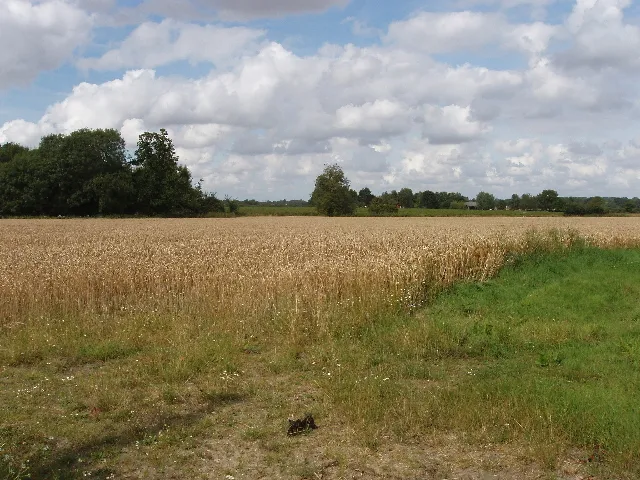
A poor U.S. wheat harvest has pushed grain prices higher — a small market move with an outsized reminder attached: the world's food supply still bends to the weather.
The U.S. Department of Agriculture forecast winter-wheat production at about 1.03 billion bushels, down roughly 27% from 2025 and the smallest crop since the 1965–66 season, according to the USDA's Wheat Outlook. The main culprit is drought across the Southern Great Plains — the heart of U.S. wheat country — which cut yields and led farmers to abandon more acreage than usual, Farm Progress reported. The crop of hard red winter wheat, the largest U.S. class and a staple for bread flour, is the smallest since the late 1950s.
Prices respond
Wheat futures rose after the report as traders priced in the tighter supply, farm-market reports noted, rebounding from a near four-month low touched days earlier. (Futures are standardized contracts to buy or sell a commodity at a set price for future delivery — a wheat contract on the Chicago Board of Trade covers 5,000 bushels, and a bushel of wheat weighs 60 pounds. They are the main way the world prices grain.)
The move was meaningful but not dramatic — a supply-driven bounce, not a spike. Prices had been depressed by ample global stocks, and the U.S. shortfall tightens the picture without erasing that cushion.
Why a U.S. drought moves world prices
The reason a bad harvest in Kansas matters in Cairo or Jakarta is that wheat is a globally traded staple and the U.S. is one of the largest exporters. When American production falls, the world has less supply to draw on, which tends to firm prices everywhere and sends buyers toward other exporters. That is a particular concern for food-importing countries across the Middle East, Africa and Asia, where wheat is a dietary mainstay and higher grain costs feed quickly into the price of bread.
It also reshapes trade flows: with U.S. wheat less plentiful and less price-competitive, importers lean harder on the Black Sea region — Russia, Ukraine and Kazakhstan — whose harvests then carry even more weight in setting the global price. That concentration is one reason grain markets are so sensitive to weather and geopolitics in a handful of exporting regions.
Why it matters
For farmers and grain traders, the USDA numbers confirm a hard year in the Plains and a firmer near-term price floor. For food companies and households, wheat is an input in everything from bread to noodles to livestock feed, so a tighter crop is one more upward nudge on food costs — modest on its own, but part of the broader story of why groceries stay expensive. And for investors, it's a textbook case of how commodity prices work: supply, weather and stockpiles, not sentiment, set the direction. Boursel makes no price forecast; the takeaway is that even in an age of AI and abstract finance, a dry spring in the American heartland still ripples out to the world's dinner tables.