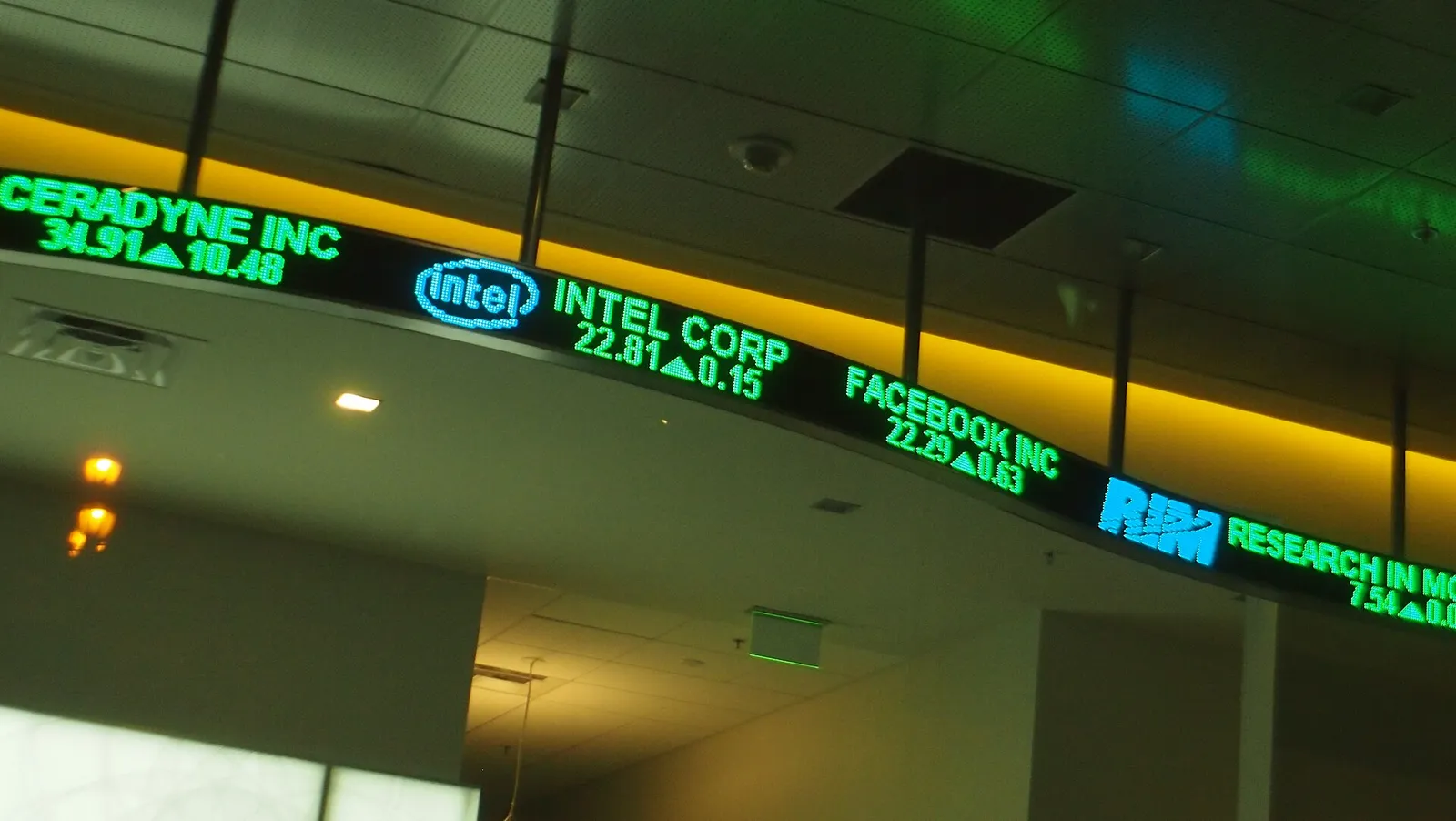
Why does a bad afternoon on Wall Street so reliably become a bad morning in Tokyo? This week's tech sell-off — which dragged SoftBank down more than 11% after U.S. declines — is a textbook case. Here's the machinery behind it.
The baton pass across time zones
The major exchanges don't trade at once; they hand off in a relay. New York closes around 4 p.m. Eastern. Hours later Tokyo and Hong Kong open, then Frankfurt and London, then New York again. At each handoff, traders see what happened while they slept and reprice. So a late slide in U.S. tech shows up first in Asian futures, then in Asian cash markets at the open — the losses "travel" even though no single market is open the whole time.
Five engines of synchronization
1. Global funds selling everywhere at once. Big investors — pension, sovereign and hedge funds — hold positions across dozens of countries. When a risk model or a cash need says "cut exposure," they sell across the board, transmitting a New York decision into Tokyo and London order books within hours.
2. Shared fundamentals. The same forces move companies everywhere: U.S. interest rates and the dollar set borrowing costs worldwide; oil prices hit a German carmaker and a Korean refiner alike. When the AI-earnings outlook darkens in the U.S., it darkens for AI-exposed firms globally.
3. Risk appetite — "risk-off." Markets run partly on mood. In "risk-off" stretches, investors flee anything volatile and crowd into perceived safety — Treasuries, gold, the yen. That impulse is global, and self-reinforcing: selling begets more selling.
4. Direct supply-chain links. A drop in U.S. chip stocks isn't just sentiment for Asian chipmakers — it's a business signal. Taiwan's TSMC makes the chips; South Korea's Samsung and SK Hynix supply the memory AI data centers need. Mark down the U.S. AI revenue outlook and you mark down theirs, through earnings models, not just nerves.
5. U.S. mega-cap tech as the bellwether. A handful of American giants — Nvidia, Apple, Microsoft — are so large and widely owned that their moves set the tone for tech investing everywhere. When they fall, managers in every time zone reassess.
The terms, plainly
Correlation measures how closely two markets move together, from −1 (opposite) to +1 (lockstep). In calm times, U.S. and Asian equities are loosely linked; in a crisis that number jumps. Contagion is when a shock spreads further or faster than the underlying economics alone would justify — a sector problem in one country spilling into unrelated markets. The Bank for International Settlements and academic work on cross-market linkages document that such co-movement has intensified as markets have integrated.
Why diversification helps least when you need it most
The case for spreading money across countries rests on the idea that they don't all move together — losses in one offset gains in another. That holds in normal times and breaks down in a sharp global sell-off. Research on past crises finds equity correlations across major markets rising sharply under stress: positions that usually behave independently move as one, because the thing driving them isn't a local factor but a global one — fear. The lesson isn't that diversification is useless; over long horizons different markets genuinely diverge, and concentration adds risk. It's that geographic spread won't insulate you from a fast, sentiment-driven rout like this week's. When Wall Street sneezes, the world still catches cold — and that's analysis of how markets behave, not investment advice.