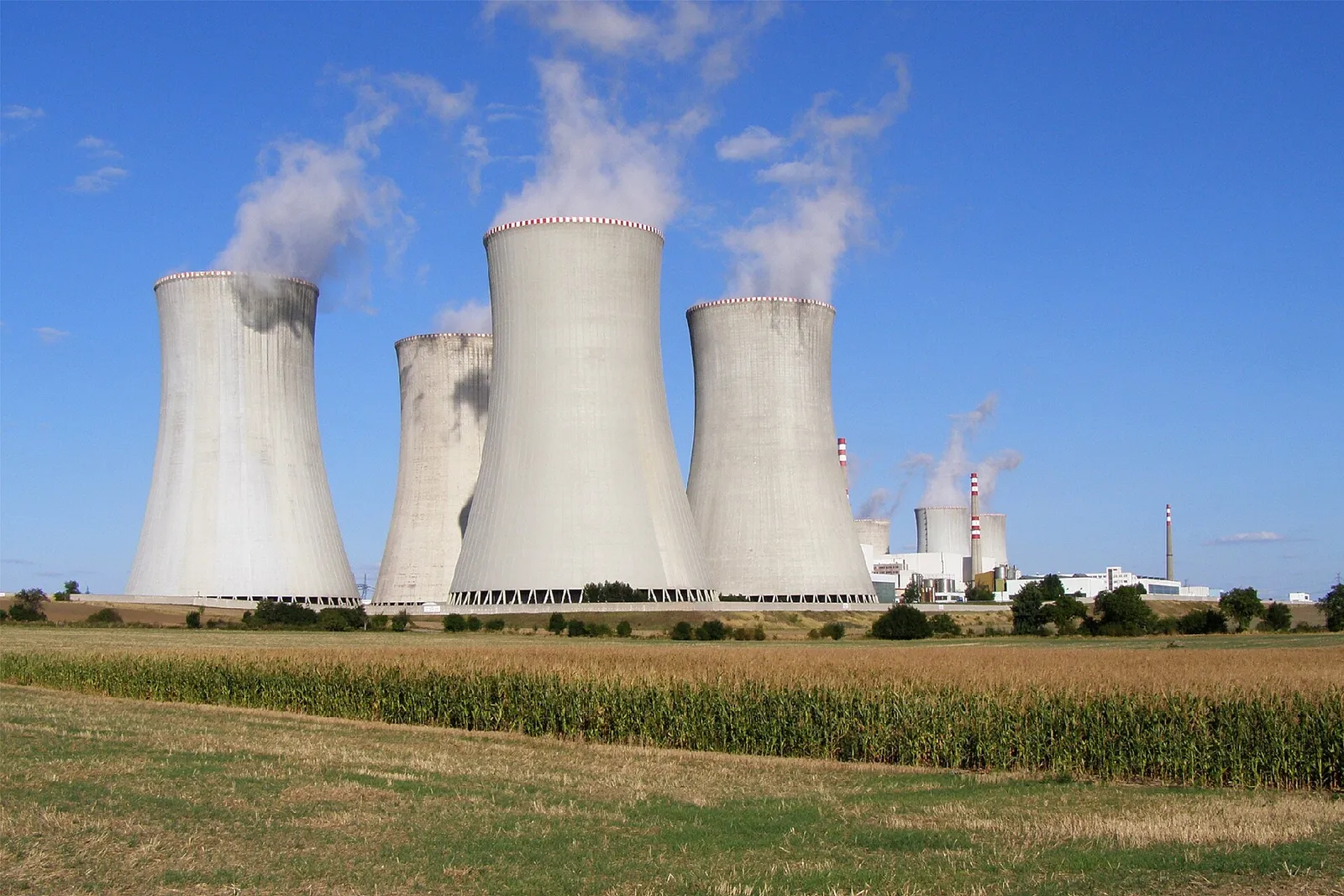
One of Europe's richest industrialists is making a multibillion-dollar wager that the future of clean, reliable power is nuclear — but nuclear built small and fast.
A firm backed by Polish billionaire Michał Sołowów plans to invest around £35 billion to deploy a fleet of small modular reactors (SMRs) in the UK — 14 units totaling about 4.2 gigawatts of capacity across several sites, with first electricity targeted for around 2034, The Guardian reported. The plan would use a reactor design (GE Vernova Hitachi's BWRX-300) and hinges on winning UK government support and approvals, according to the company's announcement.
What a small modular reactor is
A small modular reactor is a nuclear plant designed to be much smaller than a traditional one — typically 300 megawatts or less, versus 1,000-plus for a conventional reactor — and built from factory-made modules shipped to the site and assembled, rather than constructed piece by piece on location. The promise: faster builds, lower upfront cost, and the flexibility to add units as demand grows, on smaller plots of land. (Baseload power is electricity available around the clock, regardless of weather — the kind nuclear provides and that solar and wind, on their own, cannot.)
Why the money is flowing now
Two forces are converging. The first is decarbonization: governments want carbon-free power, and nuclear is the main proven source that runs 24/7. The second is AI. The explosion of AI data centers — which draw enormous, constant power — has sent technology companies hunting for dependable, clean electricity, and many have turned to nuclear. That demand is a big reason investors are suddenly willing to write huge checks for reactors, and why the UK, with a supportive regulatory push, is courting SMR developers. Britain's own effort includes state backing for a domestic SMR program.
The caveats
Enthusiasm should be tempered with reality: SMRs are largely unproven at commercial scale. Very few are operating anywhere, timelines routinely slip, and first-of-a-kind projects tend to cost far more than the mass-produced economics that boosters promise — the savings only arrive once many identical units are built. Licensing is another hurdle, since nuclear rules were mostly written for big reactors. A 2034 target is ambitious, and analysts generally expect meaningful SMR deployment only in the 2030s. In other words, this is a bet on a technology that still has to prove itself, not a solution available today.
Why it matters
For energy and climate, a £35 billion private commitment is a vote of confidence that SMRs can become real infrastructure — and a test case the whole industry will watch. For AI and data centers, it underscores that the constraint on the AI boom is increasingly electricity, not just chips, and that the hunt for round-the-clock clean power is reshaping energy investment. And for the UK, landing a project this size would advance its ambition to be a hub for next-generation nuclear. Boursel offers no investment view; the takeaway is that the surging power needs of the digital economy are reviving nuclear — and pulling in the kind of big private capital that will determine whether the small-reactor promise is real or just, for now, a very expensive hope.