The free-trade deal that governs commerce among the United States, Mexico and Canada just entered a more uncertain chapter — at the hands of the president who signed it.
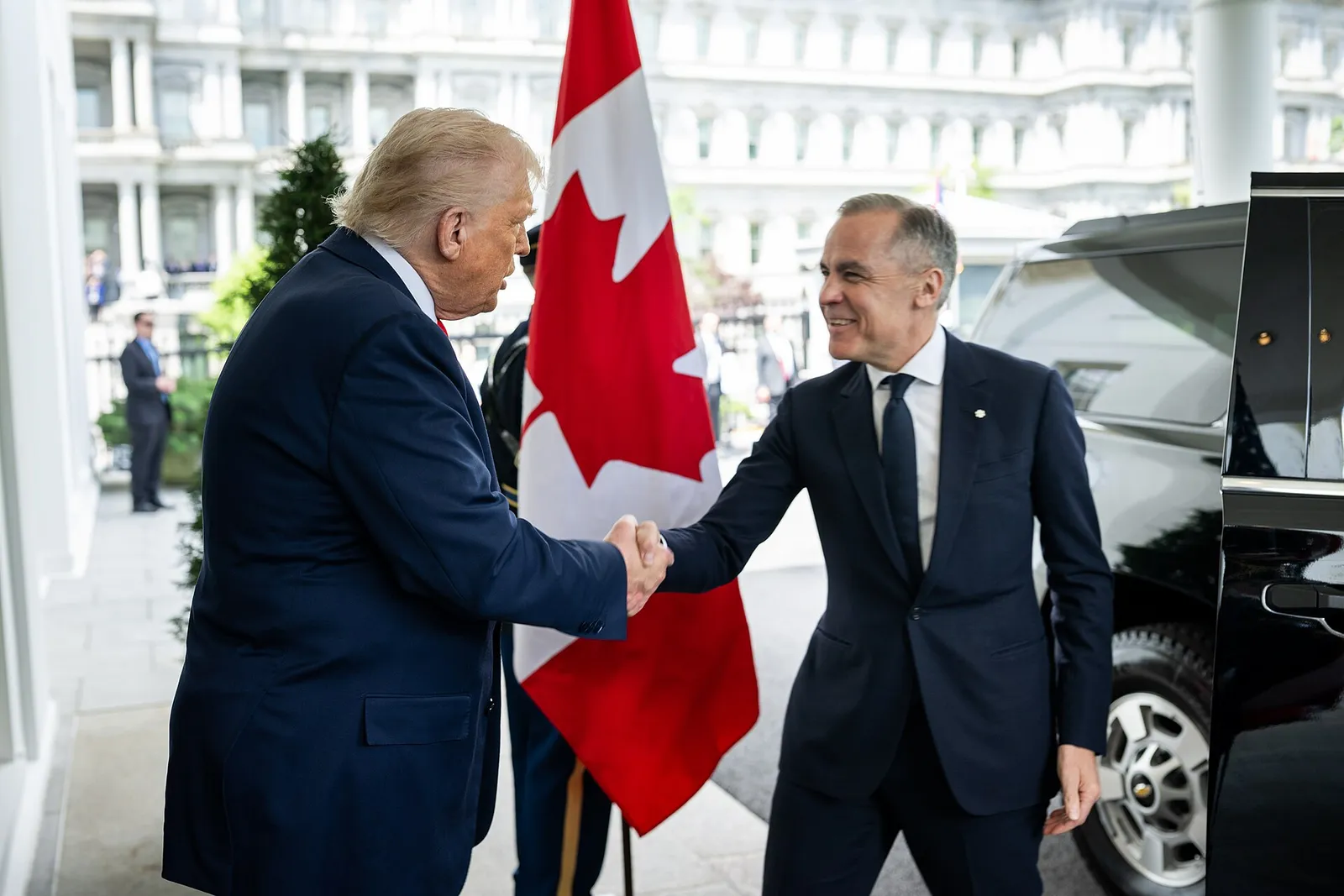
At the pact's first scheduled joint review on July 1, 2026, the United States did not agree to renew the USMCA in its current form, U.S. Trade Representative Jamieson Greer said, and will keep pushing to address what Washington calls the agreement's shortcomings and its trade deficits with the two neighbors, according to the USTR statement. President Trump signaled he would rather strike separate deals with Mexico and Canada than renew the three-way pact, CNBC reported.
What actually happened — and what didn't
Crucially, this is not a cancellation. The USMCA — the U.S.-Mexico-Canada Agreement, which replaced NAFTA in 2020 and which Trump signed in his first term — remains in force. Under its own rules, the three countries hold a joint review every six years; if they don't all agree to renew, the deal doesn't die but instead enters a period of annual reviews, and it only lapses years later (in the mid-2030s) if the impasse is never resolved. So the immediate legal effect is limited — but the political signal is large. (A free-trade agreement removes most tariffs and sets shared rules among members; the USMCA covers everything from cars to farm goods across a combined economy of well over $30 trillion.)
The U.S. is due to hold another round of bilateral talks with Mexico the week of July 20, the USTR has said.
The autos flashpoint
Nowhere are the stakes higher than in automobiles. The USMCA already requires that a large share of a vehicle's value — currently 75% — be made within North America to cross borders duty-free (the "rules of origin"). Washington has signaled it wants tougher content rules, and it has paired the trade talks with tariff pressure: the U.S. has imposed 25% tariffs on imported vehicles, with USMCA-compliant vehicles exempted. That combination pushes automakers to build more in North America — and specifically in the U.S. — or pay up.
The trouble is that the region's car industry is deeply integrated: parts can cross the U.S.-Mexico and U.S.-Canada borders many times before a vehicle is finished. Rewriting the rules mid-stream forces companies to rethink supply chains built over decades.
Why it matters
For Mexico and Canada, whose economies send the bulk of their exports to the U.S., the uncertainty is acute — every investment and sourcing decision now carries the question of what the rules will be next year. For U.S. companies and consumers, tougher content rules and tariffs can protect some domestic factory jobs but also raise costs for cars and other goods, a trade-off economists have long flagged. And for the global trading system, a U.S. president declining to renew a deal he himself negotiated underscores how much trade policy has become a lever rather than a settled framework — a source of ongoing risk for any business with a cross-border supply chain. Boursel takes no political side; the takeaway is that North American trade just moved from fixed rules toward open-ended negotiation — and that uncertainty itself has a cost.