This is general information, not investment advice.
"Mining" sounds like digging, but it's really a global computing race that happens every ten minutes.
What miners do
Roughly every ten minutes, thousands of specialized computers worldwide race to solve the same cryptographic puzzle. The winner gets to add the next block — a batch of recent transactions — to bitcoin's shared ledger, the blockchain, and earns a block reward: newly created bitcoin plus the transaction fees in that block. This is proof of work: the puzzle has no shortcut, only billions of guesses per second, and a miner who tried to slip in a fraudulent transaction would simply lose the race and earn nothing. Honesty is the profitable strategy.
The block reward and the halving
The reward is how new bitcoin enters circulation. It started at 50 BTC per block in 2009 and halves every 210,000 blocks (about four years). The April 2024 halving cut it to 3.125 BTC; the next, around 2028, drops it to ~1.56. The schedule is fixed in code and enforces a hard cap: no more than 21 million bitcoin will ever exist (over 19.7 million are already mined). Eventually miners will live on fees alone.
Difficulty and hashrate
Because more computing power would otherwise produce blocks faster, the network automatically adjusts the puzzle's difficulty every 2,016 blocks (~two weeks) to keep block time near ten minutes — a self-regulating thermostat. Total computing power is measured as hashrate; a higher hashrate generally means a more secure network.
Hardware and economics
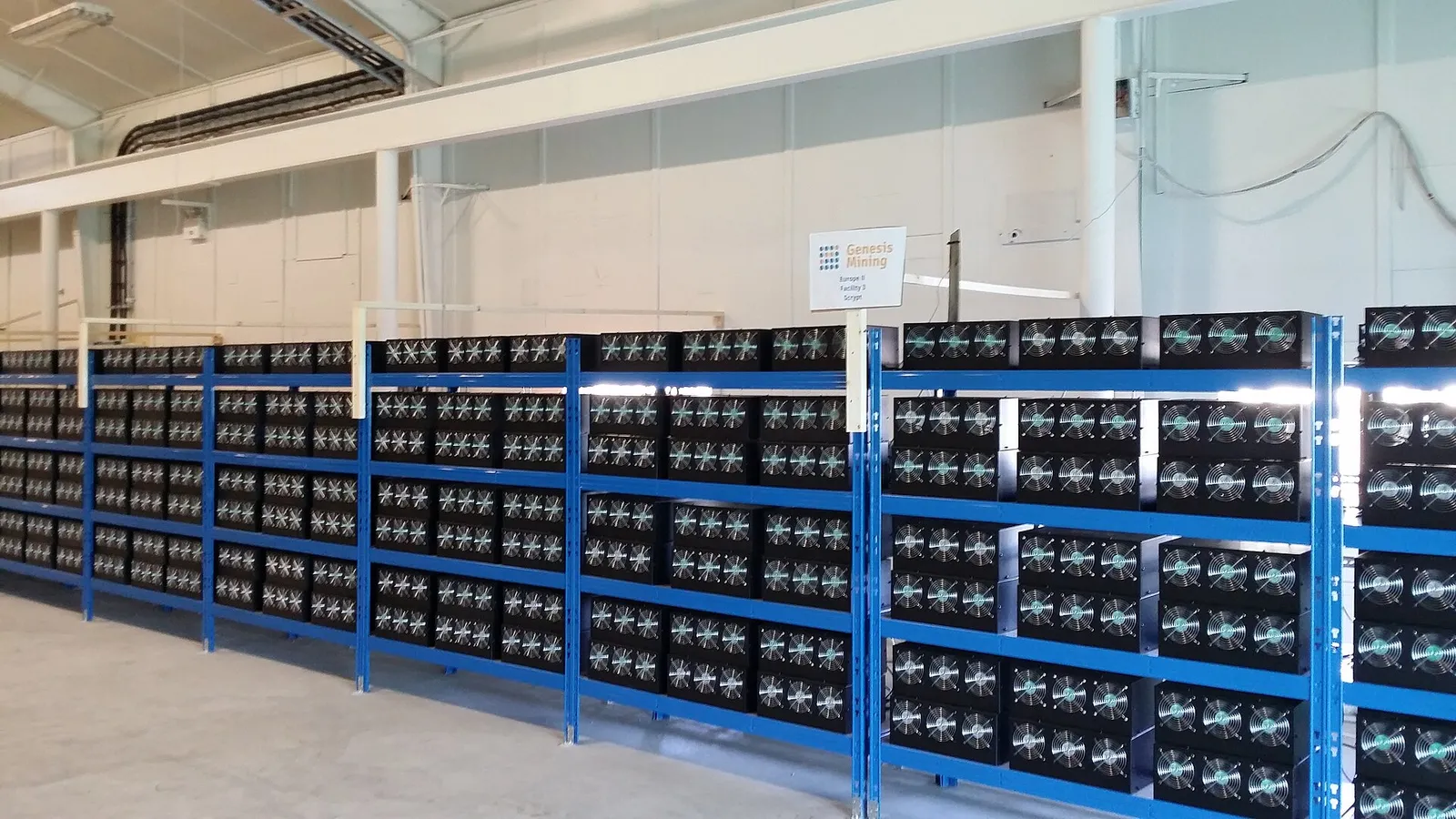
Mining once ran on laptops, then graphics cards; today it needs ASICs — chips built for nothing but bitcoin hashing. Electricity is the dominant cost, which pushed mining toward cheap-power regions. China hosted most of the network until a 2021 ban sent miners fleeing; the U.S. absorbed much of that capacity and now hosts a large share. Because a single machine rarely wins, most miners join pools that combine power and share rewards in steady payouts.
The energy debate
Bitcoin's power use is large and contested. The Cambridge index has estimated its annualized electricity consumption on the order of a mid-sized country's — figures in the rough range of ~140 TWh a year (treat any single number as a moving estimate). Critics point to the carbon footprint and competition with other users. Defenders note a rising share of the energy comes from renewables and nuclear (Cambridge's 2025 industry report put it above half), and that some miners use otherwise-wasted "stranded" power or act as flexible loads that switch off at peak demand to help balance grids. The honest answer: bitcoin's carbon intensity depends heavily on which grid the miners plug into, and the debate isn't settled.
The business of mining
Mining is now an institutional industry with listed stocks — MARA, Riot, CleanSpark — that have raised billions. Their margins get squeezed when bitcoin's price falls near their all-in cost per coin (often tens of thousands of dollars), and the 2024 halving — which cut daily new issuance from ~900 to ~450 BTC — sharpened that pressure. The response has been telling: several miners are repurposing their power-and-cooling infrastructure to host AI workloads, which pay more per kilowatt — the same convergence we've covered between crypto mining and the AI data-center boom.
The bottom line
Mining is the enforcement layer of a money system with no central operator: proof of work makes cheating ruinously expensive, difficulty keeps the clock steady, and the halving imposes scarcity by algorithm. Whether its energy cost is a fair price for a decentralized network is a legitimate, open argument — but mining itself has gone from hobby to heavy industry, with its own stocks, power contracts and corporate strategy.