
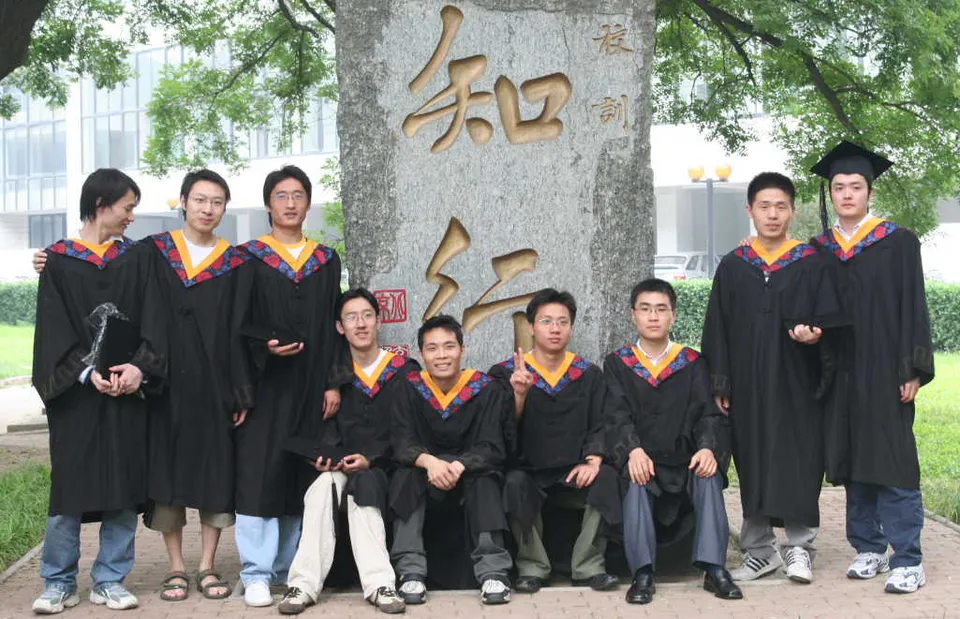
China will send a record 12.7 million students out of its universities and into the workforce in 2026, about 480,000 more than the 12.22 million who graduated in 2025, according to figures from the Ministry of Education reported by the South China Morning Post. They are arriving in a labor market that has too few of the jobs they trained for, a mismatch that has become one of the more stubborn strains on the world's second-largest economy.
The numbers behind the strain
China's urban unemployment rate for 16-to-24-year-olds, excluding students, was 15.6% in May 2026, down from 16.3% in April and the lowest reading in eleven months, according to National Bureau of Statistics data compiled by Trading Economics. Even at that improved level, youth joblessness runs more than three times the country's overall unemployment rate.
The headline figure also carries a caveat worth understanding. In June 2023, China's youth unemployment rate hit a record 21.3%, after which the statistics bureau suspended publication and later resumed it with a narrower method that excludes the tens of millions of students still in school, as the Asia Society has documented. The change lowered the reported number without changing the underlying reality: many young people cannot find stable work that uses their qualifications.
Underemployment, not just unemployment
For many graduates, the problem is not the absence of any job but the absence of a suitable one. Starting salaries for graduates in liberal-arts fields have run as low as 2,800 to 3,000 yuan a month, roughly $385 to $415, the South China Morning Post has reported — pay that can trail what experienced factory workers earn. A visible sign of the squeeze is the number of degree-holders taking gig work: a meaningful share of drivers for food-delivery platforms such as Meituan hold university degrees, the paper found.
Where demand is, and isn't
The mismatch is partly about skills. China rapidly expanded its universities to build a middle class, tilting toward business, finance and general liberal-arts degrees, even as employers increasingly want vocational, advanced-manufacturing and technical expertise. Automation is reshaping the picture further, thinning out entry-level administrative and routine office roles where graduates traditionally start, while demand for specialized engineers in artificial intelligence and data grows faster than the supply of graduates who can fill it.
Beijing has treated the issue as a priority, rolling out training programs, subsidies and internship schemes aimed at emerging industries. The scale of the response reflects the political stakes: persistent youth joblessness is a sensitive matter in an economy already contending with weak consumer demand and deflationary pressure. The deeper challenge is structural, and it will not be solved in a single graduation season.