Ingvar Kamprad was, by most measures, one of the richest people on earth. He also drove a two-decade-old Volvo, flew economy class and, when he ate out, took the free salt and pepper. The founder of IKEA built a global business on relentless cost-cutting — and the discipline started with himself.
The man from Småland
Kamprad was born in 1926 in Småland, a poor, rocky region of southern Sweden whose hard-scrabble reputation he often invoked. He was selling matches to neighbors by age five and, at 17, used a cash reward from his father for good grades to register a mail-order business in 1943. He called it IKEA — his initials plus the family farm, Elmtaryd, and home village, Agunnaryd, according to Wikipedia's account of his life. He kept working at the company until he was 87 and died in 2018, aged 91.
Thrift as a way of life
Kamprad's frugality was habitual, not performative. He flew economy, drove an old Volvo for years, ate in IKEA's own canteens and, as Fortune recounted, bought much of his clothing at flea markets and sought cheap haircuts when traveling. "I don't think I'm wearing anything that wasn't bought at a flea market," he said in a 2016 documentary. His summary of the corporate creed was blunt: "Wasting resources is a mortal sin at IKEA."
How thrift became the business model
The link between the man and the company is direct. IKEA added furniture to its catalog in 1948, and the flat-pack breakthrough came soon after, from a practical fix: a worker removed a table's legs to fit it in a car. Unassembled furniture in flat boxes slashed shipping costs, warehouse space and breakage — and shifted the labor of assembly to the customer, who is rewarded with a lower price. The first store opened in Älmhult, Sweden, in 1958; by 2008 IKEA was the world's largest furniture retailer.
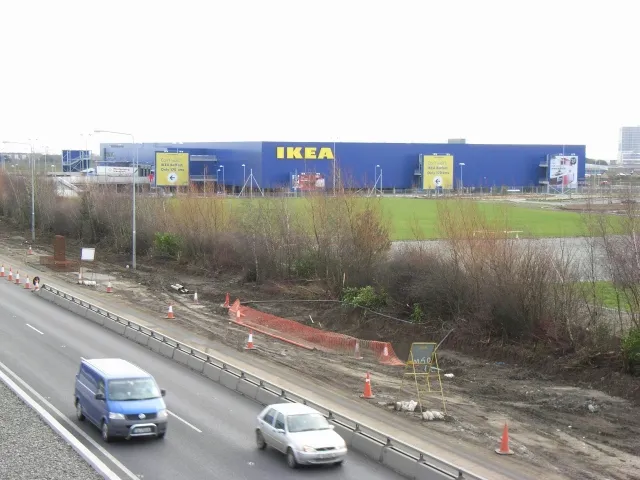
Kamprad codified the philosophy in a 1976 manifesto, A Testament of a Furniture Dealer: simplicity and cost-consciousness weren't just personal virtues but obligations for every employee. The operating model that flows from it is hard to copy — central design, bulk global sourcing, flat-pack logistics, big out-of-town stores on cheap land, a scripted layout that minimizes staff, and the famous cafeterias that keep shoppers on-site longer.
The structure behind the brand
IKEA's ownership is deliberately, almost defensively, complex — the product of Kamprad's long effort to shield the company from takeover, family in-fighting and tax. The stores are run by Ingka Group, owned by a Dutch non-profit foundation whose rules keep the assets out of the family's hands, while the IKEA brand and concept sit in a separate entity, Inter IKEA, under a foundation tied to the family. In effect, the company you shop at and the brand it operates under are legally distinct, joined by a franchise agreement.
Ingka Group reported about €44.6 billion in sales in its 2025 financial year and runs hundreds of stores in dozens of countries, employing roughly 220,000 people, per Wikipedia.
The lesson — and the caveats
Kamprad's story is a case study in how a founder's temperament can imprint permanently on a company. The thrift wasn't a marketing story bolted on after success; it came first, and then became indistinguishable from how IKEA operates. There were contradictions — he spent years as a tax exile in Switzerland, and faced lasting scrutiny over teenage involvement with a Swedish pro-fascist movement in the 1940s, which he later called "the greatest mistake of my life." Neither erased the operating legacy. The flea-market clothes and the recycled habits weren't theater; they reflected a conviction that cost is always a choice — one IKEA has applied at industrial scale for eight decades, and that still sets the price of the bookshelf in your living room.