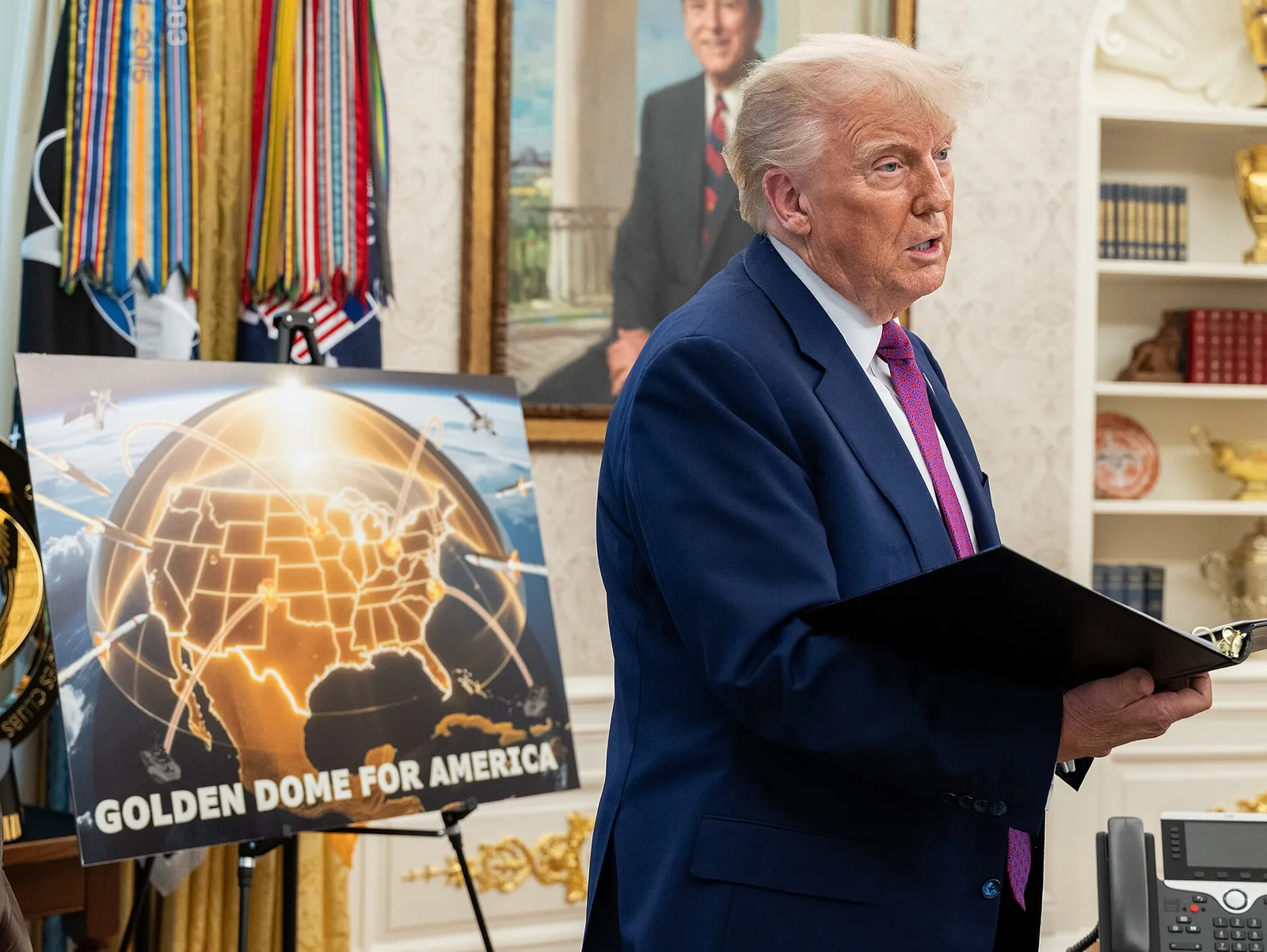
A single sentence from the White House moved a $10-billion-plus corner of the crypto market on Wednesday. Speaking at a press event with technology executives and federal agency heads, President Donald Trump said that Commodity Futures Trading Commission Chair Michael Selig is "working to bring Hyperliquid into the United States in a fully compliant and legal fashion," according to The Block.
The market response was immediate. The HYPE token rose about 17% over the following 24 hours. Three exchange-traded funds tied to Hyperliquid, from 21Shares, Bitwise, and Grayscale, each gained roughly 20% on the day, and the Nasdaq-listed treasury vehicle Hyperliquid Strategies closed up 30.4%.
What Hyperliquid is
Hyperliquid is an onchain exchange for perpetual futures, derivatives that let traders take leveraged positions on asset prices without owning the assets and without an expiry date. Unlike traditional futures venues, the platform runs around the clock, and its markets have grown into some of the deepest in decentralized finance. American traders, however, have been outside its walls: the platform has operated beyond direct U.S. regulatory reach, which is exactly what the remark about bringing it onshore "in a fully compliant fashion" implies changing.
A remark is not a rulebook
What Wednesday's comments did not include is any of the machinery that a real U.S. debut would require. There is no published framework, no timeline, and no formal CFTC action to point to yet. Bringing a decentralized perpetuals venue under U.S. oversight would raise questions that regulated exchanges have spent decades answering, from trade surveillance and position limits to who, exactly, is accountable when the operator is a protocol rather than a company.
That distinction matters for anyone reading Wednesday's price action. The rally priced in a political signal, a strong one, given that it named the sitting CFTC chair, but a signal is where it currently ends.
Why the market cares anyway
The direction of travel is consistent with this administration's broader posture: pulling crypto activity that migrated offshore back into regulated U.S. channels. For Hyperliquid, U.S. access would open the largest pool of retail and institutional derivatives demand in the world. For the CFTC, it would extend its oversight into a fast-growing market that currently operates outside it.
The gap between those ambitions and an actual, compliant launch is where the risk sits. Traders who bought Wednesday's headline are betting the follow-through arrives; the schedule, for now, belongs entirely to the regulators.