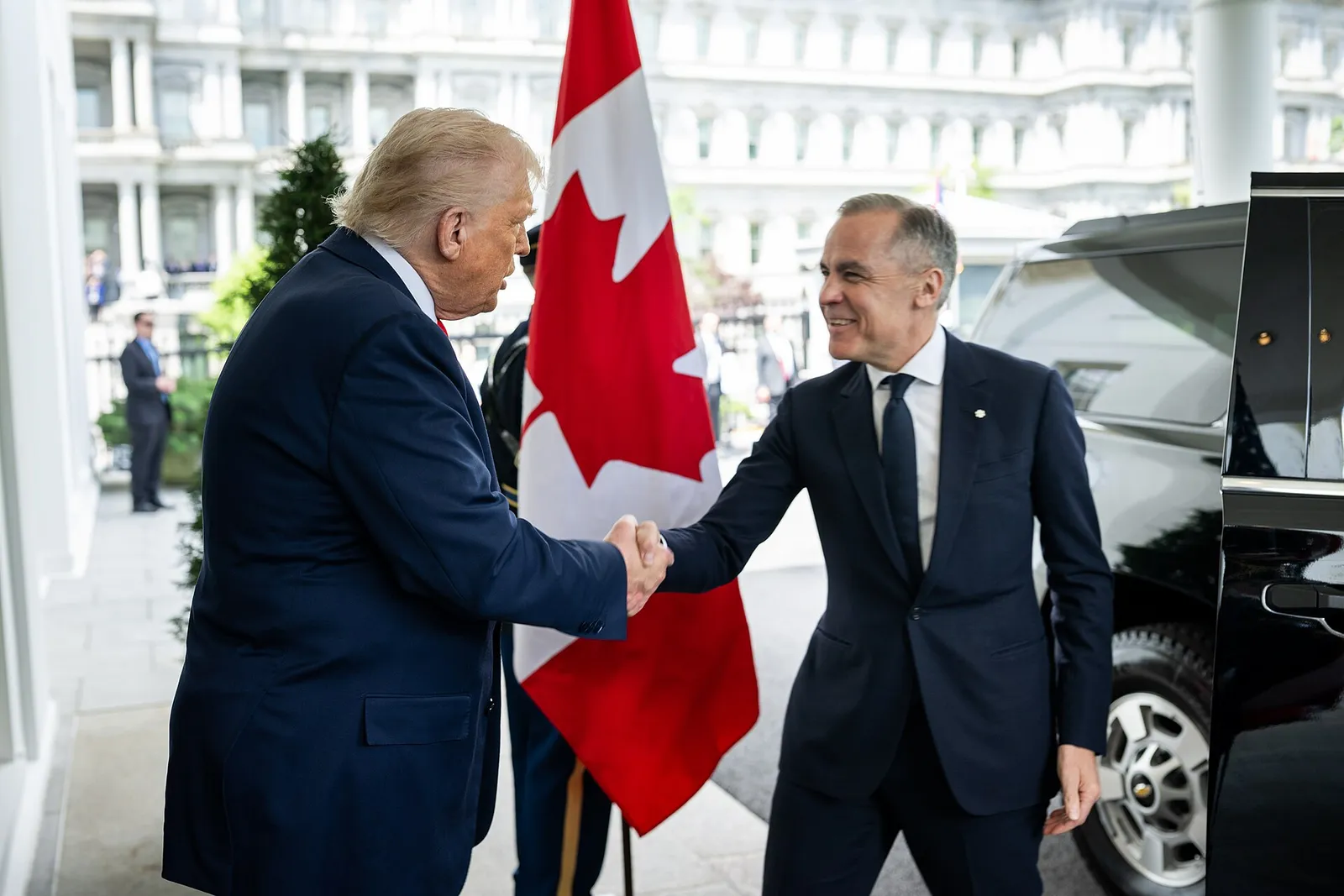
The deadline arrived, and Washington blinked, or negotiated, depending on whom you ask. Hours before 50% tariffs on a swath of Canadian goods were due to take effect on Wednesday, President Trump announced he had paused them for three days, posting on Truth Social that the two countries had reached what he called "a very fair" trade agreement, subject to finalizing documents. The threatened duties covered roughly $20 billion in Canadian imports.
Ottawa's version was noticeably cooler. Prime Minister Mark Carney said "substantial progress has been made, although there is important work still to be done". Neither government has published a text, and the gap between "we have a deal" and "important work remains" is where the economic stakes sit.
What is reportedly in the deal
Some contours have emerged from the two sides' statements. Trump said "tariffs will be non-existent for farmers," pointing to zero duties on US agricultural exports into Canada, a concession aimed at American farm interests bruised by earlier rounds of retaliation.
The auto sector appears to be the hardest file. Negotiators have discussed cutting the Section 232 tariffs on Canadian-built vehicles to 15% from 25%, with deeper reductions tied to how much US content a vehicle carries. Section 232 is the national-security provision of US trade law that the administration has used to tariff autos and metals. The sector was described as a sticking point in the talks, and how broadly any reduction applies remains unclear.
Why it matters this much to Canada
The asymmetry of the relationship explains Ottawa's urgency: nearly 72% of Canada's goods exports go to the United States. A 50% tariff wall, even on a subset of goods, would have hit Canadian manufacturers and food producers immediately, while the pause buys negotiators only days, not certainty. The threatened tariffs would have applied regardless of the USMCA framework that normally governs North American trade preferences.
For US businesses and households, the stakes run through supply chains rather than headlines: Canadian metals, vehicles, energy and food are inputs across the American economy, and tariff whiplash, imposed, paused, renegotiated, is itself a cost that companies price into hiring and investment decisions.
The next 72 hours
The three-day pause sets up an unusually compressed endgame. If documents are finalized, both leaders get a win to sell: Trump a renegotiated relationship, Carney an averted crisis. If talks slip, the 50% tariffs return as leverage. Both governments say they are finalizing the agreement, but the details remain murky, and until a text appears, businesses on both sides of the border are planning around a deal they cannot read.