Hyundai has raised its United States investment plan to $26 billion through 2028, up from the $21 billion it pledged in March 2025, and is proposing to expand its Georgia plant from 500,000 vehicles a year to between 700,000 and 800,000 by 2028. At the top of that range it would be the largest vehicle assembly plant in the country.
Chief executive José Muñoz has been direct about why. "Tariffs are helping accelerate our localization plan," he said. "That's very, very simple."
That is an unusually clean statement of the case for tariffs, made by the company paying them, and it deserves to be reported alongside the invoice.
What the policy cost
Hyundai paid about 4.1 trillion won in tariffs during 2025, roughly $2.9 billion, and its operating profit fell 19.5% over the year. In 2026 it has been running at around 900 billion won a quarter.
The rates behind those numbers moved twice. A 25% duty on imported vehicles took effect in April 2025, and was cut to 15% for South Korean cars in November of that year.
So the sequence is: tariff imposed, several billion dollars paid, profit falls by a fifth, investment plan enlarged. Both halves of that are the policy working as designed. A tariff is meant to make importing expensive enough that producing locally becomes the cheaper option, and the cost of the transition falls on the company until the new capacity exists.
The Georgia site
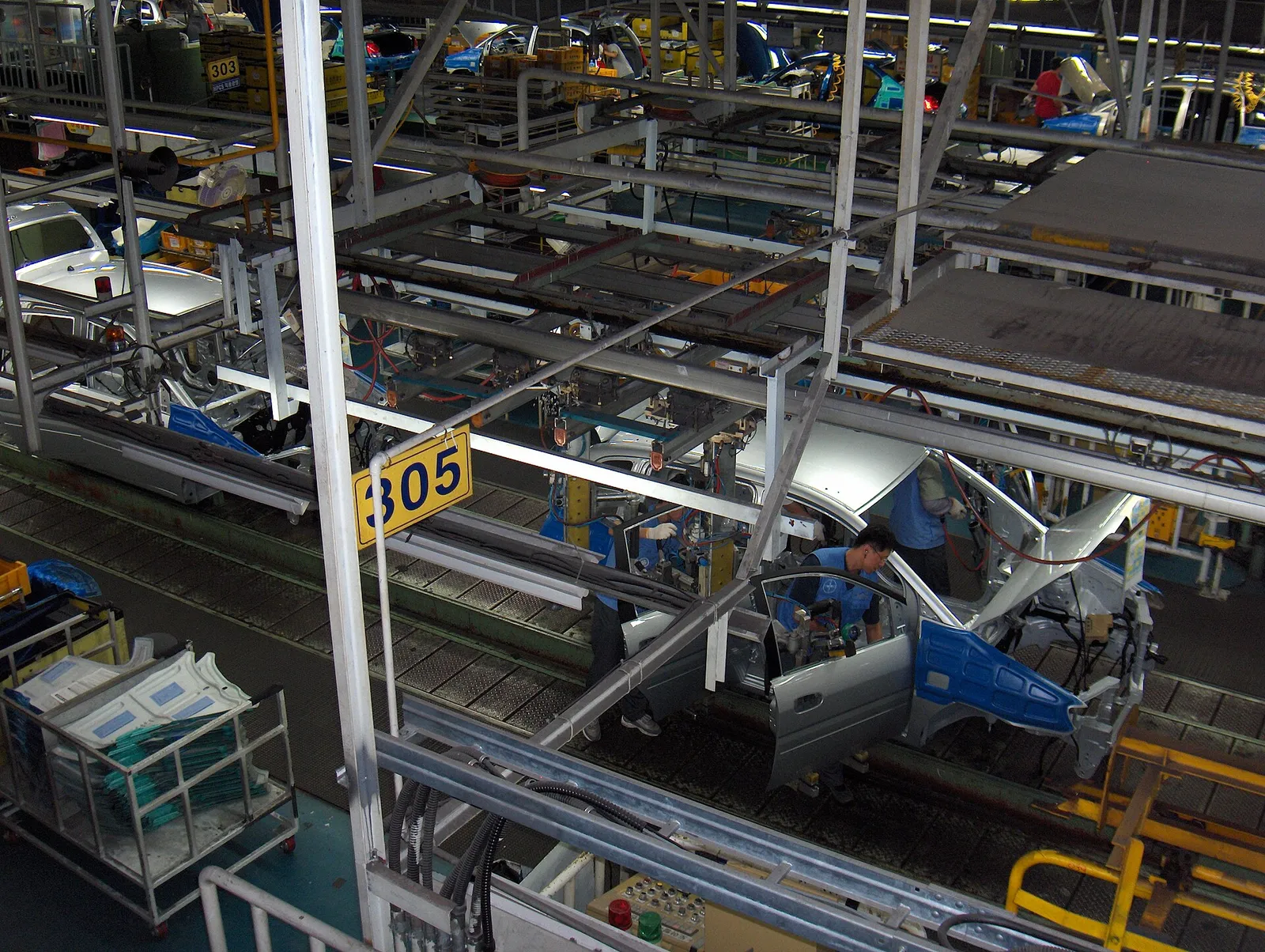
The Metaplant in Bryan County opened in March 2025 and now employs more than 8,500 people, with about 6,900 more at nearby suppliers. It builds the Ioniq 5 and Ioniq 9, and added the Kia Sportage Hybrid in June. Hyundai is separately evaluating where to build body-on-frame trucks and SUVs.
The supplier number is the one worth noting. Roughly 45% of the jobs associated with the site are not Hyundai's own, which is the pattern with assembly plants and the reason states compete so hard for them. It is also why the investment is difficult to reverse: the supplier base takes years to build and does not follow the assembler back out.
The target that explains the strategy
Muñoz's stated goal is that 80% of the vehicles Hyundai sells in the United States are built there by the end of the decade, against about 40% in 2024.
Doubling the domestic share is a genuine industrial commitment, and it is worth understanding what it does to the company's exposure. A manufacturer that builds where it sells is insulated from tariffs in both directions, and from currency moves too. That protection is durable in a way a trade agreement is not, which is precisely the argument for making the investment even if the tariff regime later softens.
The risk is symmetrical. Capacity built to serve a protected market becomes expensive spare capacity if the protection is removed and cheaper imported vehicles return, and 800,000 units a year is a large bet on the policy environment lasting.
Why this matters beyond one company
Because it is the clearest evidence available of a tariff achieving its stated purpose, with the cost of doing so on the record.
Most arguments about tariffs are conducted in the abstract, or with modelled estimates of consumer prices. Here there is a company saying plainly that the policy changed its behaviour, a figure for what the policy cost it, and a physical plant with a payroll to show for it.
What the numbers do not tell you is the counterfactual: how much of the $26 billion would have been spent anyway, given that Hyundai had already committed $21 billion before the tariff rate was cut, and how much of the cost was passed to American buyers in the price of a car rather than absorbed in that 19.5% profit decline. Those are the two questions any honest assessment turns on, and neither is answered by this announcement.