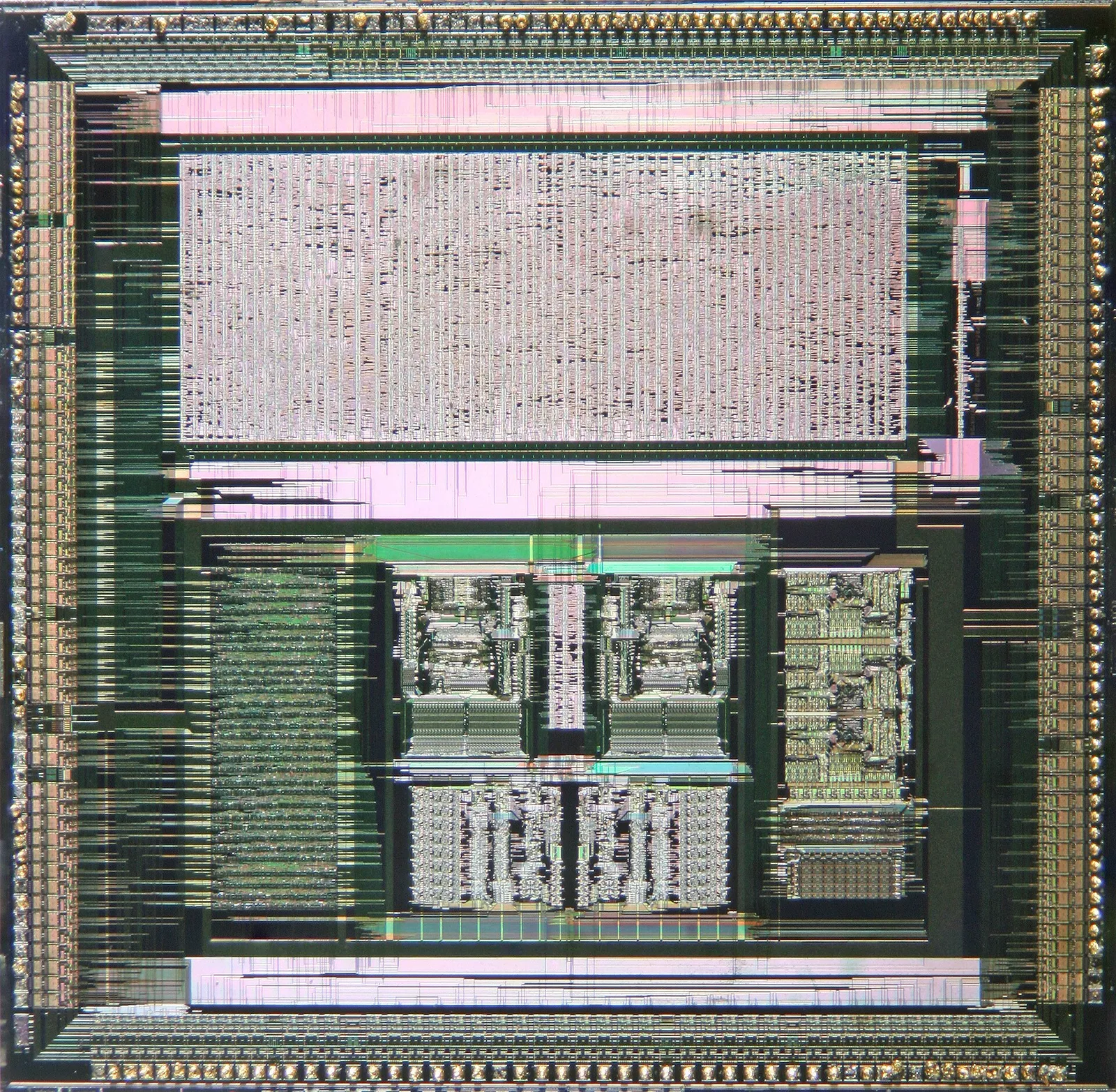
IBM is making a long-range bet on the physics of AI computing. At a semiconductor research conference on June 25, the company unveiled a new transistor design it calls nanostack — and made some eye-catching claims about it.
What IBM showed
Nanostack is a logic chip — a general-purpose processor design, not a memory or AI-specific accelerator — that IBM says operates below the 1-nanometer threshold (roughly 0.7 nanometers), as reported by Yahoo Finance. A nanometer is a billionth of a meter; smaller "nodes" generally mean more transistors packed into the same space. IBM says the design fits about 100 billion transistors onto a die the size of a fingernail — roughly double the density of the 2-nanometer chip it demonstrated in 2021 — by stacking transistors vertically in three dimensions.
IBM claims the architecture delivers up to 50% more performance, or up to 70% better energy efficiency, than its 2-nanometer process — figures stated as maximums under unspecified conditions. The energy claim is the one most relevant to AI: power consumption has become a binding constraint on data centers running large models.
A research result, not a product
The crucial caveat: this is laboratory research presented at a conference, not a chip customers can buy. IBM says production could begin "as early as" the next five years, at its Albany, New York research site, using next-generation lithography equipment from ASML. Semiconductor milestones frequently take longer than projected to reach commercial scale, and IBM stated its performance and efficiency figures as best cases.
IBM also occupies an unusual position: unlike Taiwan Semiconductor Manufacturing or Intel, it does not make chips at commercial scale for outside customers. Its chip research has historically functioned as a licensing-and-partnership engine rather than a direct revenue line, so nanostack is best read as a long-horizon technology play, not a near-term earnings driver.
The market reaction
IBM shares rose around 2% in pre-market trading on the news but gave back the gain as the session went on, reflecting the research-stage nature of the announcement, per exchange data cited by Yahoo Finance. The leading edge of chip manufacturing is currently held by TSMC, in production at 2 nanometers, and Intel, ramping its 18A process; none has publicly demonstrated sub-1-nanometer logic in research.
For IBM, the near-term AI business is its watsonx software platform and hybrid-cloud services, built up through acquisitions including Red Hat. Nanostack is a bet further out — a claim on where computing goes once today's nodes run out of room, in a market still dominated by Nvidia's chips. Whether it reaches a fab, and on what timeline, will determine if it is more than a headline.