The fear that drove oil higher this month has largely unwound. Brent crude fell to about $72 a barrel by Friday — its lowest since late February — capping a weekly drop of more than 10%, the steepest in a month, per CNBC. U.S. West Texas Intermediate (WTI), the American benchmark, slid in tandem to around $71–72.
Why it fell: the risk premium drains
Oil prices carry a risk premium — extra cost markets bake in when supply looks threatened. Earlier in June, that premium ballooned after the U.S. struck Iran following an attack on a cargo ship near the Strait of Hormuz, the narrow chokepoint through which a large share of the world's seaborne crude passes. The danger to those shipments sent prices spiking on fear of a supply shock.
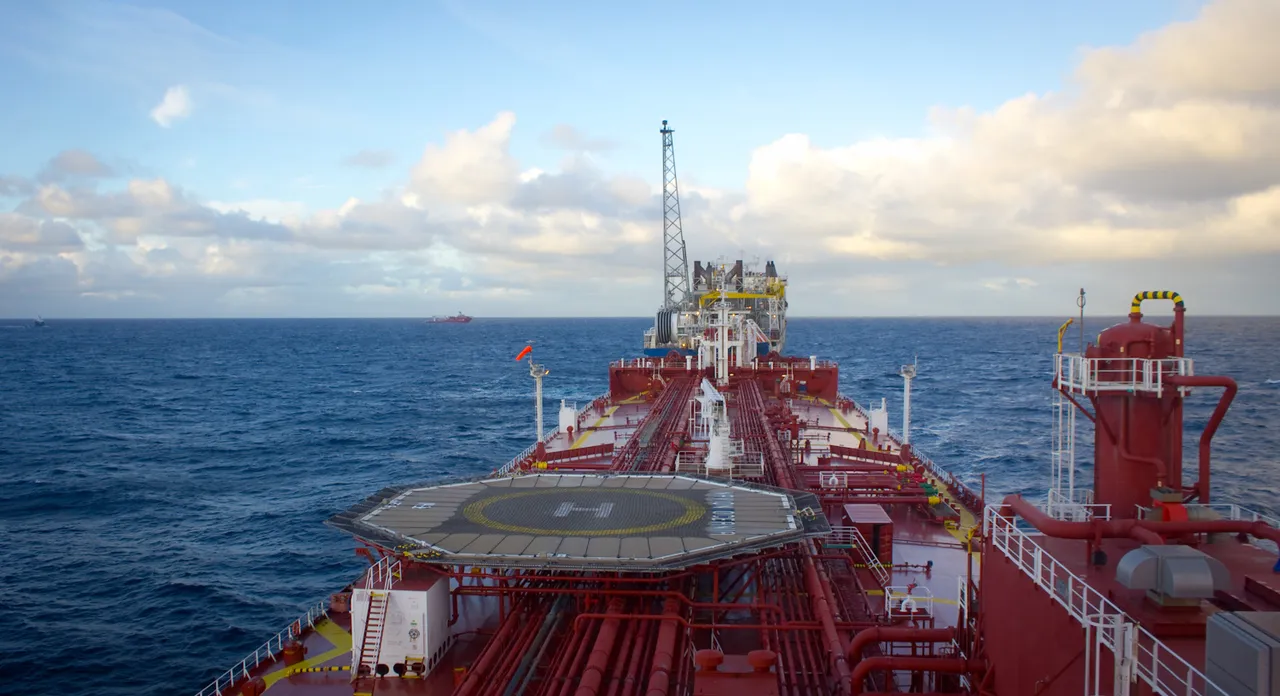
That fear is now reversing. With a ceasefire holding, tankers have returned to the strait in force — traffic has climbed back toward roughly 75% of pre-conflict levels, CNBC reported — easing fears that Gulf supply would be cut off. As the threatened disruption failed to materialize, the premium came out of the price, and crude slid back toward where it traded before the crisis.
Why a lower oil price matters
Cheaper crude ripples well beyond energy markets. It feeds through to gasoline and diesel, easing costs for households and businesses, and it pulls down headline inflation — a relief for central banks weighing how long to keep interest rates high. For oil importers, from Europe to Asia, it is a tailwind; for producers and energy companies, the opposite. After a month in which the Middle East threatened to reignite an inflation problem, oil's retreat removes — for now — one of the bigger risks hanging over the global economy.
The other half of a volatile week: the AI trade cools
Equities had their own bout of turbulence, centered on the trade that has powered the 2026 rally: artificial intelligence. After a relentless run, crowded AI and chip names came in for profit-taking, dragging the tech-heavy indexes lower on the week even as the broad market held up better. (Boursel hasn't independently verified the precise daily index levels reported elsewhere, so we'll stick to the direction.)
The pullback looked more like a pause than a reversal. The big technology indexes remain well up for the year, and the move had the hallmarks of investors trimming richly valued, heavily owned positions rather than fleeing the theme — a rotation out of the hottest corner of the market rather than a broad retreat. Analysts also pointed to the rates backdrop: any sign the Federal Reserve will keep policy tight pressures the high-growth, high-valuation stocks that dominate the AI trade, since their worth leans on profits far in the future.
The takeaway
Two of the year's defining forces moved in the same week and in a reassuring direction: the geopolitical risk premium that had inflated oil deflated as shipping normalized, and the speculative heat in AI stocks cooled without cracking. Neither is a forecast — oil can spike again on the next Gulf headline, and the AI trade has defied doubters all year. But for a market that spent June bracing for an energy shock, a week that ended with cheaper crude and a calmer tech tape counts as the kind of volatility investors can live with.