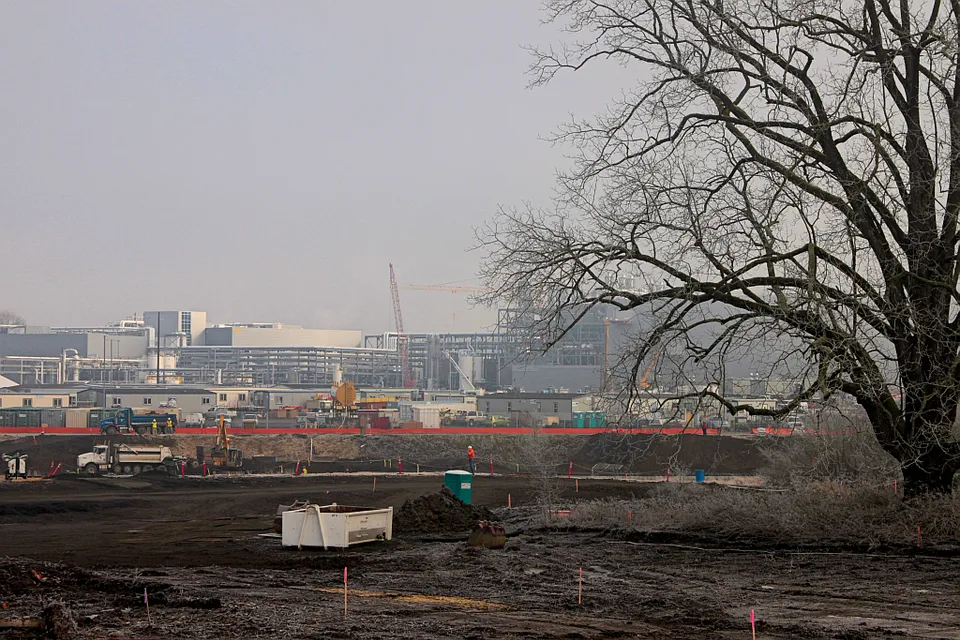
Boise has been Micron's hometown for four decades. It is now becoming Micron's construction site. The company is investing approximately $50 billion in Idaho over a two-decade build-out, anchored by two high-volume, leading-edge DRAM fabs with about 600,000 square feet of cleanroom each, co-located with its research campus so new memory technology can move from lab to production line without crossing an ocean.
Washington is a partner in the project. Micron's award from the CHIPS Program Office totals $6.44 billion in direct funding across its Idaho, New York and Virginia projects, plus $65 million for workforce development, part of a national goal to lift US advanced-memory manufacturing from under 2% of global output today to roughly 10% by 2035. The Boise site alone is projected to create 3,500 manufacturing and facility jobs and 6,000 construction jobs.
Why the math finally works
Memory chips were long the semiconductor industry's brutal commodity business, which is precisely why so little of it stayed in America. AI changed the equation. High-bandwidth memory, the stacked DRAM that feeds data-hungry AI accelerators, is the scarcest input in the AI supply chain after the accelerators themselves, with AI demand absorbing more than half of global HBM output and manufacturers reported to be effectively sold out through 2026. Scarcity plus subsidy is what turns a $50 billion hometown bet from sentiment into strategy.
What a mega-fab does to a midsize city
The strain shows up in land, water and roads before it shows up in payrolls. Micron has had more than 1,140 acres annexed into Boise city limits since 2022 and recently asked the city for another 240 acres for electrical infrastructure. Fabs are thirsty: reporting on the project puts the existing plant's water use at 4.7 million gallons a day, with the first new fab lifting daily demand to over 10 million gallons, in a high-desert region where water rights are already contested. And access is a live dispute: a single road serves the industrial area, and residents and officials have pressed the question of who pays for a second one.
Labor economics cut both ways. Thousands of well-paid construction and fab jobs are a windfall for Idaho wages; they are also fuel under a housing market that Micron's growth has historically helped drive. The pattern is familiar from Phoenix and Columbus, the other CHIPS-era boomtowns: the subsidy arrives as a national-security line item and lands as a local housing, water and infrastructure problem.
The test case
Micron's Boise expansion, with its first new fab structurally complete and initial wafer output targeted for next year, is now one of the cleanest tests of whether chip re-shoring works as economic policy: whether a midsize American city can host leading-edge manufacturing at Asian scale, and whether the AI memory boom lasts long enough to repay the concrete being poured today. For investors in the memory cycle, and for every city courting a fab of its own, Boise is the experiment worth watching.