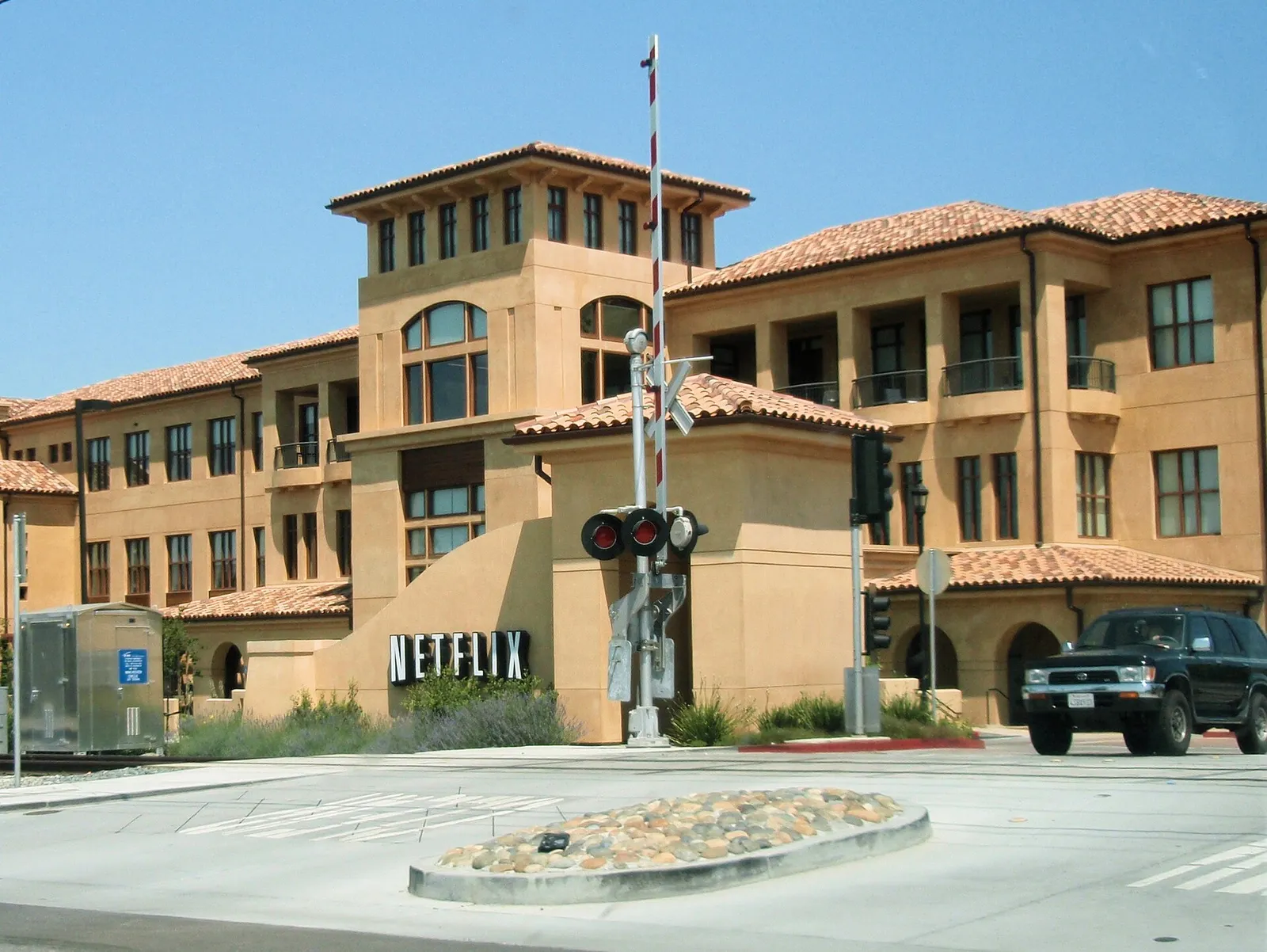
Netflix paid about $587 million in cash for InterPositive, an artificial-intelligence filmmaking startup co-founded by the actor and director Ben Affleck. The company announced the acquisition in March but did not attach a number to it at the time; the price surfaced in a regulatory filing covering the period ended June 30.
The figure came in below what had been expected. Bloomberg had earlier reported the deal could reach roughly $600 million.
What the company actually makes
InterPositive's tools are aimed at post-production, the editing stage after filming ends, rather than at generating finished scenes from scratch. The software addresses missing shots, background replacements and incorrect lighting, the gaps that show up in an edit when a scene was shot on a tight schedule, in the wrong light, or without a piece of coverage the editor later needs.
That distinction matters commercially. Reshoots are among the most expensive line items in film and television, because they mean reassembling a cast, crew and location that have already dispersed. Software that repairs footage in the edit attacks a cost that studios can measure, which makes it an easier purchase to justify than tools whose output would have to survive a creative argument.
Affleck's framing, and the industry's
The entire InterPositive team moved to Netflix with the deal, and Affleck joined as a senior advisor. He has positioned the technology as an assist rather than a substitute, saying he wanted to "protect the power of human creativity."
That framing is doing real work. Generative AI remains contested in Hollywood, where its use was central to the 2023 writers' and actors' strikes, and a well-known director vouching for a tool carries weight with crews that might otherwise treat it as a threat to their jobs. Whether the framing holds depends on how the tools get used at scale, which is a question about Netflix's production practices rather than about the software.
Netflix has not been waiting for the acquisition to start. Roughly 300 of its titles have already used generative AI in some form.
What the price signals
For context on scale, $587 million is a substantial cash outlay for a tooling acquisition but a modest one against Netflix's annual content budget, which runs to the high tens of billions of dollars. Read that way, the deal is less a bet on AI as a product than an attempt to own a piece of production infrastructure outright rather than license it from a vendor, and to keep it away from competitors.
The open question is whether the savings materialize. Post-production fixes reduce reshoot costs only if the output clears the quality bar for a finished title, and neither Netflix nor Affleck has published figures on how much the tools have saved on the titles that used them. Until that evidence appears, the $587 million is best read as a statement of expected value, not a demonstrated one.