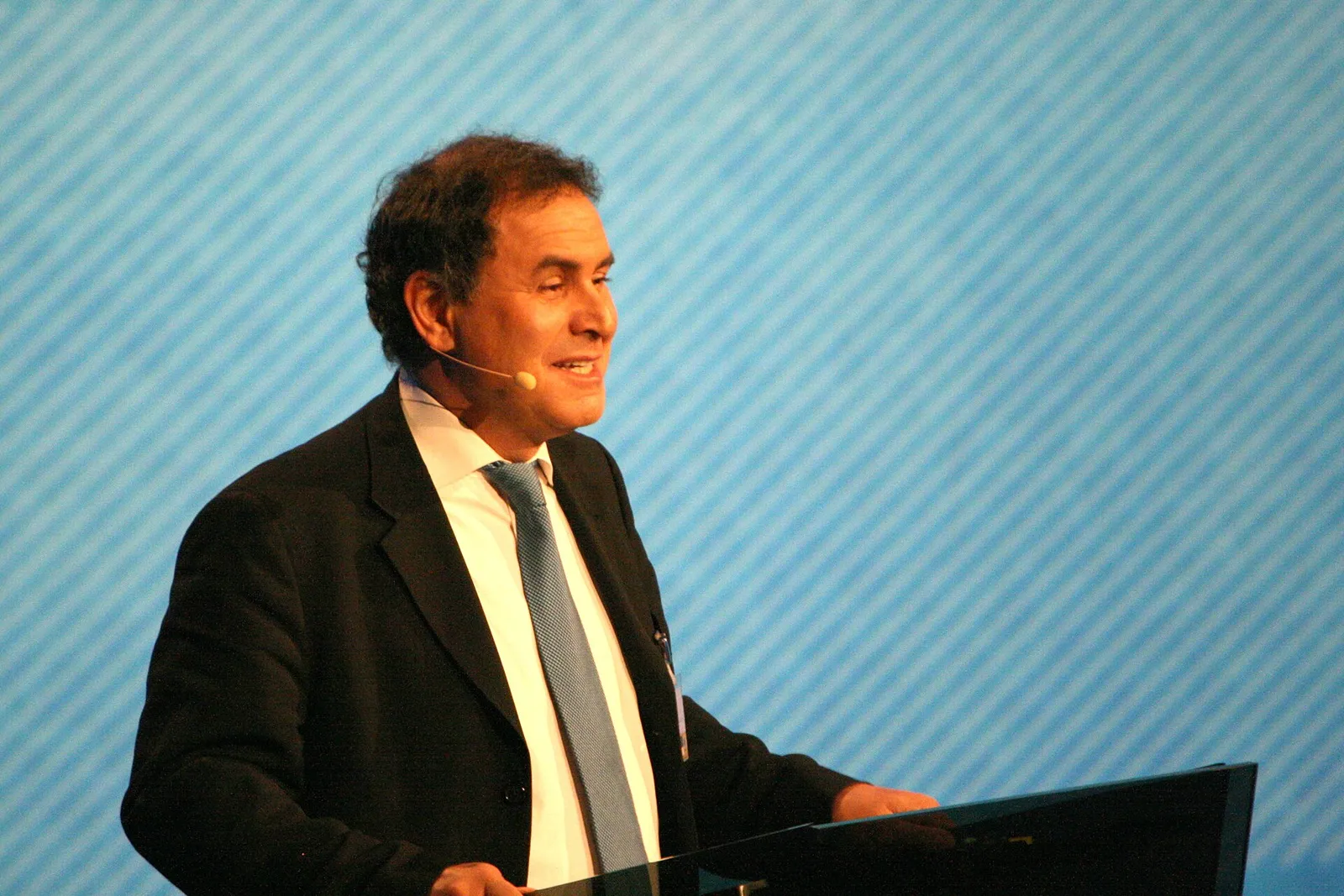
Few economists have been as withering about cryptocurrencies as Nouriel Roubini. The New York University professor known as "Dr. Doom," who built his reputation warning of the 2008 financial crisis, has for years argued that most digital assets are "not even assets as they are not backed by anything — only vaporware."
Now Roubini is joining the very industry he criticized — though on his own terms. On June 23, 2026, his firm Atlas Capital Team published a whitepaper, which Roubini co-authored, introducing what it calls the "Technodollar": a digital reserve asset that Atlas says is backed "not by a single commodity but by a broad claim on America's most productive companies" and assets.
What the Technodollar actually is
The product reaches investors through a token called USAFi, described as a permissionless ERC-20 token — a standard blockchain token format — tied to a regulated security. According to CoinDesk, USAFi is backed by the Atlas America Fund (Nasdaq: USAF), an exchange-traded fund overseen by Roubini that holds U.S. Treasuries, real estate, gold and agricultural commodities, intended to "preserve capital through different economic environments."
The token is slated to launch in the third quarter of 2026 under the framework of Dubai's Virtual Assets Regulatory Authority (VARA), and is aimed primarily at investors outside the United States. Tokenization infrastructure is provided by Securitize, a firm backed by asset-management giant BlackRock, according to the launch announcement.
Tokenization, explained
"Tokenization" means representing ownership of a traditional asset — a Treasury bond, a share, a bar of gold, a building — as a digital token that lives on a blockchain, the shared electronic ledger first popularized by Bitcoin. The idea is that such tokens can be transferred and settled around the clock, potentially faster and more cheaply than through conventional financial plumbing. Assets handled this way are commonly called "real-world assets," or RWAs, to distinguish them from purely speculative tokens with nothing tangible behind them.
The sector is no longer fringe. Excluding stablecoins, the tokenized-asset market has grown to more than $30 billion, with established players including BlackRock, Franklin Templeton and Apollo already running tokenized money-market, Treasury and credit products.
The skeptic's distinction
The move is striking precisely because of who is making it. Roubini's pitch rests on a distinction he has drawn before: between cryptocurrencies, which he still views as speculative, and blockchain technology itself, which he now argues can usefully carry assets that already have value. "We are living through the most dangerous period for savers in a generation," he said, citing inflation, trade wars and geopolitical stress — framing the Technodollar as an answer to that risk rather than a conversion to crypto maximalism.
His involvement gives the tokenization story an unusual booster, and skeptics may note the irony of a famed crypto critic adopting its core technology. As with any new financial product, the questions that matter — how the fund is governed, how redemptions work, and how it performs across market cycles — will be answered over time, not at launch. This article is informational and not investment advice.