Scotland is becoming an early test of a question facing governments everywhere: how many enormous, power-hungry AI datacentres can a country absorb before its electricity grid and climate targets buckle. For now, Scotland's government has come down against the most drastic option, a freeze, while signalling that the rules are about to get tighter, as The Guardian reported.
What was proposed, and what was rejected
Campaigners, environmental groups and some local councils, including Edinburgh, have asked the Scottish government to impose a moratorium on new datacentres until clear "green" standards and environmental checks are in place. First Minister John Swinney has declined to go that far. But he told members of the Scottish Parliament that he would consider new national planning guidance to balance the projects against energy and climate goals, and would "explore" whether decisions on the largest "hyperscale" datacentres should be taken at national level rather than by individual local councils, The Scotsman reported. A datacentre is a warehouse of computer servers; a "hyperscale" one is a very large facility of the kind AI now demands.
The physical limits
The concern is not abstract. Scotland has about 24 datacentres somewhere in its planning pipeline, and the biggest are vast. Two of the largest proposed projects alone, in Fife and near Falkirk, would together need on the order of 900 megawatts of power, close to a quarter of Scotland's peak electricity demand, according to The Scotsman. Those two applications have each drawn thousands of public objections.
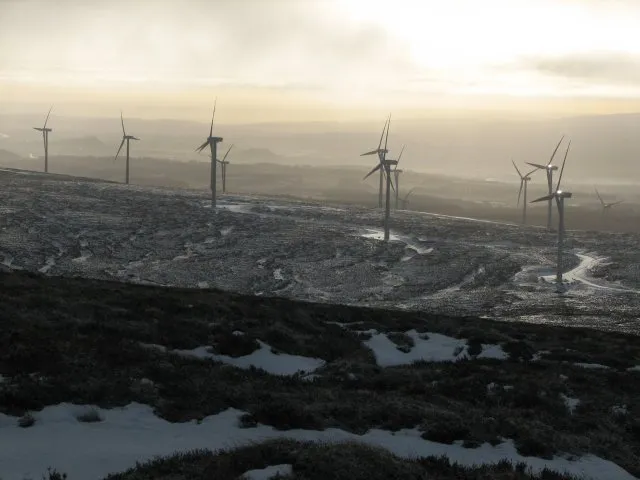
Two resources are at the heart of the worry. The first is electricity: AI datacentres draw enormous, constant power, and connecting them can strain a grid and compete with other users. The second is water, since many centres use large volumes to cool their servers. Set against Scotland's legally binding climate targets and its pitch as a clean-energy leader, a rush of high-consumption facilities is politically awkward, even though Scotland's abundant wind power is part of what makes it attractive to datacentre developers in the first place.
The clash with the UK's AI push
Scotland's caution sits uneasily with the wider British strategy. The UK government has been actively courting AI infrastructure, designating "AI growth zones" and treating datacentres as critical national infrastructure to be built quickly, with streamlined planning and priority grid connections. Scotland's own AI strategy, published earlier in 2026, likewise embraced datacentres as an economic opportunity, leaning on the country's renewable-energy strengths.
That is the bind. Move to restrict or nationalize approvals, and Scotland risks pushing billions of pounds of investment south to England or abroad, and appearing to work against the UK's AI ambitions. Wave the projects through, and it risks its grid, its water and its climate credibility.
Why it matters
The Scottish standoff is a local version of a global collision. The AI build-out is running into hard physical limits, power, water and land, and the constraint is increasingly the grid rather than the chips. How governments referee the fight between datacentre investment and community and environmental concerns will shape where the world's AI capacity actually gets built. Scotland's answer, still being worked out, will be watched well beyond its borders.