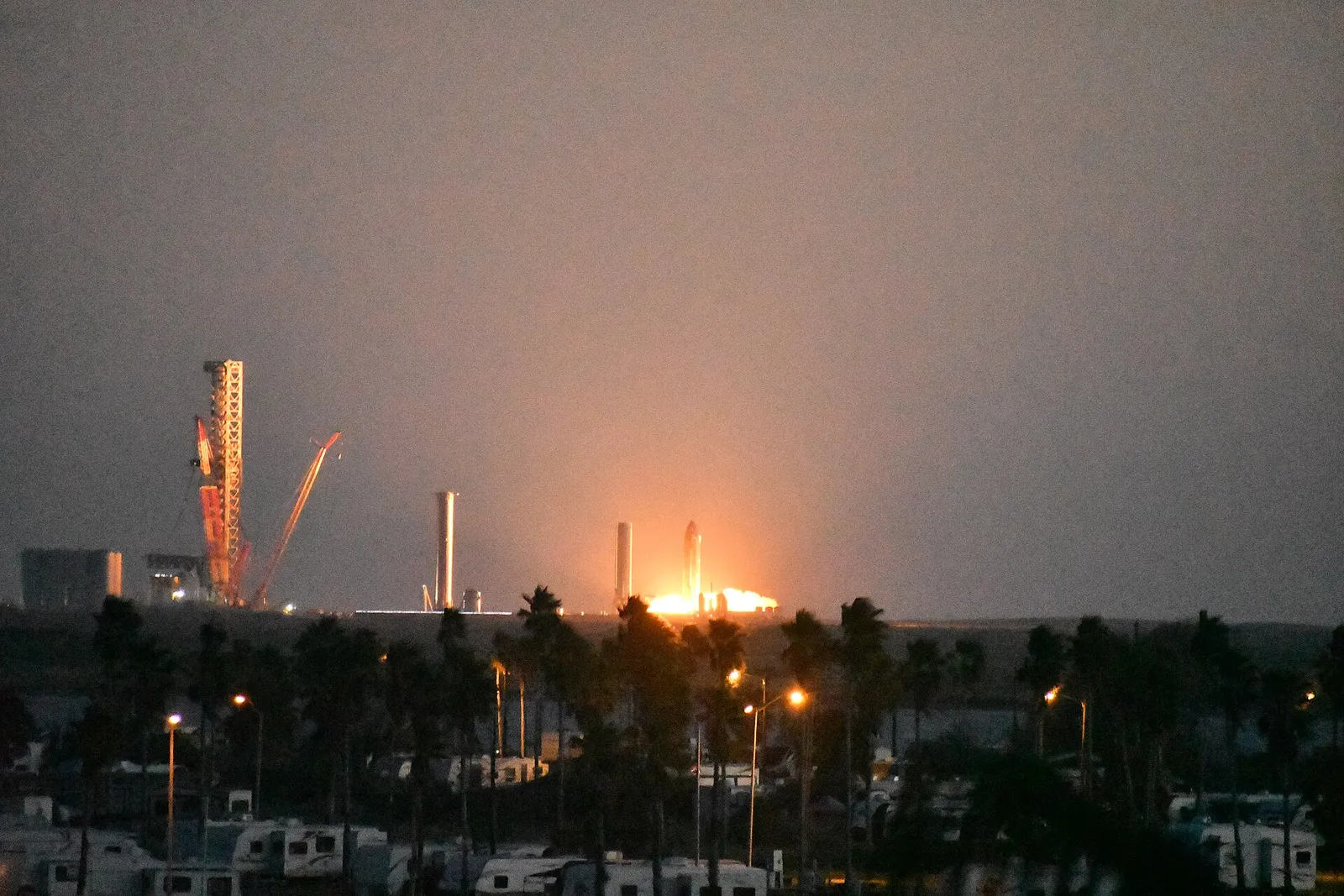
SpaceX's giant Starship rocket never left the ground. In the final seconds of its ignition sequence on Thursday evening, several of the vehicle's engines failed to start, triggering an automatic abort that shut the launch down on the pad, according to the Las Vegas Sun. Chief executive Elon Musk said the automated system stopped the launch when the engines did not all light, and that SpaceX would try again within days.
What "aborting" a launch means
An abort like this is a safety mechanism working as designed, not an explosion. Modern rockets ignite their engines a moment before release while held down, so the flight computer can check that everything is firing correctly. If it detects a problem, as it did here, it cancels the launch before the rocket ever lifts off. That is far preferable to launching a malfunctioning vehicle. In engineering terms it is a routine, if frustrating, part of testing a new rocket.
Why the stock cared
What is new is that this setback showed up in a share price. SpaceX went public in June, and its stock (ticker SPCX) fell roughly 3.6% in after-hours trading, to about $126.45, according to CNBC. During the regular session the shares had already touched an all-time low and slipped below their $135 initial-offering price for the first time since the debut.
As a private company, SpaceX could treat a scrubbed test as an ordinary bump in an iterative process: find the fault, fix it, fly again. As a public company, thousands of investors now reprice that risk in real time. A scrubbed flagship test raises questions about timelines for the missions that are supposed to generate revenue, above all deploying the Starlink satellite network, and nervous shareholders react. The move below the IPO price is a psychological marker too, the point at which early public investors are, on paper, underwater.
Why Starship matters to the story
Starship is central to SpaceX's business case, not a side project. It is the massive, fully reusable rocket the company is counting on to launch large batches of satellites cheaply and, eventually, to carry cargo and people to the Moon and Mars. SpaceX's existing Falcon 9 rocket is a proven workhorse, but Starship is a far larger, newer vehicle still being tested, and its reliability is the crux of the company's long-term revenue plans. Each successful or failed test is therefore read as evidence for or against the core investment thesis.
What to watch next
Musk indicated the next attempt would come quickly, a turnaround that reflects SpaceX's fast test cadence, though any launch also needs clearance from US aviation regulators. For the stock, the next flight matters more than this one: a clean launch would ease worries about the program's maturity, while another abort or a failure would likely harden the doubts that have pushed the shares below their offering price. Boursel does not forecast the share price; the takeaway is that a company long insulated from public markets is now living with their verdict, test by test.