SpaceX will be added to the Nasdaq 100 on July 7, just 25 days after it began trading on the Nasdaq exchange on June 12, Investing.com reported. The inclusion is expected to set off roughly $4.3 billion in automatic buying, according to a J.P. Morgan estimate cited in the report.
What the Nasdaq 100 is
The Nasdaq 100 is an index of the 100 largest non-financial companies listed on the Nasdaq, weighted by market value. It is the benchmark behind some of the world's biggest exchange-traded funds, most prominently Invesco's QQQ. Being added to it is more than a badge of prestige: it changes who is required to own the stock.
Why inclusion forces buying
When an index adds a company, every fund that promises to track that index has to buy the new member to match it. This is not a judgment call. A passive fund — one designed to mirror an index rather than pick stocks — must hold each constituent at roughly its index weight, or it will drift away from the benchmark its investors are paying it to follow. So the moment SpaceX enters the Nasdaq 100, index funds collectively have to buy billions of dollars of its shares regardless of the price.
That mechanical, price-insensitive demand is what the $4.3 billion figure refers to: the value of SpaceX stock that passive funds will need to acquire to bring their holdings in line. Active traders often try to get ahead of these well-telegraphed events, buying before the rebalancing in anticipation of the forced demand — which can lift the price before the index change actually takes effect.
A fast track onto the index
SpaceX's quick entry — weeks rather than the usual longer wait — reflects a change in Nasdaq's own rules. The exchange recently eased requirements around profitability, how long a company must have traded, and the size of its public share float, clearing a path for newly listed firms to qualify almost immediately.
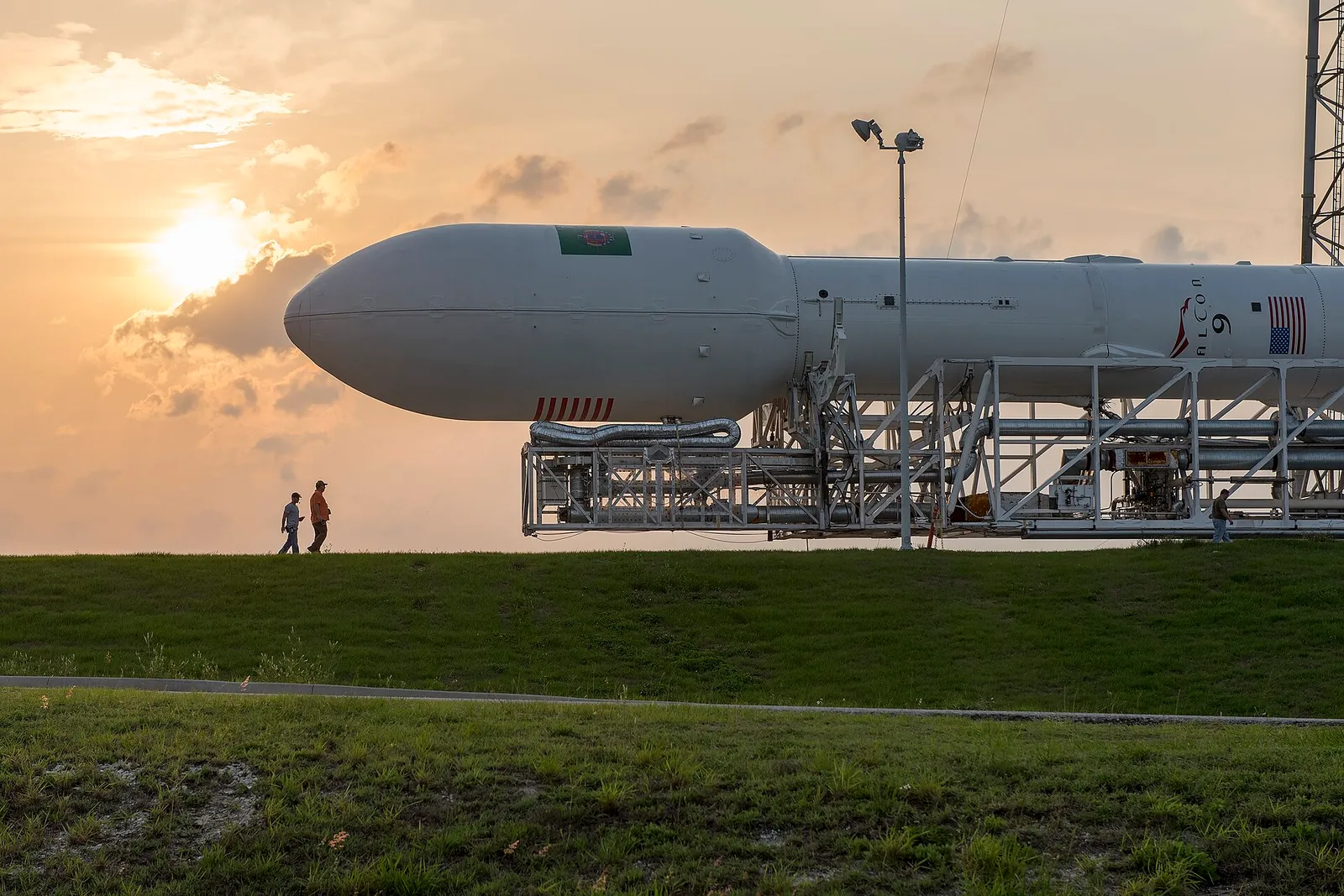
That matters in SpaceX's case because the company is not consistently profitable. Its launch business, led by the reusable Falcon 9 and the Starlink satellite-internet service, brings in substantial revenue, but the company reported a net loss of about $4.9 billion last year, reflecting the heavy cost of developing its next-generation Starship rocket. Under Nasdaq's revised criteria, that red ink no longer blocks inclusion.
The S&P 500 door stays shut, for now
SpaceX is not on the same fast track to the S&P 500. S&P Global, which runs that index, declined to relax its rule that a company must have traded publicly for at least 12 months before it can be considered. That keeps SpaceX out of the S&P 500 until at least mid-2027, and only then if it meets the other criteria.
The distinction carries weight for investors: S&P 500 index funds hold far more money than Nasdaq 100 trackers, so an eventual S&P inclusion could unleash a much larger wave of passive demand than next week's event.
What to watch
The near-term question is whether the buying is already in the price. Because index changes are announced in advance, much of the mechanical demand can be front-run and absorbed before the official rebalancing date. Investors should also remember the effect is one-time: once passive funds have set their SpaceX weight, there is no recurring forced buying. After that, the stock trades on its fundamentals — launch contracts, Starlink subscriber growth and the cost of building Starship — like any other. Morningstar's chief equity market strategist, Michael Field, said the fast-tracked inclusion "highlights investor interest in the stock," while adding that his firm believes SpaceX is overvalued — a reminder that index membership and fair value are separate questions.