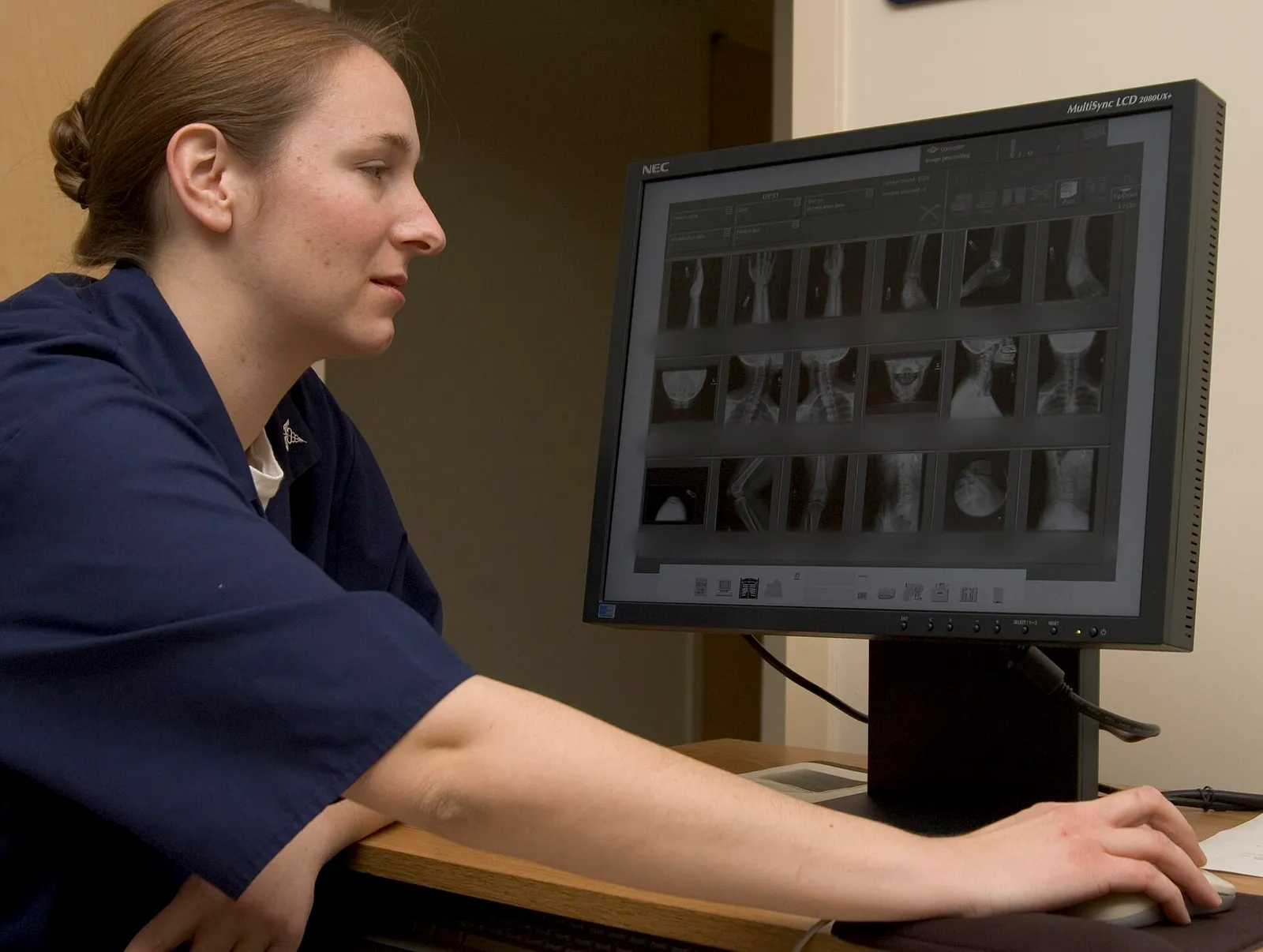
In 2016, at a machine learning conference in Toronto, Geoffrey Hinton told the audience that hospitals should stop training radiologists. It was "completely obvious," he said, that within five years, or ten at most, AI would read medical images better than people. "If you work as a radiologist, you're like the coyote that's already over the edge of the cliff but hasn't yet looked down."
A decade on, the average US radiologist salary was $571,000 in 2025, according to Fortune. The number of active radiologists in the United States has grown by about 10 percent over that period.
"We actually have a huge shortage of radiologists. So the exact opposite of this prediction has happened," Christoph Herpfer, an economist at the University of Virginia's Darden School of Business who studies physician labour markets, told the magazine. There were 7,469 active radiology job postings as of May, of which 1,470 had been open more than 60 days.
Being fair to Hinton
Hinton has since narrowed the claim, clarifying last year that he was speaking purely about image analysis and saying that human radiologists will work alongside AI to become more effective. That is a meaningful retreat from "stop training radiologists," and it should be recorded.
It is also worth separating two questions that get conflated. Was Hinton wrong that machines would become very good at reading images? Largely no; AI image analysis has advanced enormously. Was he wrong that this would eliminate the profession? Yes, and the gap between those two answers is the whole lesson.
Why the prediction failed
Three things explain it, and none is specific to medicine.
The first is that a job is not a task. Reading scans is the most visible part of radiology and far from all of it. Radiologists perform image-guided procedures, advise other physicians on which test to order, communicate findings to patients and colleagues, and carry legal and professional responsibility for the interpretation. Automating the most legible component of a role leaves the rest in place.
The second is that demand moved. Imaging volumes have risen as populations aged and as insurance coverage expanded, and cheaper, faster interpretation tends to generate more scanning rather than less. When automation reduces the cost of an activity, consumption of it frequently rises, which can more than offset the labour saved per unit. Radiology has been a clean example.
The third is accountability. A system that is highly accurate still produces cases where it is wrong, and someone has to be answerable for those. That requirement does not disappear with better models; it concentrates the human role on exceptions and on responsibility, which is harder to automate than throughput.
What this does and does not tell us
The honest caveat is that being early is not the same as being wrong, and nothing here proves AI will not eventually displace radiologists. Hinton's timeframe has passed, but timeframes are the easiest part of a forecast to get wrong while the direction is right.
Nor is the wider labour picture reassuring by default. Snap and Block have cited AI in cutting thousands of jobs. Anthropic's chief executive Dario Amodei has warned AI could eliminate half of entry-level white-collar jobs within five years, though he has more recently argued it may also transform and expand certain kinds of work rather than simply replace them.
The useful generalisation is narrower than either the doom or the dismissal. Automation has historically removed tasks faster than it has removed occupations, and the occupations most exposed are those where the automatable tasks constitute most of the job and where demand is fixed. Radiology failed both tests: the readable-image portion was a minority of the work, and demand for imaging was nowhere near saturated.
For anyone assessing which jobs are genuinely at risk, that is a more useful screen than asking whether a model can do the headline task. The questions are what fraction of the role the task represents, whether cheaper output expands the market, and who carries the liability when it goes wrong.