This is market analysis, not investment advice.
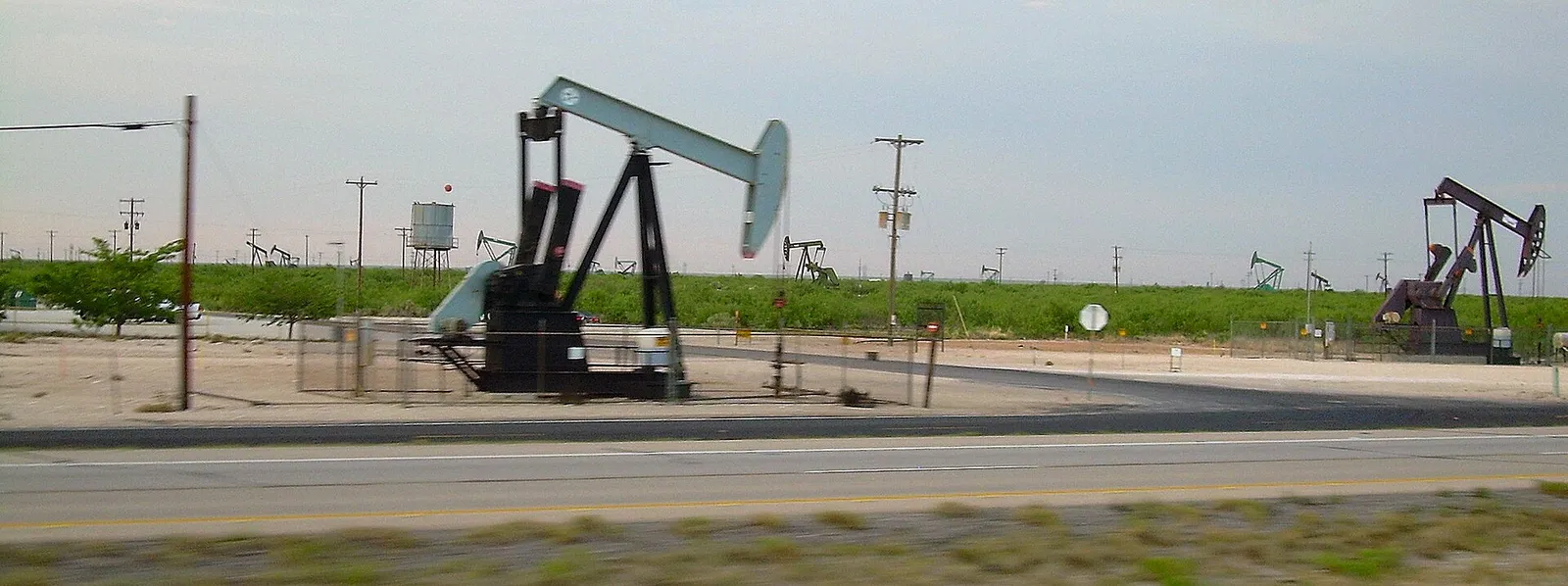
One of the most unusual ways to bet on artificial intelligence in 2026 isn't a chipmaker or a cloud company. It's a landlord. Texas Pacific Land Corporation (NYSE: TPL) owns roughly 880,000 acres of West Texas, mostly in the oil-rich Permian Basin, and makes money simply by owning the ground, Yahoo Finance reports.
A landlord, not a driller
TPL doesn't drill wells or operate anything. It collects royalties — a cut of the revenue — when energy companies pump oil and gas from beneath its land, charges fees for pipelines, roads and power lines that cross it, and sells brackish (non-drinkable) groundwater to drillers. That toll-taking model throws off remarkable numbers: TPL reported $798 million of revenue and $481 million of net income in 2025, a margin north of 60% that few companies outside software can match, and it carries no debt, per Yahoo Finance.
Why AI came to the desert
The link between arid Texas land and AI is, at first, baffling. But the warehouse-sized data centers that train and run AI models need three things in bulk: cheap land, electricity and water for cooling. West Texas has all three. The land is open and inexpensive; the Permian is laced with natural-gas and power infrastructure built for the oil industry, so generators can be set up next to a data campus — a big advantage when coastal power grids are too congested to connect new sites quickly; and TPL controls large stores of brackish water that can cool servers without draining scarce drinking-water supplies.
That has made TPL's geography newly valuable to the AI build-out — a theme Boursel has tracked elsewhere, from gas-turbine shortages to surging data-center power demand.
The deals putting it on the map
Two moves crystallized the story. In late 2025, TPL made a $50 million investment in Bolt, an AI-infrastructure firm chaired by former Google chief executive Eric Schmidt, pairing capital with water-supply rights. Then in June 2026, TPL agreed to provide surface acreage and brackish water to Chevron's "Project Kilby," a large power project in Reeves County, Texas, the companies announced. Chevron has said the power would feed a neighboring data-center campus; per Chevron's own statement, the project is tied to a long-term agreement to supply Microsoft. (Boursel could not independently confirm the Microsoft terms beyond Chevron's announcement.)
The valuation question
Investors have already paid up for the theme. TPL shares trade around 54 times trailing earnings, per Yahoo Finance — a multiple you'd expect on a fast-growing tech company, not a land trust — after a 3-for-1 stock split late last year. The catch: the great bulk of TPL's revenue still comes from its old businesses, oil-and-gas royalties and water sales. Data-center-related income is, so far, a small slice. The high price effectively bakes in years of AI-driven growth that has only just begun.
The risks
The thesis has real soft spots. TPL's core income rises and falls with oil prices, since it depends on Permian production. The AI deals, while eye-catching, are still modest next to the royalty business. And the whole story leans on continued heavy capital spending by the cloud giants — the discretionary investment that could slow if the AI boom cools, taking demand for Permian land and power with it. At 54 times earnings, investors are paying for a future that hinges on construction timelines, grid approvals and spending plans that can change.
The company traces back to 1888, when bondholders of a failed railroad were handed millions of acres of Texas scrubland. More than a century later, that same dirt is being repriced for the computing age — not because of what's under it, but because of what can be built on top.