This is general information, not investment advice. Crypto is volatile and high-risk.
If Bitcoin is digital money, Ethereum is closer to a programmable platform. That difference is the whole story.
A programmable blockchain
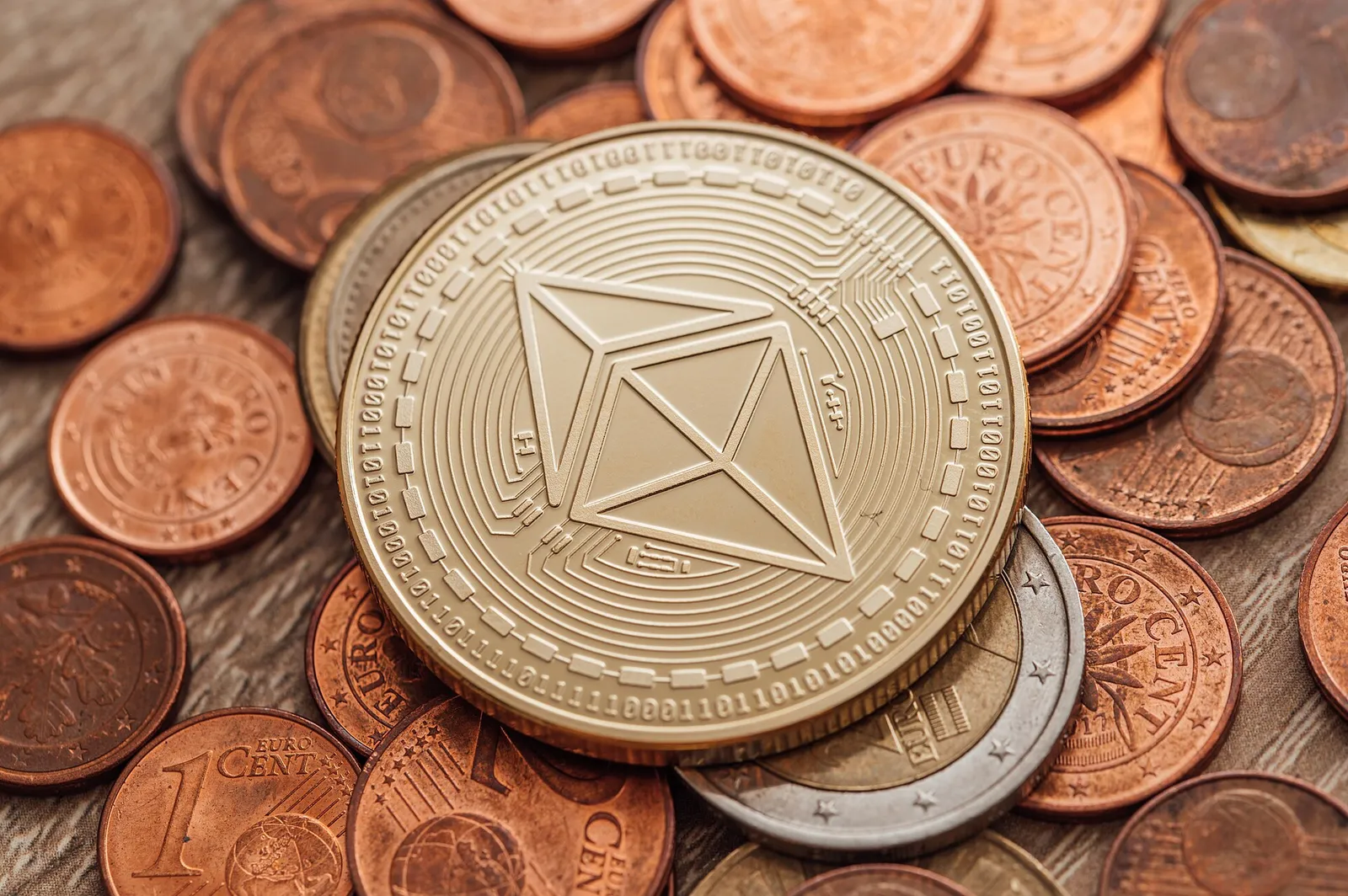
Bitcoin was built to do one thing: move value without a bank in the middle. Ethereum, launched in 2015 by a team including Vitalik Buterin, set out to be broader — a global, open "computer" anyone can program, as ethereum.org puts it. Its native currency is Ether (ETH), the second-largest cryptocurrency by market value after bitcoin. The point isn't just payments; it's running code on a shared, tamper-resistant network.
What a smart contract is
Ethereum's defining feature is the smart contract: a program stored on the blockchain that executes automatically when its conditions are met — no middleman. Picture an escrow: normally a third party holds money and releases it once a condition is met. A smart contract writes that rule into code — "if address A delivers X, release Y ETH to address B" — and runs it itself. Once deployed, neither side can quietly alter it, and the code is open for anyone to inspect. These contracts power nearly everything built on Ethereum.
Gas: paying to run it
Running code on a shared network isn't free. Users pay gas, denominated in ETH, for the computational work — a simple transfer costs little, a complex trade costs more. When the network is busy, users bid up gas and fees rise; at peak congestion in 2021, average fees ran into the tens of dollars. Gas is how the network allocates limited capacity and compensates those who maintain it.
What's built on it
Ethereum is the base layer for most of crypto's major application categories — and ones we've explained before:
- DeFi (decentralized finance): lending, trading and yield without banks.
- Stablecoins: dollar-pegged tokens like USDC, issued as Ethereum contracts.
- NFTs: unique tokens recording ownership of digital items.
- DAOs: member-run organizations governed by on-chain voting.
The Merge: a 99% energy cut
Ethereum's biggest technical change came on September 15, 2022 — "The Merge" — when it switched from energy-hungry proof-of-work mining to proof-of-stake, per ethereum.org. Instead of computers racing to solve puzzles (Bitcoin's method), Ethereum now uses validators who lock up — "stake" — ETH as collateral and are chosen to confirm blocks in proportion to their stake; cheating costs them their stake ("slashing"). The switch cut Ethereum's energy use by roughly 99.95%.
The criticisms
Ethereum isn't without problems. Fees and congestion can make small transactions impractical, which spawned "layer-2" networks (Arbitrum, Optimism, Base) that process activity off the main chain to cut costs — at the price of more complexity. Smart-contract bugs can be exploited; the 2016 "DAO hack" drained millions and split the chain. Regulatory uncertainty lingers over whether ETH is a security. And competition from faster, cheaper rivals like Solana keeps pressure on.
Where it stands
By most measures — value locked in apps, active developers, breadth of use — Ethereum remains the dominant smart-contract platform. Whether it stays there depends on how well its scaling roadmap keeps pace with demand and rivals. For a newcomer, the key idea is simple: Ethereum isn't just a coin, it's the infrastructure a large slice of crypto runs on.