Natural gas heats homes, powers factories and generates a large share of the world's electricity. But it has always had a problem: it is hard to move. Liquefied natural gas, or LNG, is the technology that solved it, and in doing so reshaped global energy markets. Here is how it works and why it matters.
What LNG actually is
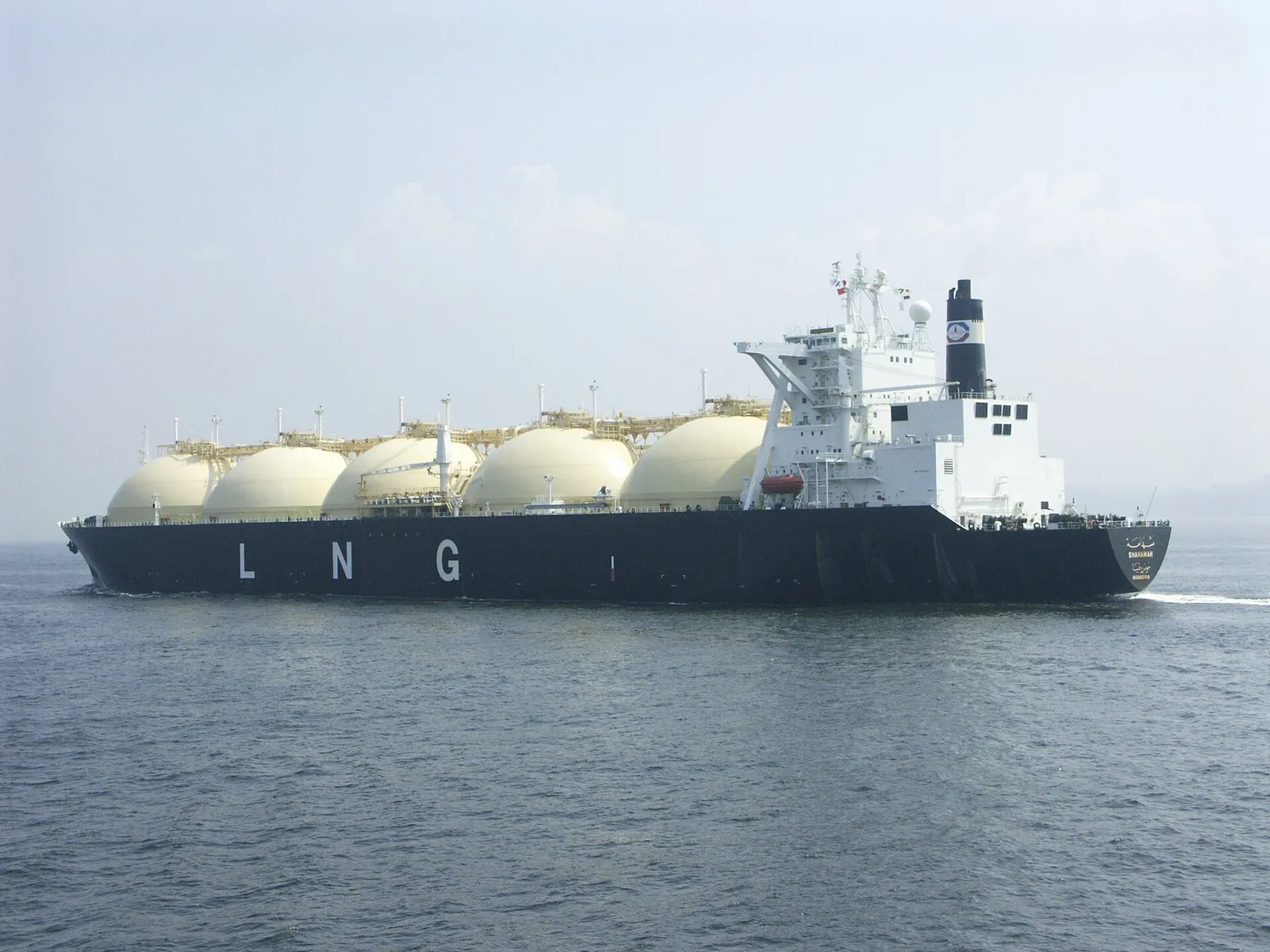
LNG is ordinary natural gas, which is mostly methane, cooled until it turns into a liquid. That happens at around minus 162 degrees Celsius (about minus 260 Fahrenheit), as the US Energy Information Administration explains. The point of chilling it is space: as a liquid, the gas shrinks to roughly 1/600th of its volume. That makes it possible to load huge quantities onto a ship and carry them across an ocean, something you cannot do with gas in its normal state.
The contrast with oil is the key. Crude oil is a liquid that pours easily into tankers, so it has always been globally traded. Gas, being a gas, could historically only travel through pipelines, which tie a producer to whoever is at the other end of the pipe. LNG breaks that tether.
From gas field to power grid
The LNG chain is a series of expensive steps. Gas is produced from a field and piped to the coast. There, a "liquefaction plant", built around processing units known as "trains", cools the gas into liquid. This step is costly in itself: the refrigeration burns a meaningful slice of the gas as fuel. The LNG is stored cold, then loaded onto specialized insulated ships called LNG carriers.
At the destination, an import terminal does the process in reverse, "regasification", warming the liquid back into gas so it can enter local pipelines and reach power plants, factories and homes. Every link in that chain, especially the liquefaction plants, costs billions of dollars and takes years to build, a reason new projects are approved only cautiously. That heavy upfront cost is why only a limited number of countries export LNG.
A regional fuel goes global
By freeing gas from pipelines, LNG stitched separate regional markets into something closer to a global one. The largest exporters today are the United States, Qatar and Australia, with others such as Malaysia and Nigeria also significant. The biggest buyers have traditionally been in Asia, Japan, South Korea and China, which import LNG to secure their energy supplies.
Europe's shift was more sudden. After Russia's 2022 invasion of Ukraine cut much of the continent's pipeline gas, Europe scrambled to replace it with seaborne LNG, becoming a major importer almost overnight and competing with Asia for cargoes. The United States, meanwhile, has grown into the world's largest LNG exporter, the IEA notes, a remarkable turnaround for a country that was building import terminals barely 15 years ago.
Prices, arbitrage and geopolitics
Because LNG links different regions, it also links their prices, without making them equal. Analysts track three main benchmarks: Henry Hub in the United States, TTF in Europe, and JKM in Asia. US gas is typically the cheapest of the three, with Europe and Asia usually paying more, the gaps reflecting shipping costs and local supply and demand. When those gaps widen, traders can profit by buying cheap gas in one region and shipping it to a pricier one, an arbitrage that also helps balance the global market.
For countries, the stakes are higher than trading profits. LNG has become a tool of energy security and, at times, of pressure: who supplies whom, and at what price, is now a geopolitical question. A wave of new export capacity is due this decade, which producers such as Shell expect to meet fast-growing demand, particularly in Asia. That growth sits alongside an unresolved debate: whether gas is a useful "bridge" away from dirtier coal, or an investment that locks in fossil-fuel use for decades. However that argument resolves, LNG is now a permanent fixture of the world's energy map, and of the markets and rivalries built on it. This article is informational and not investment advice.