
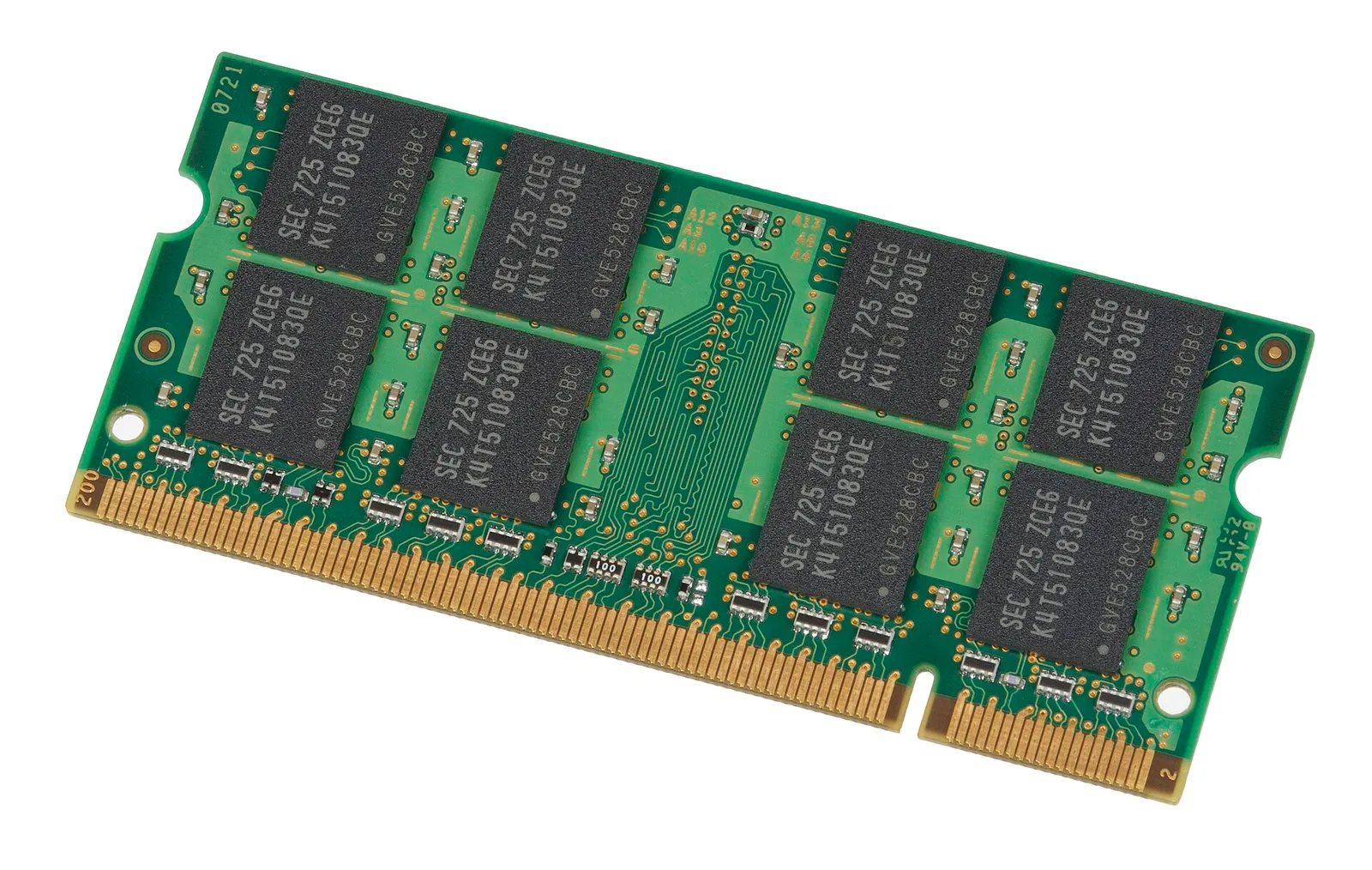
Of all the companies riding the artificial-intelligence boom, one of the less obvious has become a favorite gauge of it: Micron Technology, a maker of memory chips. Its shares have climbed sharply as AI spending has surged, and some market watchers have gone so far as to call it, as MarketWatch put it, "the most important stock in the market". Understanding why, and why others are wary, is a useful lens on the whole AI trade.
What Micron makes
Computers need two broad kinds of chips: ones that do the calculating and ones that store the data being worked on. Micron is in the second business, memory. Its main products are DRAM (dynamic random-access memory), the fast working memory a processor uses moment to moment, and NAND flash, which stores data more durably.
The product that has made Micron central to AI is a specialized form of DRAM called high-bandwidth memory, or HBM. Modern AI accelerators, the powerful chips from the likes of Nvidia that train and run AI models, are astonishingly fast, but they are useless if they cannot be fed data quickly enough. HBM is the memory that sits alongside those accelerators and shovels data into them at enormous speed. Only a handful of companies can make it well, and Micron is one of them. That makes its sales a direct read on how fast the AI data-center build-out is actually going, which is why investors treat it as a bellwether.
The bull case
The optimistic view is straightforward: demand for HBM is enormous and, unusually for this industry, visible well in advance. The companies building AI data centers plan their memory purchases far ahead, so a maker like Micron can have a large share of its output effectively spoken for before it is produced. If AI spending keeps growing, a supplier of a scarce, essential component should enjoy strong pricing and steady demand, an unusually comfortable position for a memory maker.
Why memory makes people nervous
Here is the catch, and it is a big one. Memory chips are a commodity, largely interchangeable between makers, and the memory business is famously cyclical, meaning it swings between boom and bust. The pattern has repeated for decades: demand rises, prices climb, every manufacturer races to build new factories, all that new capacity arrives at once, supply overshoots demand, and prices collapse, sometimes brutally. Memory has minted fortunes and destroyed them on this cycle more than once.
That is the fear hanging over Micron. Building chip factories takes years, and the industry is investing heavily now to meet AI demand. If that demand cools, or simply grows more slowly than the new capacity coming online, the same glut-and-crash dynamic could return, dragging prices and profits down hard. There is also concentration risk: a large share of the AI memory demand comes from a small group of giant technology firms, so if even a few of them trim their spending, the effect on Micron could be outsized.
The honest bottom line
Both things can be true at once. Micron is genuinely important, its product is essential to AI, and current demand is real and strong. And memory is the part of the chip industry with the worst track record of turning today's shortage into tomorrow's glut. Whether this cycle is different, because AI demand is structurally larger and more durable, or whether it ends the way memory cycles usually do, is the crux of the debate, and honest analysts disagree. Boursel takes no view and offers no investment advice; the useful thing is to see clearly what the stock actually represents, a bet that this time the memory cycle behaves differently.