A quiet change in mortgage rules could cost homeowners a lot of money the next time a storm damages their roof. On March 18, 2026, the Federal Housing Finance Agency (FHFA) said Fannie Mae and Freddie Mac — the entities that stand behind most US mortgages — will no longer require full replacement-cost coverage on roofs, and will accept cheaper actual cash value coverage instead, the agency announced. The rest of the house still gets full replacement-cost protection.
Because lenders' requirements effectively set the floor for what insurance most borrowers carry, loosening that floor lets insurers offer — and steer customers toward — policies that pay much less than a new roof costs.
RCV vs. ACV: the difference that matters
Two terms decide how much you collect after roof damage:
- Replacement Cost Value (RCV): pays what it costs to install a new roof today, with no deduction for age or wear (you still owe your deductible).
- Actual Cash Value (ACV): pays what your roof is worth today — the replacement cost minus depreciation for its age and condition, as Bankrate explains.
The gap can be large. Take a roof that would cost $20,000 to replace but is 10 years old: under an ACV policy, depreciation might cut the payout to roughly half — and after your deductible, you could be left covering $10,000 or more yourself. (The exact numbers depend on your policy and the adjuster's depreciation estimate; this is an illustration, not a quote.)
Watch for these policy features
Insurers use several tools that push roof costs onto you:
- Roof payment schedules: a sliding scale by age — a new roof might be covered at 100%, dropping in steps as it ages, so an older roof pays only a fraction.
- Percentage deductibles: instead of a flat $500–$1,000, many policies now use a deductible of 1%–5% of the home's insured value. On a $300,000 home, a 2% deductible is $6,000 before coverage kicks in.
- Separate wind/hail deductibles: storm damage is often subject to its own percentage deductible, on top of the roof-coverage rules above.
Why this is happening now
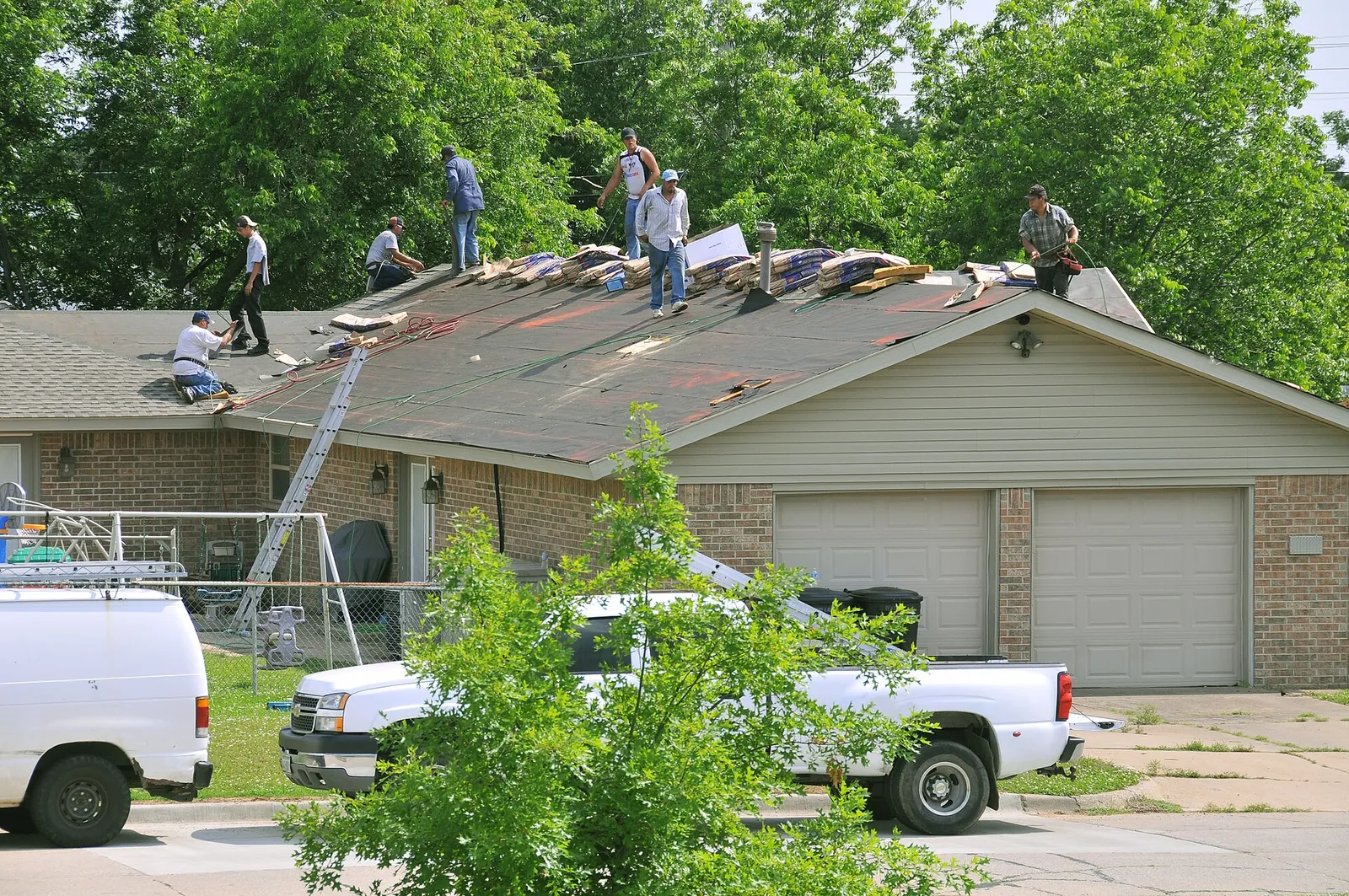
The backdrop is a home-insurance squeeze. Severe storms — especially hail, an increasingly costly and frequent peril that now causes billions of dollars in insured losses each year — have driven big claims, and roof claims are a major piece. With roof replacements running anywhere from about $5,000 to $30,000-plus, insurers in hard-hit states have raised premiums, tightened roof terms, or pulled back entirely. In Florida, average premiums have climbed to among the highest in the nation, and carriers have exited several high-risk markets, as CNBC has reported.
What to do — practical steps
This isn't advice on which policy to buy, just how to know where you stand:
- Read your declarations page. Find whether your roof is covered at RCV, ACV, or on a payment schedule — and ask your agent directly if it isn't clear.
- Calculate your real deductible. If it's a percentage (especially for wind/hail), work out the dollar figure for your home's insured value so a storm isn't a surprise.
- Document the roof now. Photos of its age and condition help support a claim later.
- Weigh the trade-off. A cheaper ACV policy lowers your premium today but raises your out-of-pocket exposure after damage; a newer roof can sometimes earn discounts.
The bottom line
The rule was billed as a way to reduce insurance costs, and premiums for some borrowers may indeed ease. But the savings come with a shift in risk: less is guaranteed from the insurer, and more falls on the homeowner when a roof actually needs replacing. Heading into hail and hurricane season, the cheapest policy on paper may be the most expensive one after the next storm — which is why it pays to know exactly what your roof coverage says before you need it.