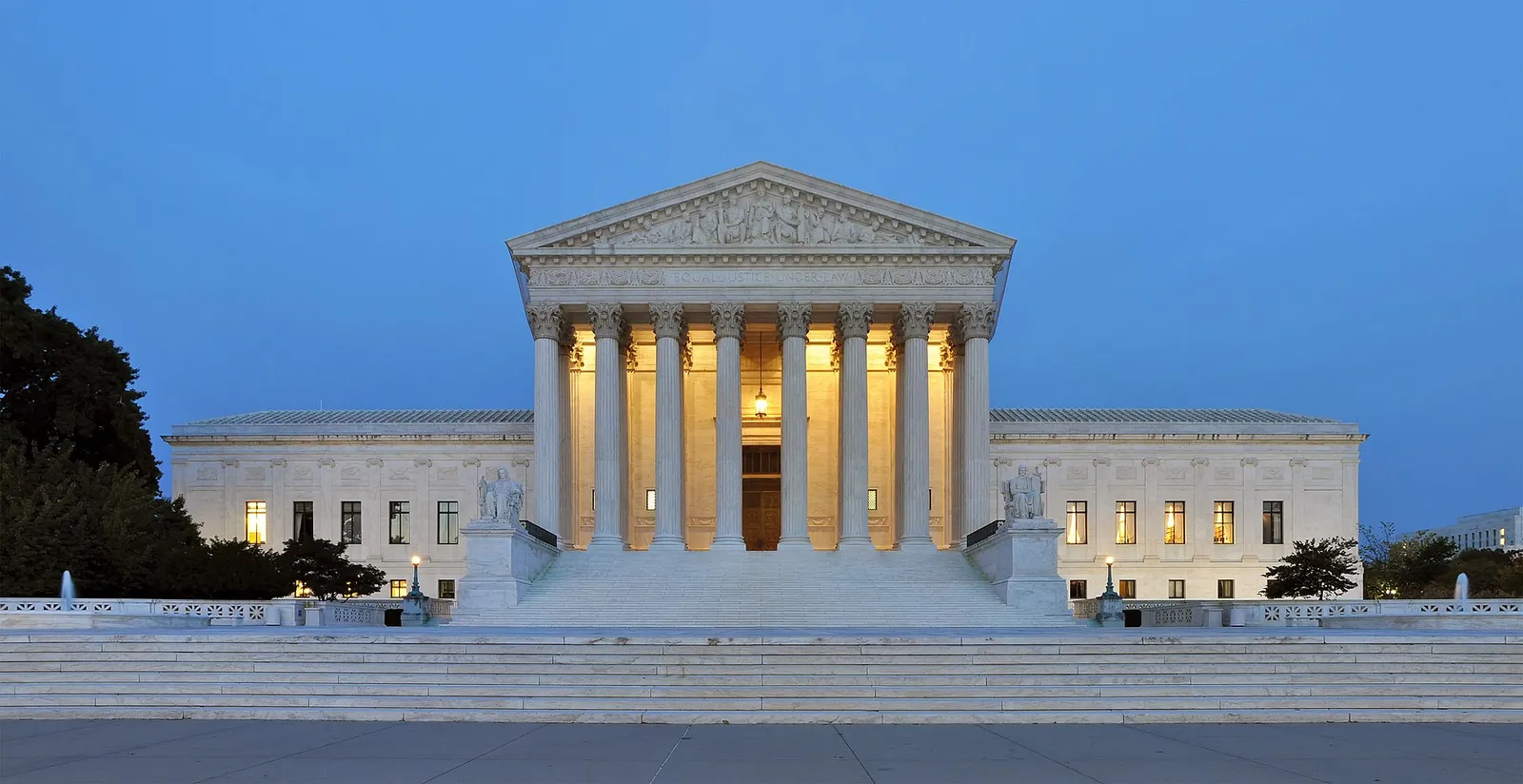
The principle that the Federal Reserve answers to no single politician got a significant — if partial — defense from the highest US court. The Supreme Court ruled 5-4 on Monday that President Trump cannot, for now, remove Federal Reserve Governor Lisa Cook, allowing her to remain on the central bank's board while her lawsuit over the firing plays out, NBC News reported.
What the Court decided
Chief Justice John Roberts wrote for the majority, joined by Justices Sonia Sotomayor, Elena Kagan, Brett Kavanaugh and Ketanji Brown Jackson; the four other conservative justices dissented. The ruling is, in effect, an interim one: it keeps Cook in place rather than settling once and for all whether a president can fire a Fed governor. Roberts reasoned that Trump had not given Cook adequate process to contest the case against her before moving to remove her.
Crucially, the Court drew a line around the central bank. In the same set of decisions it expanded presidential power to remove leaders of other independent agencies — but carved out the Federal Reserve, preserving the long-standing protection that its governors can be dismissed only "for cause," not at a president's pleasure. The practical message: the Fed is special.
How this started
Trump moved to fire Cook last year — the first attempt to remove a Fed board member in the institution's roughly 112-year history — citing mortgage-related allegations raised by an administration official: that Cook had listed two different properties as her primary residence on loan paperwork, which can secure better terms. Cook denies wrongdoing and has not been criminally charged. A lower court blocked the removal, and the Supreme Court's order now leaves that block in place while the underlying facts are litigated.
Why markets care
For investors, this case is about something larger than one governor: central-bank independence. The reason an independent Fed matters is credibility. When a central bank can set interest rates based on the economy rather than a politician's wishes, markets trust its commitment to controlling inflation — and that trust keeps borrowing costs and inflation expectations anchored. If a president could purge policymakers who disagreed on rates, that credibility would erode, with potential consequences for Treasury yields, the dollar and inflation expectations.
This is exactly why the ruling matters beyond Washington. Economists had warned that a decision against Cook could rattle bond markets on fears the Fed was becoming politicized. By keeping her in place — and explicitly shielding the Fed while loosening removal protections elsewhere — the Court offered markets a measure of reassurance, even if the bigger fight isn't over.
What's next
The case heads back to the lower courts to weigh, on the merits, whether the grounds for Cook's removal meet the "for cause" bar — a process that could run for months and leave her status not fully settled. The Fed, meanwhile, continues to set policy against the backdrop Boursel has tracked: sticky inflation, a higher-for-longer rate debate, and officials like Richmond's Tom Barkin urging caution.
The bottom line, stated neutrally: the Supreme Court has, for now, kept a sitting Fed governor in her job and reaffirmed the central bank's special insulation from political removal — a meaningful marker in an unprecedented clash over who controls the institution at the center of the US economy. The legal question of presidential power isn't fully resolved, but the immediate signal to markets is one of continuity at the Fed.