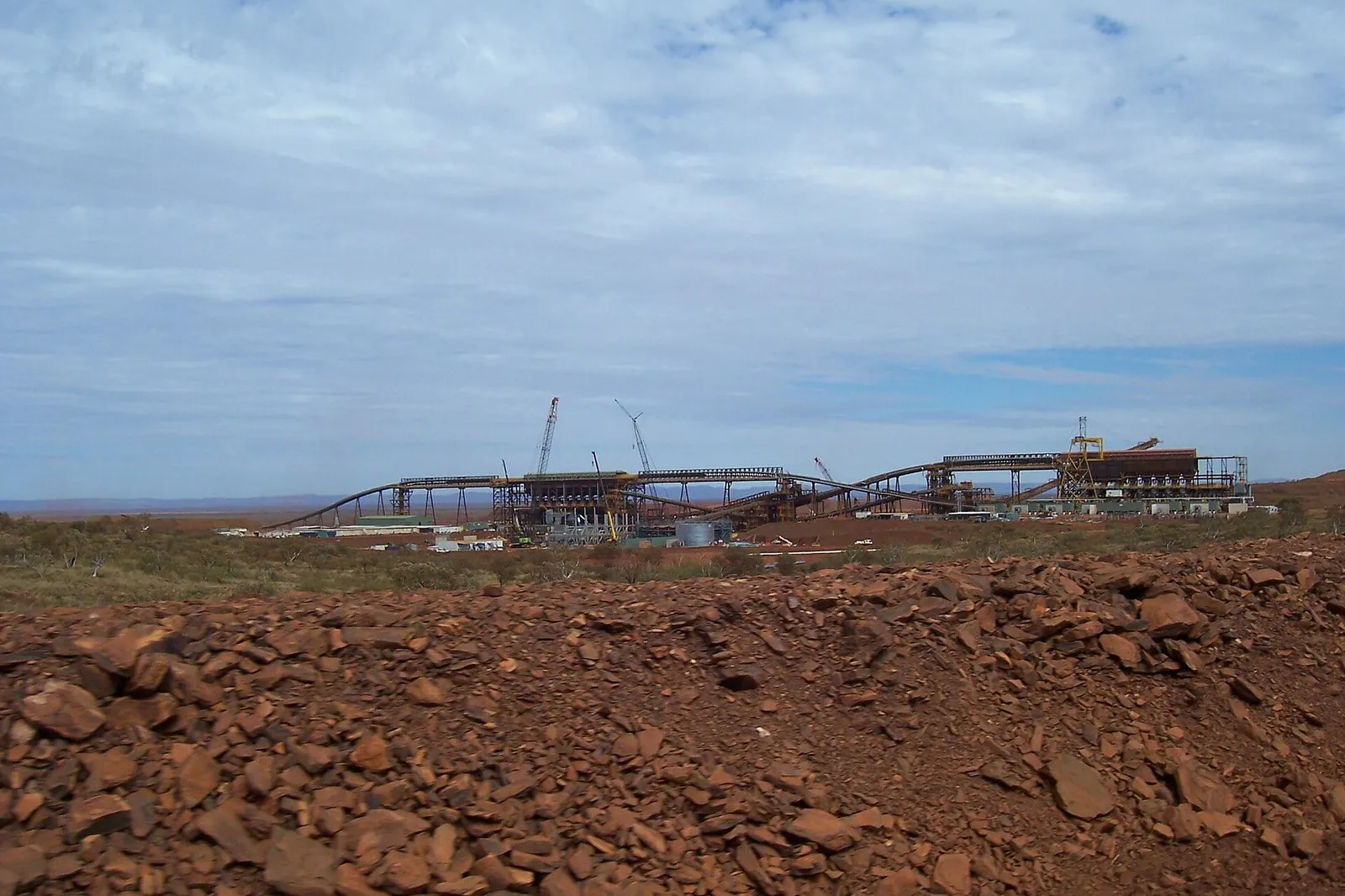
The Federal Court awarded the Yindjibarndi people A$150 million for cultural loss, A$136,757 for economic loss and A$217,152 of compound interest on that economic loss in May. The Yindjibarndi Ngurra Aboriginal Corporation lodged an appeal today.
They had sought A$1 billion for cultural loss and more than A$800 million for economic loss.
The ratio is the finding
Put the two awarded numbers next to each other. Cultural loss came to A$150 million. Economic loss came to A$136,757. The court valued the cultural harm at roughly eleven hundred times the economic harm arising from the same conduct.
That is the substance of what Australian law now does, and it is unusual by the standards of most legal systems, which struggle to price anything that has no market. Compensation is normally built from observable loss: rent forgone, output not produced, land value diminished. A court awarding A$150 million for harm with no market price at all, alongside an economic figure in six digits, has decided the cultural component is the principal thing being compensated rather than an add-on to it.
For anyone assessing the liabilities of a resource company, that reordering matters more than the size of this particular award.
What happened on the ground
Fortescue mined on Yindjibarndi native title land from 2012 without an Indigenous Land Use Agreement.
Of 240 sites the company itself had designated as heritage places, the court found 124 had been completely destroyed.
That is a company's own inventory of what it considered significant, with slightly over half of it gone. The precision of the finding is what makes it usable: this is not a contested characterisation of cultural value but a count against a list the miner drew up.
What the appeal is actually arguing
Not that the number is too small in the abstract. That the method is wrong.
The corporation contends the compensation should have been tied to typical royalty payments under Pilbara native title agreements rather than to land value. It also claims entitlement to compensation for social division within the community caused by the mine.
The first of those is the one with sector-wide consequences. A land-value basis produces an award anchored to what the ground was worth; a royalty basis produces one anchored to what was extracted from it. Iron ore land in the Pilbara is worth very little as land and a great deal as ore, so the two methods do not differ at the margin, they differ by orders of magnitude. Every miner operating on native title land in Australia has an interest in which one the appeal court adopts.
The second claim, for social division, would extend compensable harm from country and heritage to the fabric of a community. We are not aware of that being established, and the reporting does not say it has been.
Fortescue's position
The company had no immediate comment. It has previously said it sought to reach a settlement with the corporation for fifteen years, and it has paid the awarded sum.
Both parts of that are worth holding. Fifteen years of attempted settlement is a long time for a mine to operate without an agreement, and paying the award rather than resisting it is not the behaviour of a company expecting the figure to be reduced.
Why this is not only an Australian story
The reporting reaches back to Rio Tinto's destruction of two culturally significant rock shelters at Juukan Gorge in 2020, which triggered a reckoning about heritage damage across the industry.
What has changed since is that the reckoning now has numbers attached. A reputational event becomes a balance sheet item once a court has priced it, and once priced, it can be provisioned for, insured against, and demanded in due diligence by anyone buying a mine or lending against one.
The appeal will decide the multiplier. The principle that cultural loss carries the larger number is already established.