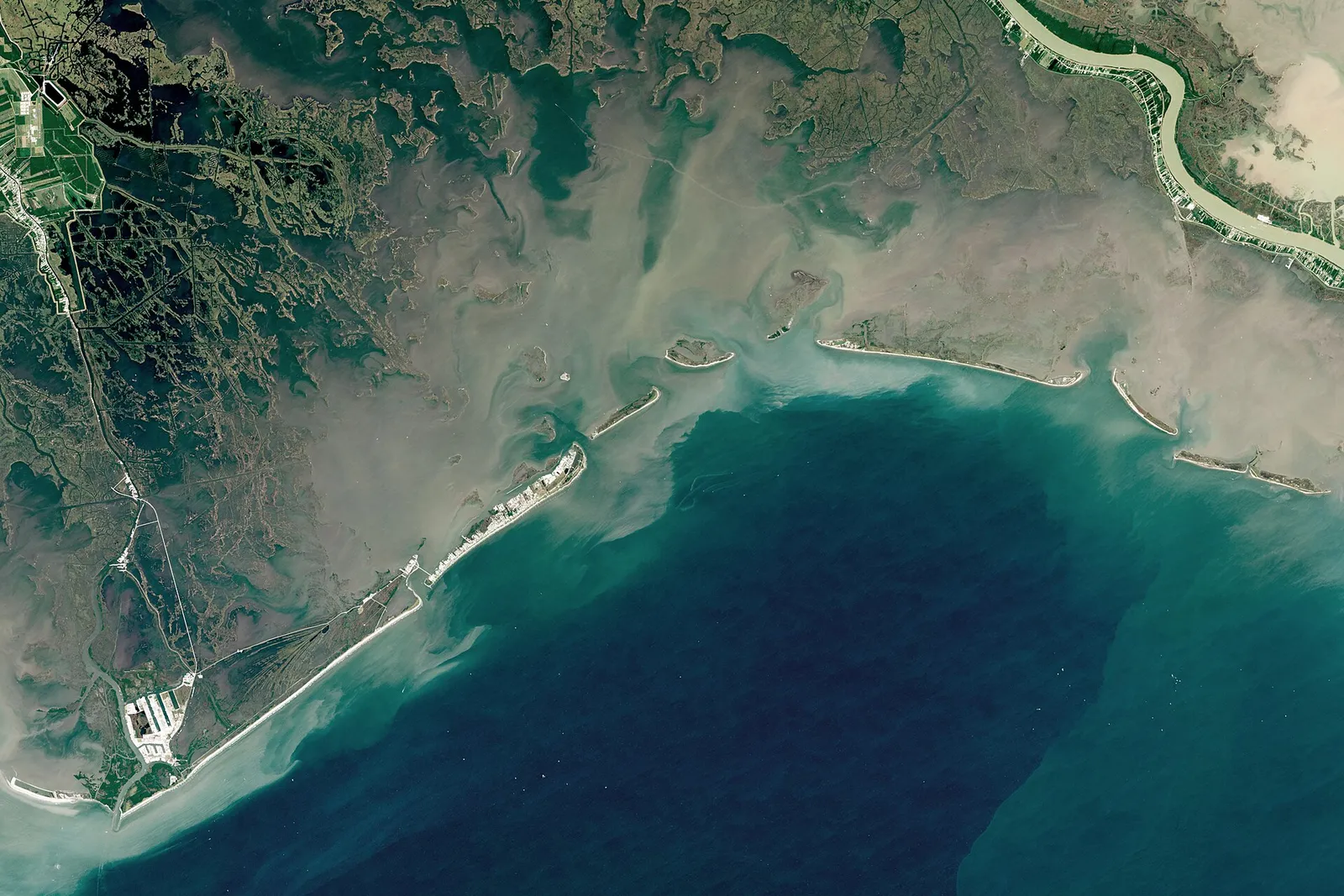
SpaceX will build a second Starbase in Vermilion Parish, Louisiana, west of New Orleans, on a former Exxon property along the Gulf Coast, with a $100 billion investment and construction starting in 2027. The company targets a first Starship launch in 2029. Louisiana officials say initial operations are expected in 2030.
The employment figures are 3,000 direct permanent jobs over ten years, at an average salary of $92,600, and more than 30,000 construction jobs at peak.
Do the division
$100 billion against 3,000 permanent jobs is about $33 million of capital per job.
That is not a criticism of the project and it is the number missing from every announcement of this kind. A spaceport is capital, not labour: the money buys launch mounts, propellant plants, power generation, port facilities and an airport, and the permanent headcount required to operate all of that is small relative to the spend. The same ratio holds at semiconductor fabs and data centres, and it is why "jobs created" has become a weak measure of what large industrial projects actually deliver to a place.
What a parish gets from a project like this is mostly not wages. It is the property tax base, the construction phase, the supplier cluster that may or may not form, and the risk that the anchor tenant changes its mind. Which is why the number nobody has published matters more than the ones that have.
The incentives are the missing figure
The reporting does not specify tax breaks or incentive details.
Until that is disclosed, the $100 billion is a gross number rather than a net one, and there is no way to judge the deal. A state contributing meaningfully to a private capital programme is making an investment on behalf of taxpayers, and the return on it depends entirely on terms that have not been published: abatement length, clawback provisions if the jobs do not appear, and who pays for the roads, water and grid connections a self-sustaining spaceport needs.
Chad Vallo, president of the Vermilion Parish Police Jury, put the local case: the project "will bring not only a variety of jobs to our Parish but will offer opportunities to our grandchildren allowing them to stay home for employment." That is the hope such deals are sold on, and it is a reasonable thing for a parish official to want.
Two dates that do not match
SpaceX targets a first launch in 2029. Louisiana officials expect initial operations in 2030.
A year's divergence between the company's timeline and the state's is worth noticing at the announcement rather than in 2029. Large industrial projects routinely slip, and where the operator and the host already differ at the outset, the host's number is usually the better guide.
What the design tells you
The Louisiana site is planned as a self-sustaining spaceport with propellant production, power generation, shipping and airport capabilities.
That is the same vertical integration we described when SpaceX began hiring natural gas traders: the company needs methane for Starship propellant and gas-fired generation for its own facilities, and it has decided to own the supply rather than buy it. Propellant production on site is that decision built in concrete.
It also explains the location. A former Exxon property on the Gulf Coast comes with industrial zoning, existing infrastructure, deepwater access for shipping large stages, and proximity to the gas that makes the methane.
The comparison the company will not want
The existing Texas Starbase has reported hundreds of injuries to OSHA and is described in the reporting as the most dangerous site SpaceX operates.
Building a second facility at ten times the scale invites the obvious question about whether the safety record travels with the construction method. Louisiana has its own regulator and its own workforce, and nothing about the Texas record predetermines the outcome. It is the question a parish accepting 30,000 construction jobs should be asking before the first pour, and it is easier to ask now than after.