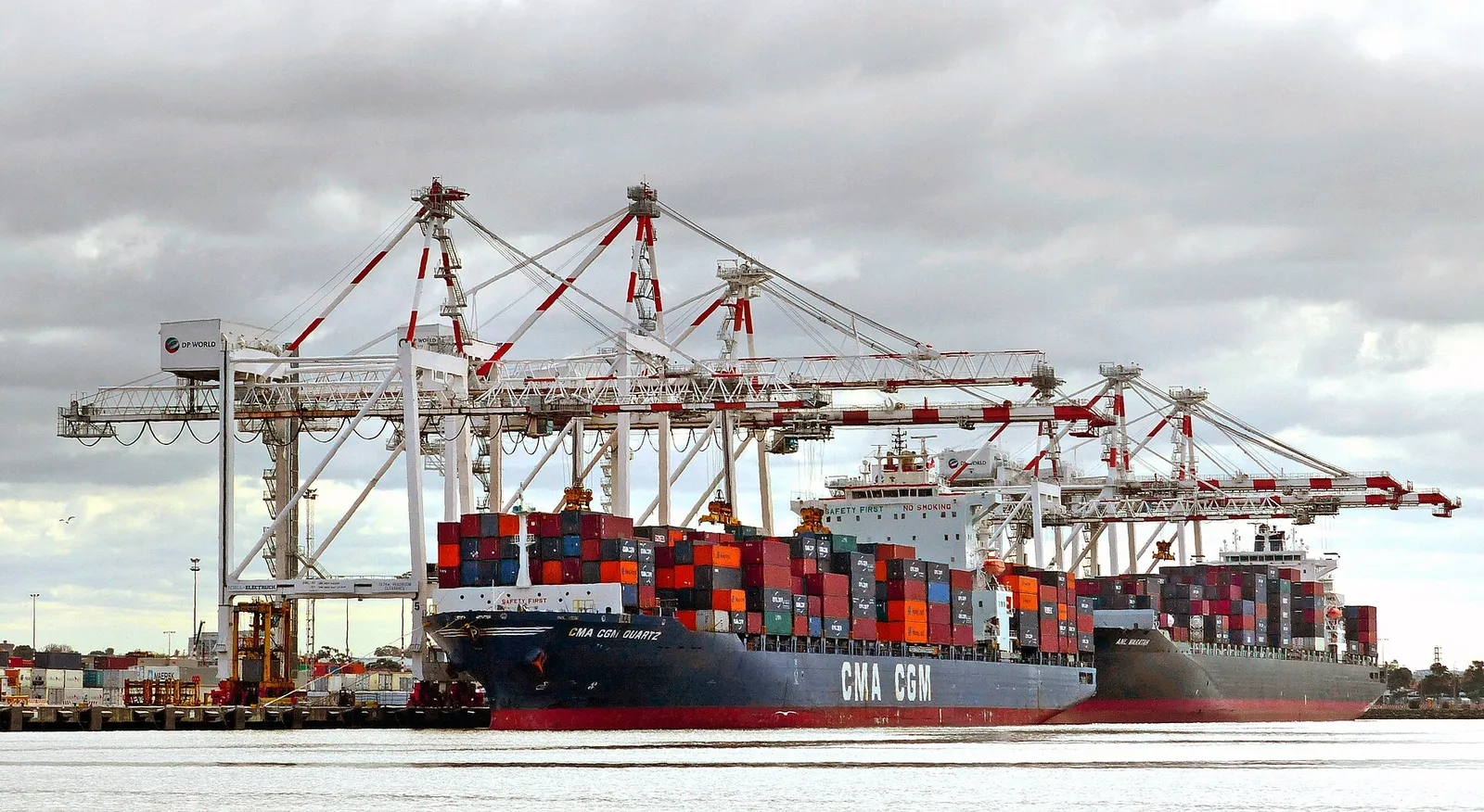
A labor fight on Australia's docks has become a case study in one of the economy's biggest unresolved arguments: how the productivity gains from automation should be split between companies and the people whose jobs the machines change. The Maritime Union of Australia is demanding a 28-hour working week, with no loss of pay, for members at the port operator DP World, as the company introduces automation and artificial intelligence at its container terminals, the BBC reported.
The demand
Dock workers at DP World currently work about 32 to 35 hours a week, depending on location, so the claim represents a meaningful cut in hours for the same pay. The union frames it explicitly as a share of the spoils of automation. "If DP World wants AI and automation, then they must pay the social dividend," it said, arguing the technology "doesn't have to cost our members their jobs" simply to lift a terminal operator's profits, according to World Cargo News.
What is being automated
DP World's plans, according to the union, include remote-controlled cranes, driverless vehicles that move containers around the yard, and AI systems to manage staffing and scheduling. The union says the company introduced these plans outside the existing enterprise bargaining agreement, the negotiated contract governing pay and conditions, and estimates the automation could put up to 1,000 jobs, more than 60% of the affected dock and maintenance workforce, at risk. Those figures are the union's own estimates. DP World, for its part, has not given a detailed public response to the demands.
Why the stakes are high
This is not a fringe workplace dispute. Container ports are critical arteries of a trading economy, and DP World is one of the largest operators in Australia, handling a substantial share of the country's container traffic. Disruption at the docks, whether from industrial action or from a bungled automation rollout, can ripple outward into supply chains and trade. That gives both sides leverage and raises the cost of a prolonged standoff.
Automation at ports is also a genuinely contested question on its own terms. Operators argue that automated terminals are safer and more efficient over time. Unions frequently counter, as the MUA does, that heavily automated ports have not always delivered the promised productivity and can be expensive and complex to run. The evidence internationally is mixed, which is part of why these fights are so hard to settle.
A bigger argument in miniature
Strip away the specifics and the Australian docks are a preview of a debate coming to many industries. As AI and automation take on more tasks, companies stand to capture large efficiency gains. Workers and their representatives are increasingly asking to share in those gains, not only through pay, but through time: fewer hours for the same money, on the logic that if the work can be done with less human labor, the benefit should not flow to shareholders alone. The four-day-ish week, once a fringe idea, is becoming a bargaining demand.
How this particular dispute resolves, whether through a shorter week, job guarantees, retraining, or a harder-fought compromise, will be watched by employers and unions well beyond the waterfront. It is an early, concrete negotiation over a question most of the economy has so far only debated in the abstract: what workers are owed when the machines get better at their jobs.