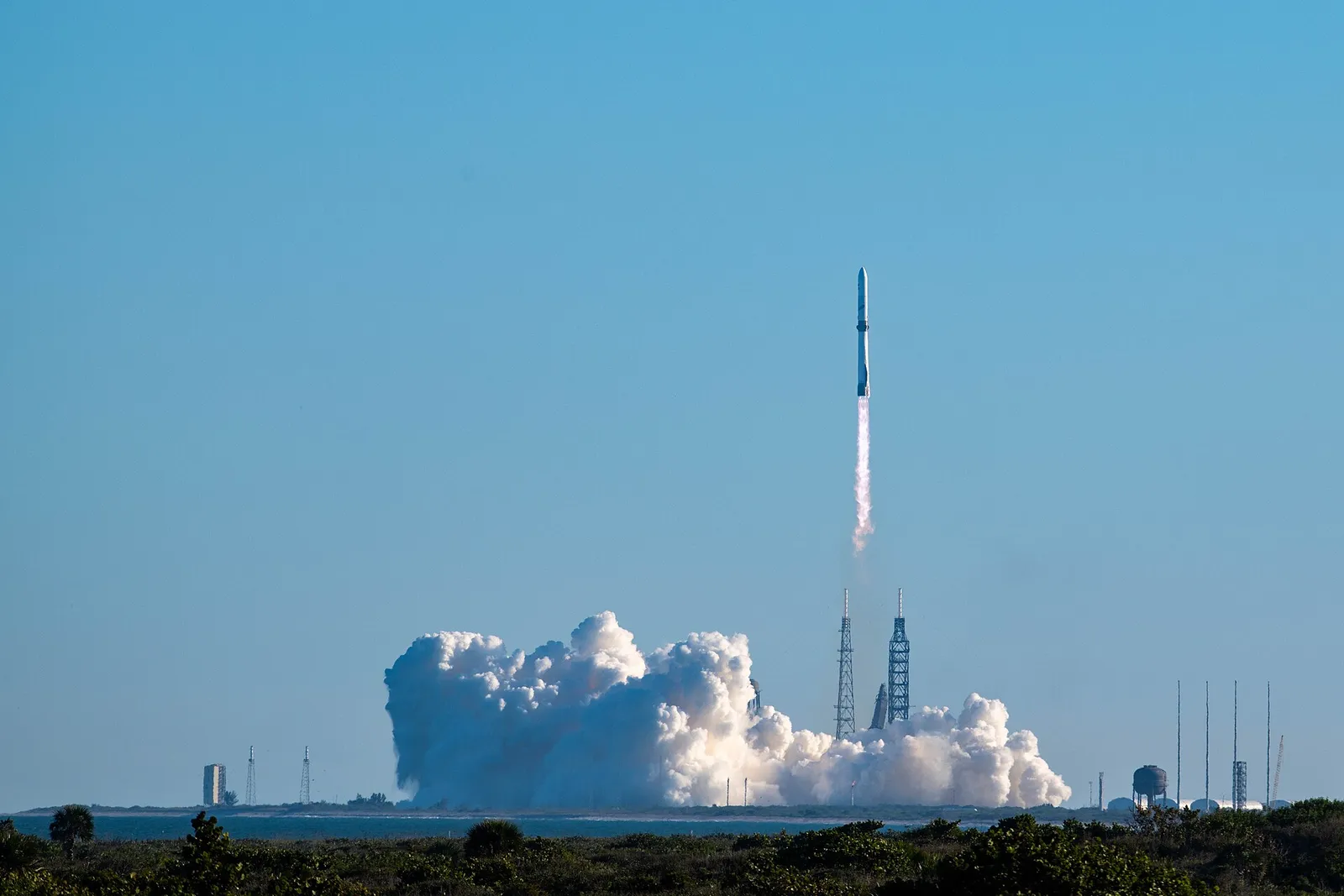
For a quarter of a century, Blue Origin has been a company with a single financier: its founder. That is about to change. Jeff Bezos's space company is raising $10 billion in its first outside funding round, at a valuation of roughly $130 billion, CNBC reported. It is a landmark moment for a business Bezos started in 2000 and has, until now, bankrolled almost entirely himself.
Who is putting in the money
The round is being led by Coatue Management, a technology-focused investment firm, which has committed around $4 billion, according to reports of the deal. Bezos himself is adding about $2 billion, with the remaining roughly $4 billion expected from other large institutional investors. For a company that has historically been funded by Bezos selling around $1 billion of Amazon stock a year, bringing in outside capital at this scale marks a strategic shift.
Why raise money now
The simple answer is that rockets are extraordinarily expensive, and Blue Origin has been spending heavily. Building launch vehicles, engines and the factories to make them requires sustained, upfront investment long before the revenue arrives. Blue Origin has reportedly been burning through several billion dollars a year, a pace that is hard to sustain on one person's stock sales, however deep the pockets.
A recent setback sharpened the point. Earlier in 2026, Blue Origin's New Glenn rocket was destroyed during a ground test, damaging a launch facility that cost around $1 billion to build. Incidents like that are a reminder of the sheer capital intensity of the business: a single failure can erase hundreds of millions of dollars of hardware and infrastructure in seconds. Scaling up, and absorbing those risks, takes more money than even the founder can comfortably supply alone.
The shadow of SpaceX
Blue Origin's raise cannot be understood without its rival. SpaceX, Elon Musk's company, went public in 2026 at a valuation well over a trillion dollars, and its market value has since traded above $2 trillion, CNBC reported. That makes Blue Origin's $130 billion, large as it is, roughly a fifteenth of SpaceX's worth.
The gap reflects a real difference in maturity. SpaceX launches rockets every few days and operates a fleet of thousands of Starlink satellites that generate recurring revenue; Blue Origin is still building toward regular, high-frequency flights. Its portfolio spans New Glenn (a heavy-lift rocket), the New Shepard suborbital vehicle used for space tourism, engines it supplies to other launch providers, and lunar-lander work tied to NASA. The technology is real, but the cadence, and the cash it throws off, lags far behind the leader.
Why it matters
The financing is a window onto the economics of the new space race. Commercial spaceflight is consolidating around a small number of very well-capitalized players, and staying in the game increasingly means raising sums that only the largest investors can provide. That a company backed by one of the world's richest people is now turning to outside money says a lot about the cost of competing.
It also puts a market price on Blue Origin for the first time. A $130 billion valuation is a bet by sophisticated investors that Bezos's company can eventually narrow the distance to SpaceX and build durable, revenue-generating businesses in orbit and beyond. Whether that bet pays off will depend on execution, on flying reliably and often, which is precisely the thing that has proved hardest, and most expensive, in rocketry. This article is informational and not investment advice.